

Upcoming webinar to showcase Saffron Interactive and AVA’s award winning Digital Prevention Platform
This Thursday 11 December at 3pm GMT, MEDEAnet will host a free webinar to showcase the winners of this year’s MEDEA Awards and interview the successful entrants. AVA (Against Violence and Abuse) and Saffron Interactive will be participating as winners of the MEDEA Professional Production Award.


Too much data, too little insight
Ah yes, that familiar sinking feeling. Ed sits at his desk, watching his inbox flood with messages about a new project he’s working on. He opens one from his manager; ‘We ran a project like that a few years ago I think, you should take a look at it’, she innocently remarks. Unfortunately, these well-intentioned words of wisdom have devastating effects. It results in what can only be described as an inner stress explosion as the volcano of frustration and tech-based anguish begins to bubble. In extreme cases, this volcano can erupt, manifesting itself in an insatiable urge to bang his head against his desk, (causing injury and eventual embarrassment). Poor Ed.
Well, that escalated quickly. Unfortunately, this is the reality facing employees. Organisations aren’t short of data, that’s for sure, but the lack of curation means that finding practical and applicable insights at work is nigh on impossible. The above scenario highlights the twofold problem posed by knowledge management. The labyrinthine antiquated systems we use to manage organisational knowledge are themselves a source of anxiety. People’s anger and frustration at having to use them has become so embedded that it now appears to be another. It becomes a second battle to get employees, for whom everything is so immediate, to travel back in time and use one of these systems.
What is a knowledge management system?
A knowledge management IT system is designed to archive the data and information your organisation holds and present it employees in a way that makes it easy to access and apply in their working lives. Intranets, wikis and enterprise social networks are all forms of knowledge management system.
In its ‘Predictions for 2014’ report, Bersin singled out the need to improve ‘knowledge contribution’ and ‘extend learning architecture’ as important steps companies can take to improve performance. Saffron ran a survey to find out more about exactly what’s going on.
We asked a random selection of workers across all sectors to complete a survey about knowledge management at their organisations. We found that 85% of employees regularly go to Google instead of using their organisation’s KMS (knowledge management system). In fact, just 30% of respondents regularly use their organisation’s KMS. Employees are driven into the arms of Google, endangering the competitive advantage that should come from leveraging your own proprietary insights, rather than relying on commoditised information available on the wider internet.
Let’s go back to our panicking employee. To stop Ed from reaching for the easiest (and most commoditised search tool in sight, your own search facility must be up to the job. It needs to be comprehensive and predictive. It needs to take the user’s requirements and direct them towards the most relevant information available, or, as the case may be, the employee who will be able to help them.
If your search is able to offer users information about resources they ‘might find useful’ because other colleagues in similar situations did, you can create a knowledge base within your own organisation, rather than relying on Google. Remember that using a large number of fields to refine a search is an antiquated and lengthy process that will only leave stressed-out Ed feeling worse than ever. Being able to offer Ed information he didn’t even know he needed gives your organisation a competitive edge: our employee, initially researching one particular project, will be directed towards another, perhaps a more relevant one that his colleague hadn’t told him about.
So, let’s imagine that Ed had been able to find out about a project that looks relevant to the one he’s just started to work on. But he wants to know more. A search engine is a great way in, but once Ed’s been directed towards the information he needs to know, he might need to speak to a relevant colleague who can help transfer this knowledge into a change in behaviour – it is this that truly marks the progression from passive data, to actionable insights that will improve business practice.
For some users, who are perhaps used to using LinkedIn to find out about colleague’s area of expertise, a profile page will provide an opportunity to showcase their expertise in certain areas. It will also enable their colleagues to search for competencies and capabilities within their own organisations. Profiles enable Ed to connect with Helga, who is based thousands of miles away, but has previously worked on the similar project. She’ll be able to provide Ed all the advice he needs with regard to dealing with the client, and improve his approach towards project management.
In return, Ed can endorse her and recommend her to colleagues. When I spoke to a particularly cynical management consultant about the idea of profile pages, she pointed out that employees will try to ‘protect what they know’ as ‘this is what gives them value in an organisation’. But the nature of these profile pages discourages such protectionist attitudes. Users will be encouraged to add as much as they can to their profile pages. Their reward is that they will be known as the ‘go-to’ in their organisation for a particular area.
Helga wins because her expertise within the organisation is acknowledged, Ed wins because he knows what to when working on this project and the organisation wins because they insight has been shared, rather than being limited to a single employee. They’ve managed to run a successful project because of it.
I realise that this is a rather idealistic picture, and whilst we’ve been idly fantasising about a world in which insight is just a few clicks and a friendly colleague away, poor Ed has been having visions of trawling through reams of data. The reality remains that quite frankly, some senior stakeholders are reluctant to invest in something as woolly sounding as ‘knowledge management’.
After all, knowledge is something immaterial; it can’t be quantified. In order to get buy-in from senior stakeholders, it’s essential the financial implications of poor knowledge management are made clear. Anne Hylton points out in her article ‘The Business Case for Knowledge Management’ that the Y2K crisis (which cost businesses an estimated $1 billion) is a prime example of this. Insights are missed so frequently that it’s a case of not knowing what you’re missing out on. This is far harder to make a business case for than say, the material need for new computers. But when it’s done correctly, a good knowledge management system will provide a sound basis for innovation and tap into revenue streams you may not have known existed. Untapped revenue, and a better ability to cope with disruptive technological changes, are what makes effective knowledge management a worthwhile investment.
But to prove this, it might be necessary to make some small adjustments to your knowledge management system before making a big leap. There are a number of changes you can pilot within your organisation to improve knowledge management. Curation on a user-by-user basis is one key factor. Rather than wading through seemingly endless amounts of data, investment in curation can go a long way. Getting contributors to enter a few simple details (name, date, department) alongside their posts will contextualise information and enable users to immediately gauge how useful it is to them.
Another feature to include would be a rating system. If you leave users to rate their own content you may find that insights will emerge organically as people begin to select the information they find most useful. These won’t seem like overwhelming tasks for Ed to perform and slowly but surely, insights will emerge if information is contextualised in a way that makes it easy to action.
Nearly everyone agrees that knowledge management is becoming a problem – 85% of our survey respondents agreed that their knowledge management systems needed to be improved. But, just like making the leap from data to insight, moving from this passive state of mind to a proactive approach towards knowledge management is not something that can necessarily happen overnight.
Crucially, our research showed that the most popular reason for non-contribution to knowledge management systems was that people simply didn’t think their colleagues would bother to look at their contributions- 40% of respondents felt this way. Whilst the terrible user interfaces certainly don’t help, when it comes to knowledge management, the war of hearts and minds is one that simply cannot be ignored.
Transforming your ‘users’ in to ‘collaborators’ is something that can only really be achieved through giving users a sense of ownership in their system – encouraging curation, profile building and easy access to information. Ed needs to realise that knowledge management has the power to help, rather than hinder his efforts. The very notion of knowledge management needn’t have such dramatic effects on the employees it’s trying to help. If it does, you’re not doing it right.
To start making a change, take a look at this recent blog post for seven quick tips to improve knowledge management at your organisation here.

Ruth Neligan
Ruth is a learning technologies consultant at Saffron Interactive. Passionate about knowledge management, gamification and learning engagement, she’s always looking to use social media to spark a debate about all things learning and performance related!
Ruth has experience working alongside clients to establish what Saffron’s behaviour-changing interventions can do for them. Responsible for managing Saffron’s blog, Insight articles and newsletters, her role at Saffron is to stay ahead of the trends so that your organisation can do the same.
Five important questions everyone has about 360 assessments
The 360 assessment tool began life in the Second World War as the German military sought to appraise one another’s performance. Nowadays, it’s not (always) a case of life or death, but the idea of personalising a method of assessment to achieve an impact has remained an important one when it comes to performance management.
AVA and Saffron Interactive win MEDEA Award for Digital Prevention Platform at international conference
The MEDEA Award for Professionally Produced Educational Media 2014 is European-wide and is awarded to the best educational media produced by a professional company or semi-professional production unit. The accolade was handed to Saffron and AVA at a ceremony which took place during the Media & Learning Conference in Brussels on 21 November.
An interview with Saffron’s branding experts
With a new office and new website, the past few months have been a busy time for Saffron! To top it all off, we’ve also introduced new brand guidelines. Two of our team members, Sonja Gebetshammer and Carina Weingast, have been charged with updating Saffron’s branding, and they’re here to share their insider knowledge about how they’ve transformed the Saffron brand.

Count ‘em — three! Saffron Interactive and AVA’s Digital Prevention Platform is finalist for three prestigious awards
Saffron and Against Violence and Abuse (AVA) have been selected as a Finalist at the European MEDEA Awards and shortlisted by judges at the Learning Awards for both External Learning Solution and Social & Collaborative Learning Solution of the Year. The triple nomination recognises the impact of a Comic Relief funded project to help practitioners implement a whole-school approach to prevent violence against women and girls (VAWG).


A brief history of pictograms and ideograms
A pictogram, also called pictograph, picto or simply icon, is the most simple and efficient way to convey a message or an idea and has been used throughout civilization – from the prehistoric age, to ancient Egypt, until today. Pictograms have constantly evolved over the centuries. Often they’ve been associated with magic powers, used to convey religious ideas or even been used as a secret code.
Saffron Interactive to create experiential elearning platform and marketplace for leading Danish business school
Saffron Interactive, recently named on Training Industry’s Top 20 Learning Portals Watch List, has been selected by International Business College (IBC) to realise its vision for a learning experience network. The Open IBC project will use open source technology and the Tin-Can API to act as a force-multiplier for IBC’s digital presence for a new generation of students.
Mary Poppins and supercalifragilistic expialidocious learner engagement
When it comes to iconic figures in pedagogy, you can’t deny that Mary Poppins’ learning approaches were well ahead of the curve. Whilst watching Saving Mr Banks last weekend (if you haven’t seen it, I highly recommend it), I realised that there’s plenty we can learn from Mary P’s approach. She knew about everything: from gamified learning, to the endowment principle. This blog post will take a look at a few occasions on which Mary P showed us how a successful learning intervention can be done:
Saffron Interactive named as a Top 20 Gamification Company
TrainingIndustry.com has selected Saffron Interactive as a part of its first-ever “Top 20 Gamification Companies” list, published this week. Saffron Interactive’s inclusion recognises its history in the area of gamification and its commitment to pushing the boundaries of learning technologies.


Why I believe addressing perinatal mental health care must be #everyonesbusiness
On Tuesday I was invited to attend the Parliamentary launch of a new report which has found that our failure to fully address perinatal mental health problems carries a total economic and social long-term cost to society of over £8 billion for each one-year cohort of births in the UK. Of that, £1.7 billion is borne directly by the public sector. It would cost a mere £337 million to raise perinatal mental health care standards to recommended levels.

Building mental resilience in the workplace
The results of our survey
In the UK, 70 million days are lost every year through poor mental health, and stress is a factor in between 50% and 60% of all lost working days. This represents a huge cost, both in terms of human distress and damage to the economy. One study puts the annual cost of depression to the American economy at $44 billion. The epidemic may explain the mystery of why, in the UK, output per worker is falling even whilst employment recovers. As Miles Davis once sang, these days: ‘Blue can be the livin’ dues / We’re all a’paying’.
To find out more, Saffron Interactive conducted an anonymous survey of over 70 senior managers in a range of FTSE250 organisations, local government bodies and smaller consultancies. Specific job functions included global training managers, L&D managers, operations managers, HR business partners and L&D business partners.
We asked how stress and related mental health issues affected their organisations, whether they were measuring its impact and what measures were in place to build resilience. Whilst only 46% of respondent organisations were directly measuring its impact on performance, we found a growing recognition of the problem and aspirations for change. We found that learning and HR professionals, along with senior management, feel they can and should play a better role in boosting mental resilience through a diverse range of initiatives.
When pressure boils over
According to the European Agency for Safety and Health at Work, work-related stress is experienced when ‘the demands of the work environment exceed the workers’ ability to cope with (or control) them’. Work-related stress is often caused by excessive quantitative demands, isolation from co-workers, a lack of control, job insecurity, role ambiguity and bullying.
There’s no doubt that years of economic difficulties and rapid technological change have exacerbated many of those causes. As one our respondents told us: ‘More and more focus on reducing our cost base, while continually bringing innovation to our customers, means we have fewer people to do the same if not more work. This leads to rising stress levels.’
But it’s also true that change, competition and positive pressure are an important part of anyone’s working life. A certain level of stress is healthy. John Binns, a Deloitte partner, trustee of the charity Mind, and director of an independent consultancy, fit4success, points out that in any organisation which is ‘aspirational, commercial, and relatively competitive, there is stress by definition.’ The problems occur when certain behaviours push this pressure ‘into an area where it becomes bad stress and damages the performance of the individual or the company.’
When stress does become ‘bad stress’ it leads to the kind of serious mental health issues, such as an episode of clinical depression, which will affect 1 in 4 of us over the course of our working lives. If handled improperly, one of these crises will impact heavily on co-workers and the bottom line. In the UK, each new case of stress leads to an average of 29 days off work.
And a lack of available strategies for personal resilience is often reflected in the inability of whole organisations to be resilient to the challenges of today’s world. Amongst a patch-work of government measures, the main legislation relating to stress in the workplace is the Health and Safety at Work Act 1974, which ‘requires employers to provide a workplace that is safe and healthy and ensure employees do not suffer from illnesses caused by work-related stress’. If it can be proven that workplace stress has caused serious illness without sufficient safeguards in place, the legal consequences and costs can be as severe as those involving physical accidents.
Defining resilience
So what do we mean by ‘resilience’? A practitioner guide defines it as ‘the successful adaptation to life tasks in the face of social disadvantage or highly adverse conditions’ (Windle, 1999, p. 63). Resilience can be understood as a personal attribute, a set of systemic or environmental factors, or, more likely, as a dynamic combination of the two. Organisational resilience is similar, but encompasses the processes, culture and structures that govern the way in which resilient attributes are enabled or blocked.
Just like person, a resilient organisation ‘can uncover and adjust to continually changing risks, endure disruptions to its primary earnings drivers, and create advantages’ (Star et al, 2007, cited in Developing resilience: An evidence-based guide for practitioners, p.4). We can understand a resilience-building programme as a set of strategies to challenge individual and organisational behaviours. Those that impact on resilience at a personal level might include negative cognitive filters, a lack of ‘mindfulness’ and poor coping mechanisms. At an environmental level, there are taboos and managerial behaviours that often play a critical role in the outcome of a given episode of mental difficulty. Finally, organisational resilience involves adaptability, risk assessment strategies, and the ability to weather serious crises when they arrive.
So what did our survey show?
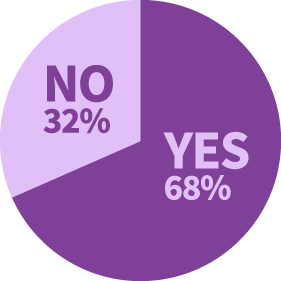
We confirmed the seriousness of the issue. 68% of our survey’s respondents affirmed that mental health issues such as stress and depression do cause problems in their workplaces:
Q. Do mental health issues such as stress and depression cause problems in your organisation?
Overwhelmingly, respondents complained of high-cost impacts. Our survey confirmed that the main perceived effects of stress-related issues are on paid absence and productivity:
Q. How do problems with mental resilience most affect your organisation?

Our survey also showed that the problem is exacerbated by poor management and a lack of resilience strategies. Representative complaints at the organisations worst affected were that mental difficulty is treated as a taboo or is ‘not something my organisation takes seriously enough’, that line managers ‘need to be better trained’ and even that the problem is denied by managers for legal reasons. 17% of respondents didn’t know of any support in place whatsoever.
However, where the problem was being addressed, we uncovered a variety of strategies: 42% said that a range of support services were available, against 26% of organisations which relied on a single method (such as workshops, a support team or resources). SMEs drew strength from their flexibility: ‘senior management are always willing to listen and try to accommodate requests such as working from home where possible.’
Respondents in the most advanced organisations outlined a culture of support backed up by a strong procedural framework. Often, respondents were reassured by a clear pathway to recovery for those affected, even if understanding was lacking: ‘Although some colleagues may not appreciate the intricacies of the condition, we have an excellent support process in place to guide the individual and their management towards a return to work and continued support.’ Promisingly, 75% of respondents indicated that there were concrete plans to increase support in the next year, with growth in every main methodology. Projected investment in e-learning or online courses was up by 150%.
Taking action
John Binns believes that, in order to take action, gaining senior management buy-in is vital. He points out that organisations ‘only really make real headway if senior management see the business case for it.’ Methods of measuring the bottom-line impact may vary, but as our research substantiates, a significant ROI can be realised from a wellbeing programme by reducing paid absences alone.
Since the launch of a mental resilience course created by Saffron Interactive in 2012, TfL has experienced an average reduction in sickness absence of one day per worker. Each day’s paid absence cost TfL £290 in wages and overheads. Add the numbers up and the result is a saving of £7.83 million per year across a workforce of 27,000.
So where should you start? Below, we outline a strategy template for HR and learning and development within a mid-to-large sized organisation seeking to boost resilience:
- If none exists, set up a confidential advisory service that allows those suffering from stress to talk. This doesn’t always need to be staffed by professionals. Often, peers with experience of the issues are best. The ultimate aim of this support service should be to increase the speed at which employees can work through serious problems and return to work, and avoid unnecessary exits from the organisation.
- Create a classroom or live online training programme for all senior managers to generate buy-in and an understanding of why the ways in which they manage stress are so important. It might be useful, as John suggests, to circumvent taboos by marketing it in terms of ‘fitness’ and overall wellbeing.
- Workshops will never reach everyone. Invest in a bespoke e-learning course to generate awareness, introduce cognitive strategies and signpost the support in place for when something goes seriously wrong. Emphasise the point that 25% of us will be directly affected by mental illness at some point and all of us will be indirectly affected. Make the learning more behavioural by including true-story scenarios, video testimonies and tailored action plans.
One of the most important outcomes of better individual resilience is organisational resilience to change and crises. Just like people, resilient organisations enjoy lasting longevity and growth. The alternative, for all but the most colossal organisations, is usually extinction: in the past century the average lifespan of a company listed in the S&P 500 index has fallen from 67 years to only 15 years. A strategy for resilience is therefore a part of a strategy for survival. And learning professionals should take a keen interest in that.

Toby Harris
Toby was the creative lead and platform product manager at Saffron Interactive. An open source enthusiast, he likes it best when he is adding value to the elearning community, developing new thinking about how people development programmes and platforms can drive business performance and prove ROI. Toby has extensive experience with learning management systems, a frenetic devotion to social media and consequently is able to keep a keen eye on best-practices in the ever-evolving world of elearning.
It’s #everyonesbusiness! Saffron Interactive develops website and branding for key campaign on perinatal mental health
The Everyone’s Business campaign 1 has launched a new website and vibrant brand identity aimed at senior decision-makers in government and the NHS. The campaign is dedicated to ensuring that all women in the UK have access to specialist perinatal mental health care during pregnancy and postnatally.

Systems architecture 101 and what you can’t ignore when developing a new business application
Having completed my induction at Saffron as the IT Technician/Developer intern, I had a feeling of accomplishment. It can be overwhelming when multiple systems are thrown at you. However, the implementation model we’ve got in place makes new starters feel at ease. Shortly after completing my induction, I was thrust into developing an internal ERP system that the company will use on a day to day basis.

Respect the system! – Creating engaging systems training
When I started as a new Instructional Designer at Saffron, I had to get my head around an abundance of new ‘systems’ in a short space of time. Of course, I didn’t think of them all as systems at the time, but when I stopped to think about what the word meant, I realised that countless new ones must be learnt and familiarised with whenever you enter a new environment. From working out how to get to work on time every day (still a struggle!), to mastering the various software applications that Saffron use; my cognitive faculties were busy getting to grips with systems all day.
‘I reflect, therefore I apply’: What Descartes can tell us about making elearning more applicable
This post is part of a sequence of articles which draw upon a book called the Six Disciplines of Breakthough Learning. This month, I’m exploring one of my favourite chapters: Deliver for application. The most prescient part of this chapter is all about reflection, a key to retention which all too often we do not retain! To understand why it’s so important, we first need to revisit some fundamentals.

What makes a great icon?
Imagine, you’re in an airport and your flight has been delayed for a few hours. You walk around the terminal, go shopping, use the washrooms, get something to eat. You’ve managed to navigate a strange environment and find out all the details about your flight without having to talk to anyone. Who’s helped you out? How have you been able to do this?
Saffron Interactive’s learning portal named on Top 20 Watch List
Saffron Interactive has been named as ‘one to watch’ on this year’s Learning Portal Companies Watch List. Training Industry has recognised Saffron and its open-source LMS, Saffron Grow, as an industry trailblazer amongst a growing list of clients that value innovation and user-impact.


We need to talk about me
Why do I want to learn this? What’s in it for me? What am I expected to do?
These are the questions that learners want to know the answer to, before they’ll even consider beginning to engage with a course. If I don’t know what’s in it for me, I won’t be switched on. If I’m not switched on, I’m not going to be motivated to do. If I’m not motivated to do, then nothing will change. You can forget about delivering any kind of measurable success if learners aren’t engaged in the first place.
We need to look to develop the “me” aspect of our learning. Learners are more time-poor and easily disengaged than ever. They don’t just want learning to be a conversation that’s worth having – they need it to be. Self-actualisation – or “me-learning” – should be our new paradigm. Here are three steps to making it happen.
1. Discovering a better “me”
First of all, we do this by allowing learners to discover what’s in it for them, how they can develop a better “me”. To instigate this process, we’ve been working with a variety of self-diagnostic activities given at the head of the learning process. A “self-diagnostic” is any exercise that asks learners to honestly evaluate how they’re currently performing.
Superficially, this may appear to look like extra testing; learners are quizzed before they begin a course, quizzed throughout it, quizzed at the end. The same approach applies to everyone: death by quiz. But it’s the exact opposite, and I’ll explain why.
Imagine the captain of my five-a-side team has told me I need to score more goals. I’ve decided that I’m going to access an elearning course that has the objective of making me more like my hero Gareth Bale.
At the outset of the learning, I want to emulate Gareth Bale’s performance as closely as possible. That’s the desired improvement. But do I already know how I compare? I might I have a good idea, but have I actually thought about it in depth? Have I considered all the facets of my game that need to be perfected in order to reach that “Gareth Bale” level, the desired end state?
A well-designed self-diagnostic activity should map directly to the desired end outcome for the learning. In this instance, a self-assessment that asked me to honestly rate myself against the “Bale scale” would allow me to benchmark where I was right now, and what I would need to improve, develop or discover in order to reach the desired end outcome.
Alternatively, it could be that I’m a HR manager and I’m taking a course on developing my understanding of talent management techniques and processes, and the self-diagnostic shows me that whilst my understanding of the process is very good, I find it harder to actually recognise and rate talent. This isn’t designed to catch learners out, but to encourage an initial process of self-actualisation. It’s three considerations; “here’s where I am”; “here’s where I could be”; “this is what I need to do to get there”.
2. Personalise my learning
From this point, I as a learner have a good idea of what I need to improve. So now I’m entering into the actual learning, what do I expect to see?
I want to see content that’s relevant to me and techniques that I can personally apply. If the “Bale scale” shows me that I’m good at scoring but my passing isn’t the best, what good is it if the learning I’m presented with is then weighted to how I can score more rather than how I can improve my passing?
Not much. What I want is to access interactions that allow me to have a go at improving my passing, feedback as to how I did so I understand why I’m going wrong, and guidance as to how I could do it better if I did poorly first time around.
So the content delivered needs to really reflect the results of my self-diagnostic, but I also want that content itself to be designed to be relevant to me. If I want to be like Gareth Bale and I play in the Spanish League, I want to test myself and see scenarios that are relevant to my background. That means it might be interesting to see how I’d fare against players in the German or the Italian leagues, but what I learn won’t generate the improvement I’m looking for if the examples aren’t relevant to my working life, or why I’m going wrong at present.
3. Give me something to do
This is at the core of what we’re calling “me” learning – showing learners a pathway to a “better me”, designing content to support that improvement and encouraging them to discover their own approach. But how do we really make the improvement happen?
We need to personalise the output of learning, giving people practical advice that they can take away from the course and apply continuously in order to support growth and development in the areas where they’ve recognised they have a need to improve. That’s how you turn 40 minutes of learning into 40 weeks of action.
So I’ve identified that my passing is not at the level of Gareth Bale (yet). I’ve identified where I’m going wrong, practised getting it right and learnt how I can get there. But how does that translate into more goals for me and my team?
Here’s how. At the end of the course, I’ve been able to build my own tailored personal action plan using tips that have been suggested, allowing me to take what I’ve been doing onscreen and start applying it off-screen. I’ve got downloadable guides showing me the key output of what I’ve learnt so I can access it when I’m in the changing room before the match, and calendar reminders throughout the week that suggest times when I should be practising my passing.
The captain of my five-a-side team would be able to evaluate the success of my training on a continuous basis by taking a look at how many goals I was scoring, or how many I was creating for teammates, and we could look at ways that this could be further supported in future once we’ve had a chance to measure the improvement.
It’s not about defining the learning design on a learner-by-learner basis, but allowing the flexibility and mechanisms for the learner to personalise content to suit them and their own requirements. This generates an improvement that benefits them as an individual, strengthens their skillset in accordance with the business need, and ultimately delivers measurable ROI as a result of this improvement.
You may never quite measure up to the Bale scale. But make your elearning a little more like “me-learning” and you’ll certainly score more goals this year!

Nick Baum
Now a senior project manager in the wider world, Nick was an acclaimed instructional designer and project manager who worked on a variety of topics for a wide range of Saffron’s clients, including AAT, BNP Paribas, BT, Deutsche Bank, PwC and Telefónica, working closely with subject matter experts in order to deliver effective and engaging content that, above all, effects the desired behavioral change.
Nicholas has extensive experience working with clients on systems and process based training. He has an in-depth knowledge of instructional design and learning strategies and is known for building strong client relationships and developing multi-lingual courses.

A day in the life of a ‘learning composer’ in 2029
As Saffron Interactive prepares to mark its fifteenth birthday, Toby Harris imagines what the life of a learning designer might look like fifteen years from now…
Kalpana Mukopadhyay wakes up in a single bed in a tiny studio apartment at 5:15am, having slept for just four and a half hours. Her journey to the office in downtown Pune may take anything between one and three hours today (she’s competing with five million other commuters), so it’s worth getting up early to beat the traffic. Self-driving vehicles were supposed to fix all that.
Before she leaves, Kalpana grabs a steaming plastic cup from beneath a tea-making machine which is shaped like a miniature household shrine – an exact replica of the one her grandparents have at home in the countryside. It’s amazing what you can get made at a 3D printing café these days. Due to critical shortages, the water in the tea is actually Kalpana’s purified urine from the night before. It still has a distinctly acrid taste. So, she reminds herself, it’s worth spending a little more on the touches that make things feel more ‘homely’.
Welcome to 5131
The date is October 20th, 2029. But everywhere the year is listed as 5131, or by its ceremonial name: Sādhārana. India is now the world’s third-largest economy, and fifteen years into the rule of the Bharatiya Janata Party, Hindustani identity politics and panchangam calendars are in vogue with advertisers. Not that a youngish learning composer like Kalpana feels particularly strongly about it. Her mind is already focused on her to-do list and her most important current project.
Outside, she hops into the back of a passing vehicle which looks a lot like a motorised rickshaw. But there’s no driver, and the front windscreen has been replaced by a noisy, digitised poster advertising toothpaste. The packed streets are a delirious screeching blur of lights and sounds, with shop-fronts piled up eight stories high on either side. The previous night’s debauchery is not even close to being over.
Drone service with a smile
But Kalpana is already miles away. She’s put on a slim pair of glasses which is running a cheap imitation of Google Glass version 105.2, based on open source, 3D printed hardware. Most of her messages and updates refer to project code 2721TEDN: otherwise known as (the awfully named) ‘Drone Service with a Smile’. This is an augmented reality simulation programme for a population of customer service managers who need to learn about the drone delivery network being rolled out on the East coast of China by Baidu Tencent (BT).
Oh, and there’s a message from Charlie, the odd young guy from England who is interning in India. He’s got a stomach bug again.
When Kalpana arrives at the office and reaches her workstation, she looks to the bank of screens which streams live footage of the research and development team she directly supervises in London. Empty desks in a dimmed office. There’s an encouraging feed of yesterday evening’s updates from the creative writing team on Share (Saffron’s combined ERP, knowledge-base and social networking platform). This group of graduates are busy working up complex branching scenarios for ‘Drone Service with a Smile’ for Kalpana to critique. She takes a moment to look at the jerky images as the scripts translate into an online, live preview, and sighs. An entire level of the course has been set on ‘Floor Four’. Four is a deeply unlucky number in China and she knows it’ll never make it past the SME. With the blink of an eye she absentmindedly reposts a link to a MOOC on Chinese culture to the team. Whenever will they learn?
Falling rotor-blades
Still, it’s essential to dedicate this supplementary brainpower from the London office to the project. BT neglected to tender for the training contract until the drone delivery network was half-finished, and, by the time the contract negotiations were finished, customer service managers were already dealing with those frantic customers who found their sheds flattened by falling packages, or their gardens chopped to shreds by rotor-blades. As a result, the client is demanding that the entire project is completed from start to finish in just under a month.
This year is Saffron’s thirtieth anniversary. Perhaps by its fortieth, companies will take planning for systems training seriously, she muses.
Kalpana’s job description is open-ended. She’s equal parts programmer, pedagogist and project manager. She has no need for authoring tools, which now languish at the low budget end of the elearning market and are mostly freeware. That’s because, like much of her generation, when Kalpana started high school she knew her way around a JQuery library much better than she knew her way around the works of Dickens.
A little like the pioneering learning designers of five decades before, she composes directly into XML. Her project files and assets sit all over the place: in the cloud, on local machines, even on tablets and phones. An efficiently loose architecture is held together by an authentication protocol which constantly synchs back to the main Saffron infrastructure.
Meet Aalam
As she works, Kalpana is assisted by Aalam. This simple artificial intelligence, making use of some proprietary Saffron algorithms, is currently hooked into the BT knowledge management system and it’s constantly casting its eye over her work, checking it back against BT processes which seem to change every two weeks. Aalam is also helping with Kalpana’s shaky grasp of Mandarin. When the project finishes in just under two weeks, Aalam will be reconnected to Share so he can focus on helping with internal projects again. Hopefully his little brain won’t get corrupted in the process like last time. Kalpana knows that Aalam can be backed-up, copied and reset just like any other piece of software, but it’s hard not get attached.
At various points during the day, Kalpana checks in on some of other projects she is managing. There are consultants in the field, on location at the offices of a global tobacco company attempting to identify what is wrong with their current appraisal process.
More interesting is a platform-like project for a major shipping company: A distributed system aimed at facilitating (almost) real-time mentoring between crews thousands of miles apart with only sporadic access the internet – and also adjusting their behaviour by subtly modifying rotas, assignment postings and mealtimes based on complex, ongoing diagnostics… Part of it which even Kalpana can’t wrap her head around involves lasers, or neutrino beams, or something like that. An email floats by from an embattled Saffron account manager, trying to explain to the client the difference between change campaigns and outright intimidation tactics.
In the weirdest parts of the day, Kalpana wonders whether using the word ‘learning’ to describe what she creates even makes sense anymore.
Change requests
As the clock inches towards 6pm, an email from an external source appears in the centre of Kalpana’s Share interface and starts bleeping in her ear. A numbness thumps in her chest as she deciphers the rushed Mandarin characters. It’s the client. The big one…. Baidu Tencent’s CEO has been bombarded with complaints on Sina Weibo and now the government has tightened up its drone-based delivery regulations.
That means most of the customer service processes are being renovated. Which means two or three levels have to be redeveloped, and the gaming logic which Kalpana has been working on for most of the day is completely rewritten. In turn, that means out-of-scope changes and, yes, another round of negotiations. Oh, and the client has added that he doesn’t expect timelines to change either.
I could do with a pint, Kalpana thinks. Today, as it happens, is her thirtieth birthday.
Toby Harris
Toby was the creative lead and platform product manager at Saffron Interactive. He likes it best when he is adding value to the elearning community, developing new thinking about how people development programmes and platforms can drive business performance and prove ROI.
Toby has extensive experience with learning management systems, a frenetic devotion to social media and consequently is able to keep a keen eye on best-practices in the ever-evolving world of elearning.


How to serve up better systems training
The social side of business systems
Information technology systems are the most expensive investments made by companies and governments. That means that training on these systems is also a big cost factor which is often ignored. Organisations roll out new software and upgrades without giving consideration to training, and when new implementations run into problems or do not meet expectations, it is the end-user who is held responsible. On the other hand, a good training programme can count as a competitive edge and a requisite to a value added system. Taking a proactive approach, by training before the software hits the end-user’s desktop, is the most effective way to ensure that a return on investment is achieved. The general rule-of-thumb is that a training programme should account for about 10-15% of the total IT budget, a figure which most organisations underestimate. This need for cost efficiencies has also driven a rise in the use of elearning which is sometimes of a very low quality. Often it is supplied by a vendor with little expertise in the area. But within a collaborative environment, effective online learning for systems training really can be the best use of your budget. This article looks at how we can build better systems training: focusing on the key questions of engagement, time-to-competence and performance support.How to structure it
‘Awareness’ modules and scenario-based learning play a vital and often under-used role in winning the emotional investment necessary for learners to accept changes in the organisation. The introduction of new systems or upgrades can mean major upheaval to the way end users work. Basic training in the new technology can help users embrace those changes before any major rollouts. This makes an evaluation of organisational readiness a critical prerequisite to developing an effective elearning course on a new system. To be successful in winning emotional engagement, start with the basics. Focus on the new look and feel, navigation and location of familiar and new functions, including the ‘help’ button. Familiarise the learner by using real-life scenarios to build confidence in the new system. Saffron Interactive’s approach of “Show me, Guide me, Let me try, Assess me” has been the winning solution with the systems training in its courses. It prepares the learner for what to expect, explains the specifics of what business processes are affected, runs through the transaction and shows what it will look and feel like with a “Let me try” phase where learners can test drive using a system simulation. The “Assess me” phase measures competence formally. Often after the initial training, users advance to more sophisticated functions. It’s important that a modular approach is taken: the advanced modules should be specific to role or job function. Too often, systems training tries to explain everything to everyone in the same way. Don’t expect it to work, in this case.The social side of systems
For any training to be effective, an instructor with mastery of the material in not enough. Learners need multiple reference points and collaborative learning is one of the most effective ways to discover, share, learn and apply skills. Systems, like anything else, have a social dimension which can’t be ignored. It’s well known that, in the classroom, collaborative learning speeds time-to-competence by building an emotional framework around the skills being taught. But when we deliver this training online or as a blend, the social side of the classroom is often forgotten. We should build forums and social networking into the design. Online collaborative learning speeds productivity by helping learners to stay connected with the system upgrades. This allows learners to structure collective knowledge as a resource for further discussion and future learning to identify inefficiencies for organisations to act on. There’s rarely just one way to do something, and often it’s not suitable to show learners all the tips and advanced shortcuts during formal training. But through collaboration, users can discover and explore new ways to perform specific business functions and tasks. Collaborative features like feedback surveys and comments also help to identify common trouble spots and create a sharing environment on how to address those concerns and solve problems. In turn, this helps to realise the desired productivity gains. Finally, it’s important to use learning analytics as part of the training. Effective systems training offers the most tangible return on investment of all programmes, yet often, it is considered an overhead rather than an investment. Analytics can provide measurable metrics on the effectiveness and performance of end users, an important piece of data for IT managers to report on and justify return on technology investment. eLearning also allows for the analysis of ‘in-course’ performance data to identify common issues and help instructional designers to focus on specifics by creating customised training in simulated environments. Companies that study returns on training investments end up improving their education programs and “see the connection between learning and development and how it drives the bottom-line,” says Jack J. Phillips, Chairman of ROI, Institute. It’s very likely that a new system roll-out will take up a lot of your time and your budget this year. Don’t be left blaming end-users for your mistakes!Case study
In November 2013 Saffron was engaged to produce a series of elearning courses (with accompanying training materials) to prepare employees for a new Enterprise Resource Planning (ERP) system roll out at a recycling specialist. As a large company with multiple sites across Europe, the client needed the training to be translated and deployed across every one of its 70 European sites. In addition to the training, there was a requirement for a learning management system that would provide the backbone for the learner experience. Saffron built a bespoke multilingual LMS solution that enabled managers to track course uptake and completion levels. The systems training, LMS, and training materials were developed and translated in just four weeks using Rapid Application Development (RAD) methodologies to meet the commercial challenges posed by the tight timescales.Challenge
Implementing an ERP system is no small challenge to a business. Over 50 % of ERP deployments experience cost overruns and over 60 % of respondents receive under half of their expected benefit from their ERP implementation. In short, implementing an ERP system is a huge undertaking. This was the challenge that faced the recycling and sustainability company when they decided to unify their various databases under one ERP system. With a network of over 70 sites across Europe and 15 reporting departments, the spectre of upheaval and disruption was looming. To mitigate this risk, effective staff training was key. However, the wide dispersal of sites, as well as the remote location of the Head Office, posed significant difficulties. That’s why when the client engaged us, we made communication a priority. True to our mantra ‘Straight Talking, Clear Thinking’, we dispatched the project lead to the head office for two weeks to thoroughly scope the project. During the rapid development process, daily communications were scheduled with the client Project Lead, alongside regular progress checks to ensure that the message remained accurate and targeted.Our approach
Key questions the client had for Saffron were: how fast can we develop the training, and can we scale up? Leveraging our experience, we were able to act quickly and smartly. The first action was to get a complete understanding of the ERP system and how its functions related to each department. This required spending time onsite with the client, learning how the system worked and the company’s internal processes. As a result of this, Saffron was able to accurately scope the project, capture the learning outcomes and analyse the client’s specific training needs. We then developed a suite of elearning modules, covering everything from the system itself to detailed training for each individual department. Our objective was that employees would be comfortable with using the system and understand its full functionality. This was especially vital to the success of the ERP roll-out, as users would be working within a ‘live’ environment where the data they input is saved and visible to all in real-time. With users accountable for the accuracy of their input, the training was integral to the success of the ERP system, allowing users to practice and test their knowledge in a no-risk environment. Through thorough preparation, we were able to adapt to changing circumstances such as shortened timescales managing translation and changes to the ERP system itself. During the development process, Saffron also worked on the classroom training materials and built a custom LMS in time to dovetail with the roll-out of the modules. We worked hard to ensure flexibility for the client and adapt to their abbreviated timescale, without compromising the quality of the end product. The LMS used a dashboard which included gamified progress dials and real-time reports on user activity for line managers, as well as set of ‘one-click’ management reports.Results
The client was delighted with the flexibility shown by Saffron in meeting the shifting demands of the project timescales. They have since followed-up and requested a series of further modules and training materials to be developed in the next quarter. To embed the learning, the LMS is being used to manage feedback survey and a dedicated Q&A forum for each role, so that a shared knowledge base can be created.
Annar Ramji
Annar is Saffron’s chief technology officer. She has over 30 years of experience in information technology and project management in the North American, European and Asian markets as well being an Accredited Adult Instructor. Annar has managed large scale technical projects to implement financial applications using Oracle Financials and SAP in complex ERP environments. Having a data architecture background, Annar has designed complex data models for clients such as Gulf Canada, Nova, and WestJet.
She’s a Certified Project Manager and has also developed curriculum information systems for the Universities of Calgary and Manitoba, incorporating the Elluminate and Blackboard Virtual Learning Environments.

What really matters in learning: features, benefits, or emotions?
These days, whizz-bang platforms in the world of e-learning are aplenty. The problem is that enough good content to fill those platforms really isn’t. In fact, the typical experience of e-learning content has become so negative that, to many outsiders or first-timers, the word itself sometimes seems doom-laden and ill-fated.
I spend an unhealthy amount of my time listening to clients bemoan the appearance of that package of 400 courses they were offered by the last e-learning salesperson to call in. The conventional e-learning course has turned Neanderthal: it’s become an ossified form, a hangover from a bygone era.
This is partly because typical user-experience expectations have changed dramatically: people are now used to scrolling down pages on the web or on phones, so why do we continue packing content into static slides? An outdated medium has begun to obscure the message.
We won’t solve necessarily this problem with a platform. The purpose of this article is to refocus attention away from the emphasis on feature-packed, mobile-optimised, social learning environments – and towards the creation of emotively charged learning content.
To do that, (and if we want to sell e-learning as a meaningful tool for personal development in a world where online experiences bring down dictatorships), we need to probe a little more into the relationship between features, advantages and benefits. Instead of the usual middle term, this article puts forward a different one: emotions.
A feature, I’m afraid, is not a why
Imagine an empty Facebook – no friends, no comments and no memes – and you are imagining the actual appeal to the learner of that shiny platform which looked so good at the Learning Technologies show. (Or you are imagining the final years of Friendster, MSN Spaces or Bebo).
But the continuing assumption that platforms somehow replace the content in them is what drives vendors to invest millions in developing clever platforms (and put them on sale at prices which are not so clever) whilst ignoring the most important person: the learner. She is not interested in features, but in benefits.
Dropping the learner into a platform which is fizzing away with a metro-style array of live streams, leaderboards and live commentary is all well and good. But if she doesn’t have a damn good reason to be there, if the experience isn’t intrinsically rewarding, it’s still an emotionally dead space.
Solving the mystery of ‘What’s in it for me?’
Last month in Inside Learning Technologies and Skills magazine, Nicholas Baum explained to us some of the principles of something called ‘me-learning’ in his article. He outlined the mechanics of how an e-learning course can become a space in which learners can visualise new behaviours in action: ‘Here’s where I am; here’s where I could be; this is what I need to do to get there’. Personalised input and personalised output via emotionally charged content is another way to put it.
The approach has been proven to work in courses such as that developed by Transport for London on mental resilience, where qualitative and quantitative evaluations drew a direct line from meaningful emotional engagement to massive return on investment. So how does it work? Where does the why really come from? What ‘buy-in buttons’ should those who design learning (and learning platforms) be pushing?
A revolution which has been gathering pace in the field of behavioural economics is highly relevant here. It’s changing the way that we are shaping the online world more generally, and e-learning needs to sit up and listen.
Traditional economics has treated the human as homo economicus, who is ‘Sovereign in tastes, steely-eyed and point-on in perception of risk’. The problem with this model is that ‘homo economicus is a rare breed.’ I would go further and say that the self-interested, calculating human doesn’t really exist a Sot all. In fact, our brain chemistry motivates us to make decisions that aren’t necessarily rational or even self-interested. Our memories are structured around emotional peaks and troughs, not averages or a steady accumulation of benefits. The ‘endowment effect’ means, for example, that we’ll place a much higher price on a teacup that is ours, than on an identical cup which isn’t – and we even hold on to shares long after the point where it made sense to sell them. A sense of belonging is the trump card.
This complicates our thinking about features and benefits, and explains why the addictive learning environment can’t be as easily manufactured as we perhaps thought. It might make perfect sense to you why a learner would naturally engage with a platform and the content in that platform because it has social and game-based characteristics – that’s what creates a sense of reward, right? But your platform is an imposter: it doesn’t carry with it the same emotional highs or the sense of belonging as the one you based it on. It is a feature, emptied of emotional benefits.
Real benefits are derived from content experiences
Looking at one of the world’s most commonly used and powerful learning tools tells us that what drives engagement are benefits which are not necessarily logical, but are instead composed of feelings and experiential rewards. Wikipedia is a breathtakingly simple combination of useful learning and community collaboration; it’s become an unbelievably trusted source of information given that its validation is based on collective action rather than external authority.
Wikipedia shows us that all features should really do is facilitate the smooth delivery and collaborative production of content. Get the features right, in this sense, and they become effectively invisible. (Worth noting, of course, that Wikipedia uses scrolling and swiping, not page-turning.)
Wikipedia’s contributors are not motivated by self-interest, but by a sense of belonging and common purpose. Its users (by which I mean all of us) are motivated not only by utility, but by the fact that we have content experiences on Wikipedia which matter: discovering something about a company which allowed you to turn around a client meeting and form a new relationship. Or something more intangible: a late night which was the time your interest in Latin America was first piqued, and realised in the life-changing trip you took a few years later. This emotional endowment is why we do something very curious indeed: we go to Wikipedia when we have no particular ‘learning outcome’ in mind at all. We are seeking after a feeling more than a fact.
Time to go beyond learning outcomes
The implication of this is the uncomfortable truth which some LMS vendors don’t like to mention: spending your pennies wisely on an affordable open-source option can do the job just as well as spending millions on a proprietary one. It also means that, instead of spending your time poring overpricing and feature lists, you should be thinking about the kind of content experience which is going to motivate your learners.
So what does really matter to learners: features, benefits, or emotions? The answer is not any in isolation, but all three together. Platforms and technology can play an indispensable role in delivering emotively valuable content experiences, but they won’t redefine the need for them out of existence.
To make e-learning better at changing behaviours, it’s time to start asking where the e-learning course or platform that you have planned fits into the emotional narrative of your learners’ lives. What mood state are you going to capture and utilise? Most importantly, how are you going to make a learner feel like it belongs to her?
Perhaps it’s time to start including emotional outcomes, as well as learning outcomes, in your next project specification.
Toby Harris
Toby is the creative lead and platform product manager at Saffron Interactive and an open source enthusiast. He likes it best when he is adding value to the elearning community, developing new thinking about how people development programmes and platforms can drive business performance and prove ROI.
Toby has extensive experience with learning management systems, a frenetic devotion to social media and consequently is able to keep a keen eye on best-practices in the ever-evolving world of elearning. His role at Saffron is to ensure that our team and our clients are continually developing best-of-class learning solutions.

Can we fall in love with an LMS? Building emotional investment in learning platforms
The ‘endowment effect’ is the well-known theory in behavioural economics that a sense of ownership makes a big difference to how we think and act. On a transactional level, it means that people will pay more to retain something they already own than to obtain something similar which is owned by someone else–even when there is no real cause for attachment. Put simply, a coffee cup becomes more valuable when it is my coffee cup.
Experiments demonstrate that such an endowment, or sense of ownership, can be established in just a few moments. Once it is, people cling on– and for economists, that is expressed in monetary value. So for those of us in the business of changing behaviour, how can we express the endowment effect in terms of performance, rather than pennies?
Firstly, on a large scale the endowment effect translates into long term emotional investment. This stuff is the glue which binds large communities together in the pursuit of common goals. It’s almost self-evident that once we have a certain store of feelings about a person or a group of people, it’s hard to let go.
And when an organisation can achieve the emotional investment of its employees – and it isn’t easy – they start acting funny. The sense of attachment means that, when faced with an unwelcome change or difficulty, they embrace it – they even become emotionally attached to the unwelcome change. Why? They’d rather keep a hold of the existing emotional stockpile than go out to hunt for a new one.
This means that the endowment effect is a hugely powerful tool, and it has big, if unexplored, implications for people development and talent practice. It demonstrates that a sense of ownership is at the heart of the engagement problem. When we say that learners are ‘hard-to-engage’, what we really mean is that we don’t know how to get learners to take ownership of new behaviours and learning outcomes.
‘Engagement’, then, is not about buckets of branding, messages from the MD and a snazzy design (although those can all help). It’s about the emotional nuts and bolts of the trainee / trainer relationship. Currently, the transaction taking place is the wrong way around.
The typical model is as follows: L&D produces training content, and the learner consumes that content. L&D is the marketplace and the learner is the customer. This is okay when your training product is an envied five day leadership course in the Swiss Alps that only the lucky few get to go on every year. But when you want to do something serious, like get thousands of people to become more mentally resilient to change, stress and disruption, or simply generate some buzz around compliance training, the product is less appealing.
The generational challenge to the LMS
So how about in the context of a learning platform? First, let’s remember that the greatest challenge facing the traditional LMS is not a technological challenge, it’s a generational one.
Generation Y is now entering middle management, and Generation Z is coming on stream. These learners are “digital natives” who innately relate to online environments in an emotional way. They don’t see a website as just a collection of content, but as a collection of experiences over which they feel a sense of ownership. This endowment effect is what makes Wikipedia, Facebook, Amazon or LinkedIn such “elastic” environments. Not all of us like these websites, of course, but what can their huge popularity teach us about building a more elastic learning experience on an LMS?
We’re already learning some of the lessons. For example, it’s more-or-less accepted now that for mature organisations, a well-stocked LMS should be a delightful bazaar of learning. Instead of content being ‘pushed’ at them (which sounds pretty unpleasant), users should get to ‘pull’ exactly what they want and mould it into a personal learning experience. Much like an e-learning version of Amazon. And most people love Amazon, right?
So why doesn’t a visit to your LMS feel as good as a visit to Amazon?
Firstly, there’s a lack of options and competition. Amazon, for example, offers me untold millions of great products. There’s dozens of sellers competing for market share in each category, guaranteeing that any taste will be satisfied. In comparison, the traditional LMS usually offers me one main library of generic content, plus a load of other bits and pieces. Really, L&D is the only ‘seller’ here.
But there’s something deeper which is broken, and it has more to do with what we are getting out of learners than what we are feeding in.
As people, learners are producers, above all else. Even when a human is ‘idling’ and not working in a job, he or she is still labouring in some way. Especially when we’re having fun, we’re often ‘producing’ something: whether that’s cooking a meal, writing a review or just texting a friend. (And when you think about it, even browsing the internet for several hours ‘produces’ useful data and a tiny dribble of ad revenue.)
From a different angle, then, a service like Amazon is similar to Facebook in that it is a very clever way to leverage unpaid human labour. The primary goal of its design may be to make you buy something, but that depends on the secondary goal: to make you contribute some of your own time (by producing a review, giving a rating, or just browsing). What they are leveraging is the endowment effect. The more time you spend on Amazon, the more of you it absorbs, and the more ‘sticky’ or elastic it becomes. Steve Wheeler points out that:
“The importance of the situatedness of learning at all levels cannot be overemphasised. Some of the strongest experiences and lessons we learn are rooted in authentic contexts, cultures and activities.”
Steve Wheeler
It’s easy to forget, but what really makes Amazon valuable to us is the ‘situatedness’ of products on offer: the huge amount of user-generated information available is like an irresistible social wrapping paper. And it turns out that we are the very people who create that situatedness, a service which we provide for free. Clever, isn’t it?
This distinction is where the ‘marketplace’ model of learning management systems really falls down. Assume that your LMS is a place where only L&D ‘produces’, and the learner ‘consumes’, and it will fail to engage. Instead, we need to re-imagine the LMS as the ‘activist-LMS’. That means acknowledging that learning content experiences are basically non-engaging unless they are ‘situated’ and enriched by what I call ‘social-activators’.
Enter the Learning Experience Network
To do so requires that we combine the LMS with collaborative software and do so in an organic way. The LMS should be a place where formal learning content is enriched and situated by user-generated content by design, not by chance. Courses should function as a group of people, as well as a formal learning pathway.
The quality of the experiences that this group of people capture and create together should become primary to how we measure the effectiveness of any learning programme. Changed behaviour is, in fact, always original. It’s new behaviour or it’s not a change in behaviour at all. It is produced by and belongs to learners, or it doesn’t belong to anyone.
That means to achieve a genuine business impact, we have to end content monopolies and find ways to leverage and reward learner production like the rest of the internet does. In other words, we need to un-manage our learning management systems.
Learning management system is therefore no longer an appropriate phrase to describe what we want to achieve (of course, all it ever really described was the back-end administration and reporting). If we’re going to enact this kind of radical rebalance towards the learner as producer, then our vocabulary needs to change. Let’s view the LMS as what we really need it to be: a Learning Experience Network.
Toby Harris
Toby is the creative lead and platform product manager at Saffron Interactive and an open source enthusiast. He likes it best when he is adding value to the elearning community, developing new thinking about how people development programmes and platforms can drive business performance and prove ROI.
Toby has extensive experience with learning management systems, a frenetic devotion to social media and consequently is able to keep a keen eye on best-practices in the ever-evolving world of elearning. His role at Saffron is to ensure that our team and our clients are continually developing best-of-class learning solutions.

From ‘training course’ to change campaign
Toby Harris explains how to define the right problem and design the complete experience.
In the last two decades, marketing has steadily abandoned simplistic audience-profiling and the traditional ‘spray and pray’ approaches to advertising spend. The insights of behavioural science show that buying decisions are related to mood-states, points of need and circumstances which are not fixed to a particular demographic. Instead, they relate to experiences which can be common to large groups.
This has drastically changed the shape of campaigns: now marketers focus on capturing and shaping an experience, and then inserting a brand into it. At the same time, online marketing has started to undermine ‘spray and pray’, big-ticket advertising campaigns. The combination of web-analytics and e-commerce payment systems now make it possible for relative amateurs to target marketing spend with laser-guided accuracy, producing a return at a very low risk. Rather than relying on individual genius or good luck, we leverage insights which are based on data.
Define the right problem
If the main themes of Learning Technologies 2014 are anything to go by, it seems likely that a more experiential and data-led approach will also influence the learning landscape in 2014-15. Content is increasingly losing its sovereignty in the design of learning programmes. It is no longer seen as separate from learners in a social dimension, our understanding of their emotional fabric and the specific problems which they face.
But whilst the learning industry is definitely becoming more focussed on delivery mechanisms which capture the broader experience of learners, there remains a worrying deficit of understanding about what the real goals of training should be.
In an industry focussed on increasingly sophisticated ‘solutions’, it is not surprising that few of us challenge some rather fixed notions of what the ‘problem’ is. We tend to assume that most organisational ‘problems’ can be aligned to one or other of the established ‘genres’ of training. Revenues dropping? You need some sales training. Negative media coverage? Better roll out some D&I training.
Typically a lofty initiative or management vision will sit behind any well-funded programme. Yet, however well-intentioned (and however specific it sounds) such an imposed ‘vision’ is often part of the problem. What modern marketers know very well, but what we forget, is that problems are specific to experiences and circumstances –and to organisations. Whereas it is a truism that best practice looks similar, dysfunction is unpleasantly diverse and varied. Why, then, do we expect the same (often generic) training content to solve a different problem every time?
Take mental resilience, for example, which is a key training theme of 2013/14. The cost of stress, depression and anxiety is a growing issue, and there are many managers who would like a ‘quick-fix’: some off-the-shelf content which they can roll out to solve the ‘problem’ of stress in their organisation. But to assume that the problem of stress is similar is a fallacy. The causes of stress are rooted in circumstances. This means they are different in every organisation.
Explaining to middle managers at a global firm that working 14-hour days is actually less productive and more harmful to their mental health than the alternative is distinctly doable. But providing a similar kind of resilience training to social carers who work alone, face difficult conditions and are paid the minimum wage is unlikely to be as effective.
The latter, as a group, face a set of very specific pain-points. To boost resilience in a measurable way, what you really need to do is ask them what the problem is and try to fix it. It’s rarely the case that a problem can be solved only by training. We know that, to a surprising degree, the right behaviours can overcome most obstacles. But behaviour must also be facilitated by the environment in which it takes place.
In this context, the kind of systemic issues – even crises – that training content is expected to ‘solve’ in isolation are astonishing. So it’s not surprising that most employees are inherently sceptical of the value of centrally mandated training. In an era of grand strategic initiatives, we have blurred the distinction between identifying a problem and inventing one.
The importance of ‘market-research’
Driven by ‘big data’, metrics-based consumer research is now indispensable to many industries. It’s how Hollywood knows how to make a blockbuster, and how supermarkets precisely match circumstances with products. For L&D professionals, conducting detailed internal market research enables us to identify the highest-value needs in an organisation. Once you have identified a concrete need, it becomes possible to build a learning experience around it.
Designing ‘the complete experience’ means combining content with the socially authentic contexts in which it exists and our desired outcomes. Technology firms nowadays tend to advertise their products as life experiences, highlighting how a particular device enriches every aspect of the customer’s life. What is emphasised is not so much the features of a certain smartphone or tablet, but the emotional outcomes for the person using it.
In learning and development, designing the ‘complete experience’ means disowning the primacy of learning content, and thinking outside of the ‘box’ of a particular learning intervention. Taking into account what happens before and after the course is as important as the design of the course content itself.
Before, after, and beyond
For example, we already realise how crucial it is to understand what learners already know. But it’s equally important to understand what they expect. No small business thinks about stocking a product without being absolutely sure of what the customer expects from it. Correspondingly, large manufacturers use marketing to shape the expectations of the customer in advance. In contrast, audience expectations are not often seriously considered when designing training, and they are almost never managed.
Most learners have already made up their minds on the value of a programme before they start it, and this is reflected in their feedback. Humans selectively confirm prior assumptions, so it’s vital that these expectations are managed. Research demonstrates, for example, that a manager’s involvement prior to the formal course is the single most powerful influence on whether learning transfer will occur (Broad and Newstrom, 1992).
By building up the right expectations and framing learning properly, we concretely impact the chances of it changing behaviours. We often view champions or super-users as part of the follow-up to a learning programme. In fact, we need to seek out these powerful influencers earlier, and involve them in our business communications.
So that was the ‘before’ – how about the ‘after’? This ‘after’ is the most overlooked aspect of learning, often because there is no intention to measure the effect of a programme anyway. Truly behavioural interventions begin only once the formal learning is finished. At the most basic level, we should design learning to be transferable. If learners don’t come away with a toolkit, action plan or some kind of personalised ‘take-away’, you’ve already made transferability more difficult.
Potential ‘after’ methods are numerous. Organise conference calls and meetings to report back on how the learning has been implemented. Use email or social media to break down the learning and communicate a tip of the day in the weeks following the course. If you have the platform to do so, try and create lasting communities of practice. If you think that this sounds like a lot of time and effort, you’re right. We need to recognise the importance of ‘before’ and ‘after’ and adjust our timescales, budgets and deliverables accordingly.
Less sledge-hammer, more scalpel
The authors of The Six Disciplines of Breakthrough Learning said in 2006 that ‘targeting educational efforts is analogous to targeting marketing campaigns.’ In 2014, we’re able to deploy even more sophisticated analytical weaponry when we target learning interventions. The multi-layered, finely-calibrated campaigns which have replaced conventional advertising have taught us that a particular change campaign should be less like a sledge-hammer and more like a well-used scalpel.
Our growing understanding of the way humans actually think and behave, or behavioural science, is challenging the outmoded shibboleths of learning design. We often think about ‘gamification’ in learning as an unusual or special ‘optional extra’, but everyday innovations in everything from urban street design to energy bills demonstrate that by integrating ‘gamified’ elements into the offline and online user experience, we are able to subtly modify environments in order to achieve a certain objective. In various ways, this understanding of experiential decision-making is now entering L&D.
An experiential and data-led approach to leaning cannot be sold as a simple cost reduction in the way that using elearning for compliance training once was. As part of a broader business transformation function, L&D budgets need to grow, not shrink. In return, programmes will be expected to deliver measurable ROI by targeting points of need. Just as for marketers, the new breed of learning professionals will need to combine an understanding of behavioural science with an ability to leverage insights from data. This demanding environment will shake up the learning industry, and severely undermine those who rely on the provision of proprietary content libraries. But it can only be positive for learners, and for those of us who believe in replacing ineffective ‘training content’ with change campaigns and measurable results.
Toby Harris
Toby is the creative lead and platform product manager at Saffron Interactive and an open source enthusiast. He likes it best when he is adding value to the elearning community, developing new thinking about how people development programmes and platforms can drive business performance and prove ROI.
Toby has extensive experience with learning management systems, a frenetic devotion to social media and consequently is able to keep a keen eye on best-practices in the ever-evolving world of elearning. His role at Saffron is to ensure that our team and our clients are continually developing best-of-class learning solutions.


One small step for learning objectives, one giant leap for your organisation
Ruth: “Nick, When do you think you’ll have your proposed blog entry ready?”
Nick: “I’m hoping to be able to sketch you something soon.”
Ruth: “Is ‘something soon’ your target?”
Nick: “Yes.”
Ruth: “It doesn’t sound all that SMART a target to me.”
Ruth is, of course absolutely spot on; my suggested ‘target’ was neither SMART nor was it smart. You’re probably familiar with the acronym SMART in the context of setting targets – it’s the idea that targets must be Specific, Measurable, Achievable, Realistic and Timely in order to be successful. Using this checklist, you can see that my target was too vague, and therefore bound to fail.
Saffron and AVA launch Digital Prevention Platform
Saffron Interactive, leading innovators in the learning technologies sector, are thrilled to announce the launch of their latest change campaign. Saffron have been working alongside AVA (Against Violence and Abuse) in a Comic Relief funded project to create a Digital Prevention Platform and elearning course to help practitioners take the correct steps to safeguard children who disclose instances of abuse and implement a whole school approach to prevent violence against women and girls.

7 quick tips to improve knowledge management
Following on from our webinar last week (you can find the recording here), we wanted to show that improving knowledge management doesn’t always have to cost a great deal of time and money. Here are seven easy-to-implement changes and smart investments you can make to improve knowledge management systems.
It’s all about innovation: Saffron at Learning Live
Saffron Interactive, creators of innovative learning content and platforms, will be exhibiting at Learning Live 2014 in London this week, returning to the event as a premium sponsor and launching its vision for the future of knowledge management.

5 tips for translation-ready web content
Increasingly here at Saffron, we’ve been asked to create courses so that they’re suitable for translation. In today’s globalised business world, working across linguistic borders has become extremely common. This means it’s essential that you remember that any content you’re writing may need to be translated throughout the design process.

QA — two letters to avoid a lifetime of regret
Picture the scene – having submitted your work in time to meet a tight deadline, you take a moment to collect your thoughts whilst perusing the very work you’ve just submitted with an air of pride.
Saffron is accredited by the LPI for the sixth year
This month Saffron Interactive, leading innovator in the digital learning sector, has been re-accredited by the Learning and Performance Institute (formerly the Institute of IT Training) for the sixth year running. The rigorous accreditation process requires that vendors demonstrate consistently excellent performance and give evidence of strategic transformation and innovation.
An illustrated guide to illustrating elearning
Who doesn’t like cartoons? Illustrations are designed to break up large amounts of text, introducing fun and laughter into the process. More than any other type of television, I can still remember the cartoons that brought me so much joy as a child.

Ten more tips for a popular website
In April we published our top ten tips for building a learning website in a reasonable timeframe and on a reasonable budget. Well, since then it seems like everyone at Saffron has been hard at work on website building (and not just ‘reasonable’ ones either!), so the logical conclusion was… ten more tips. This time we share some of the secret sauce that goes into a flamin’ hot website so good your audience will want to eat it up!

Great leadership to achieve great results? It’s game on, Captain!
Recently, England cricket captain Alastair Cook, came under fire for his ineffectiveness, which was apparently affecting the performance of the other players. But he proved all of them wrong by leading from the front: scoring runs and making tactical field placements in the very next game.

Top tips for using neurology to improve elearning
As teachers and other learning professionals will often tell you, imparting information to students is one thing, but to get them to remember and then apply it is a whole different ball game. So how do we achieve this holy grail of learning? It all comes down to the way information is retrieved and processed.
AVA: How learning technologies can change behaviour
Recently, Toby and I attended the launch of AVA’s Digital Prevention Platform. The AVA Project is an online initiative aiming to keep education and social care workers informed about maintaining good practice when reporting disclosures of Violence against Women and Girls (VAWG).
Saffron seminar to herald Knowledge Management 3.0
Saffron Interactive, leading innovators in the learning technology sector, are preparing to unveil their new vision for the future of the enterprise knowledge-base at the 2014 Learning Live show in Bishopsgate from 10-11th September.
Video: The dinosaur LMS, the new learning experience network and triggering emotional investment
Missed Saffron’s free seminar at the Learning Technologies Summer Forum last month? Don’t worry! A full recording, with all the slides, has now been posted.
Saffron to denounce the ‘dinosaur LMS’ at LTSF
In a free seminar at tomorrow’s Learning Technologies Summer Forum, Saffron (Stand 20) will ask why we put up with LMS products and content repositories which are ten years behind the sites learners actually use. In their place, the seminar will introduce a radical new model for online learning environments, the Learning Experience Network (LEN), which leverages behavioural principles such as framing, peer comparison and the endowment effect.
Clippy’s Second Chance and three ways to gamify systems training
On seeing a link with the title ‘Ribbon Hero 2’, I thought it was an app which would spam all my friends. But the moment I saw Clippy’s Second Chance, I knew it was something related to Microsoft Office.
Top 10 tips for creating a learning website
More and more often, a website is part of the blend for a successful change campaign. The most obvious example is a learning programme which engages with a wide, public, audience. This will require a place to host elearning which also performs a few other functions: links to resources, news updates and contact details. A website is the logical solution.
Want to maximise the impact of your training spend? Pick the right problem
In February I reflected on the Learning Technologies Exhibition 2014 with a post called ‘Design the complete experience’. Thinking about the end-to-end learner experience was a major theme of the show, and my title was inspired by the continuing relevance of The Six Disciplines of Breakthrough Learning, which was first published in 2006 and republished in 2010. The idea behind this book is to provide a toolkit for learning professionals who want to design programmes that make a genuine business impact, summarised in the six ‘Ds’.
Five ways to ‘gamify’ your elearning
Is 2014 the year gamification can be taken off the ‘to do’ list and put into practice? While it has been a buzzword in the elearning industry for years now, it seems like this year the time has come for gamification to start delivering real benefits for online learning.
2014
We create Saffron Share, the Learning Experience Network, and it’s shortlisted for Social & Collaborative Learning Solution of the Year

My apprenticeship at Saffron Interactive
In the past year at Saffron, we’ve formed key partnerships to extend our graduate scheme to encompass university placements and apprenticeships. It’s part of our commitment to people development and the community, which is recognised by Investors in People. This is a post by Chandni Shantilal, who is completing three months at Saffron as part of an apprenticeship programme, about her experience.

Do values matter? Saffron’s report card from Investors in People
At the heart of any great organisation is its people. It’s by far the greatest asset any business can have and those businesses that choose to ignore their people’s development can only be doomed.
L&D Extinction Events 2014 : Your vox-pops!
To coincide with Ragnarok, the predicted Viking apocalypse, on 22 February 2014 (along with Viking events up and down the country) Saffron Interactive asked leading members of the learning and development community to tell us what they thought (or hoped) would be wiped out in 2014.
Saffron recognised as Investor in People for tenth year
Saffron Interactive, one of Europe’s most celebrated digital learning and communication brands, has been re-awarded the Investors in People Standard for the tenth consecutive year, demonstrating a commitment to realising the potential of its people.

Finding time for learning in a time hungry world
Many working people often comment that they are just too busy to invest any time in their own development. The list of regularly heard excuses include having too much work to do, pressing deadlines to meet, an inability to find a quiet place or escape constant interruptions and, particularly at the moment, the constant stress of making sure they are performing and seen to be performing as they try to retain their job. Other people feel that it’s up to their employer to organise personal development activities or training. Add the current economic climate to the mix, and you’ll find many workers reporting that management are disinterested in developing their staff because of the current squeeze on budgets.
But if workers really are too busy to: join a short webinar (or watch the recorded version); download a podcast; read a blog, book or magazine article or; watch a short clip on YouTube, just how are they managing to keep up with what’s changing in their world of work? And why do many workers seem to wait for their employers to provide on-going skills and career development opportunities? That might have been the model in the 20th century. Now nearly everyone can access relevant content, for little or no charge, that will help to develop their knowledge and skills to support their current job role, prepare for a promotion or further their career.
This perceived lack of time for personal development often means that for many people, weeks and months can go by in the daily grind of life with no perceptible growth in the skills or knowledge that could contribute to their career. Frequently, this is because we see skills development as something that happens in a formal way, such as by attending a seminar or conference or sitting through an e-learning course or accredited development programme. So despite the fact that most workplace learning takes place serendipitously, we don’t attach any merit to it because our mind-set for valuing what we learn is programmed to only consider formal training.
Over the course of this article, I’m going to show you that training doesn’t have to be time or cost hungry and can still achieve the results desired by managers and employees alike.
“It’s how we spend our time here and now, that really matters. If you are fed up with the way you have come to interact with time, change it.”
Marcia Wieder
Find 15
Find 15 is an informal development programme that I instigated many years ago when I was managing my first team. Back then, as now, there was little money available in the budget to pay for courses that would deliver better skills and team performance. So having met a brick wall when asking for additional finance for staff training, I decided to try something different.
I allocated each member of my team 15 minutes per day (seventy five minutes per working week) to focus on improving their skills. I looked at the skills improvement required by each individual and scheduled 15 minutes of time, daily into everyone’s working week. During this time, they worked through a programme of resources and materials that I selected on the basis of how well they related to our business goals and the skills that they personally needed to develop.
My team kept a record of the learning that they did, including their observations on the extent to which it improved their own skills and impacted on their performance. If they failed to use their allotted 15 minutes each day, they lost it. They couldn’t add it on to the next day.
“The bad news is time flies. The good news is you’re the pilot.”
Michael Altshuler
The prospect of spending 15 minutes doing something to improve themselves within their working day was something that took the team a bit of getting used to, hence the structured programme at the start. But once they got going they started adding in their own topics and finding their own material so that they eventually took control of their own learning. For that original team, Find 15 became a habit that continues today.
The original Find 15 idea has been repeated many times within a variety of organisations to help them find time for personal and professional growth. My original rule of “use it or lose it” for each day’s Find 15 didn’t last long and there have been many situations over the years for which it has been sensible to be flexible in order to make sure that the 75 minutes per week can be used to best effect. For instance, attending a one hour webinar and spending 15 minutes writing up what was covered might be the best way for a member of staff to use their allocation for one week.
With the advent of the internet and the mass of information now available, anyone can create their own Find 15 programme and fit it into their working day simply by making a commitment to ring fence 15 minutes each day. Mobile technology has made this even easier, as has the acceptance of informal learning. However, within organisations big and small, setting up a Find 15 programme requires both line managers and staff to buy into the idea.
How to get staff and manager buy-in
In large corporates, I’ve run Find 15 marketing campaigns to raise awareness of Find 15 and to encourage staff (and their line managers) to participate. However, one of the best ways of getting this adopted is simply to talk about it. After all, look at the numbers:
- 15 minutes per day = 75 minutes per week
- Assuming 200 working days per year: 15 x 200 = 3,000 minutes
- 3000 minutes / 60 minutes = 50 hours
- 50 hours / 7.5 hour working day = 6.66 days
What employee wouldn’t want over six full working days-worth of personal development every year? Many managers would not really notice if 15 minutes were deducted from the working day: if you think about how long staff can spend making drinks for each other or having corridor conversations, time is often frittered away without anyone noticing.
However, training doesn’t just only take time out of employees’ working days. From experience, line managers require some guidance to help them find relevant learning material to which they can direct their staff. This direction is important during the early stages of the programme as it will help employees to use their time wisely but this requires real engagement by the line managers. Managers need to identify what skill deficiencies their staff currently have, as well as keep an eye out for what skills they might need to develop now, and for the near future.
Managers are likely to resist engaging with Find 15 if they feel that such a programme will create more work for them – but finding materials for a Find 15 programme doesn’t need to occupy too much time. Often all it takes is for managers to sit down and talk to their employees about what areas they might like to improve and then to suggest or signpost resources that already exist within the organisation or that can be accessed externally. It is amazing how many line managers just don’t realise the wealth of learning material that already exists within their organisations. Sure, its existence will have been communicated to them at one point (probably by email), but the likelihood is that the email got overlooked or flagged for a later review that never rose to the top of their ever expanding ‘To Do’ list.
Fellow line managers can often be a great source of relevant content. For example, what communities of practice are they are personally engaged in? What sources do they get their information from? What are the books, magazines, blogs, associations etc that they trust? Line managers probably receive more information and invites to external events and conferences by email, post and through personal networks than they can possibly read through and examine on their own. If they directed their staff to these valued sources, this constant flow of information could be shared amongst the team, relieving pressure on the line manager and giving him/her the time to research further sources of information that will help their team.
Aside from the fact that workplace training need not take up a great deal of people’s time, it is also worth pointing out to managers, that the personal development gained by programmes like Find 15 will benefit them, their team and their business performance. A crucial part of the Find 15 programme is that employees must record what they do with their 15 minutes and most importantly, whether any of the time invested has had an impact on their performance. For instance, if a member of staff spends one or two of their weekly 15 minutes reviewing a video that teaches them how to use Excel Pivot Tables, what impact would that have? In many offices, there is usually a resident “expert” who knows how to use some of the more complex Excel features.
This “expert” often gets repeatedly interrupted by requests for help. Providing less confident staff members with a video that guides them through the process (and which they can refer back to repeatedly if necessary) would not only improve the staff member’s performance (because they can now use Pivot tables without help) but would also deliver a secondary benefit of reducing the number of interruptions received by the resident office “expert.” Small changes like this can really add up to a significant difference over time. By focussing on the outcomes of small chunks of targeted learning, the individual, their manager and ultimately the organisation can review the impact of the Find 15 programme in real terms and not in terms of a happy sheet that measures little more than the attendee’s satisfaction with the trainer or facilitator!
A Find 15 programme can be used within large corporates to help staff take immediate and positive steps to address issues identified in their appraisal interviews. All too often, the agreed development plan from an appraisal can take months to materialise when formal training is seen as the only “answer.” By the time the appropriate training courses are found, funded and arranged, the employees’ post-appraisal meeting enthusiasm is likely to have died away. Employees are more likely to be motivated to engage with any training discussed in their appraisal meeting if time is set aside a short time after their meeting, when the appraisal and the reasons for development are still fresh in the their mind. In this case, a series of short informal learning pieces that the employee can work on over time would be ideal.
Find 15 can also help managers to ensure that development promised during an appraisal is actually delivered. Good appraisal systems can be derailed by a lack of follow through by line managers who schedule the time to do the appraisals and then forget to actually deliver on the actions agreed. This is true in working environments where a heavier emphasis is placed on conducting appraisals than is placed upon carrying out any of the arising actions points. Sadly, this “tick in the box” staff appraisal mentality still persists in some organisations. Find 15 can help managers to understand that executing the actions agreed in appraisals is not only their responsibility but that they will reap the benefits. Complaining that they have to wait months for HR to review all the data and organise a course is no longer a valid excuse. Of course, managers aren’t the only ones we need to convince…
What will employees think?
A Find 15 programme may be seen by some as a cheap alternative to “proper” training and some employees still view being sent on a training course as a perk. Taking away a perceived perk may not be popular, but these days few organisations can afford the training course junkets of the late 20th century, hence the rise of e-learning and synchronous learning. It is misguided to think that a set course can cover every member of staff’s requirements. Everyone’s development is at different stages, and people will have different outcomes in mind. Losing the “sheep dip” mentality is easy if everyone has their own on-going programme that is personal to their job role and team, and is controlled by the individual and their line manager. Implemented in the right way, Find 15 can provide targeted skills development for workers and motivate them to take control of their own learning rather than stagnating whilst they wait for their employer to deliver a ready-made “one size fits all” solution. I am not suggesting that formal training doesn’t have its place, but rather that the modern “knowledge worker” needs informal learning and performance support as well. This is supported by Charles Jennings in his use of the 70:20:10 model and the research of Tom Gram.
Find 15 also works for individuals who either work for themselves or find themselves in an environment where management support for the development they want is not forthcoming. In this situation, self-motivation is the key to a successful Find 15 programme.
Finding your own Find 15
There are three core ingredients to a successful Find 15 programme:
Good communication between the line manager and their staff
This is especially true at the start of the programme. The line manager must be very engaged; make sure that their employees are using the time allocated; that the required resources are available, relevant, practical to use and; that there are no technical barriers. As the programme becomes established, an open communication channel will allow staff to suggest content that they want to study as well as take direction from their manager. In time, managers should find that running a Find 15 programme requires a lot less input from them, as staff begin to take control of their own learning.
A commitment to scheduling Find 15 time in advance and making sure it is respected
If the time has to be rescheduled try and make sure it is rescheduled into the current week. I have never let people carry time over to the next week. Once you start doing that for one person everyone else starts doing it and then the programme slides back into a cycle of everyone never being able to find the time again.
Proper recording of the Find 15 activities and outcomes
In the early days we kept paper records, but these days (particularly when developing team skills) I’ve used wikis that all team members can contribute to. This helps everyone to see how everyone else is developing and so fosters an atmosphere of support and sharing (particularly if links to resources are included). When employees see what resources their team members are using, they can discuss the merits of them using these resources with their line manager. By giving staff the opportunity to begin identifying useful content for themselves, you will encourage them to start taking control of their own learning (this links back to point 1, above). A private blog that can be shared with a line manager is a good alternative where Find 15 is being used by individuals as a tool for personal development. For individuals who are managing their own Find 15 programme, I thoroughly recommend that you record the content and outcome of each set of 15 minutes in a diary or blog. By entering the activities undertaken each day and then reflecting on them at some later date, you can record any outcomes and further plans. It’s amazing how much you can demonstrate that you have gained in a year, especially if you are already keeping a professional development record for any associations or bodies that you belong to!
What content should my Find 15 programme consist of?
I always recommend joining communities of practice, following the leaders in your industry on Twitter and following relevant Linkedin discussions. Reading blogs, journals and magazines is also a great way to start getting motivated to improve your knowledge in a particular area.
If you’re running your own Find 15 programme, you might find that your daily 15 minutes is taken up finding valuable material. Train journeys, airport lounges, buses, coaches and cars are my regular study zones. Travel time can be a rich time for catching up on web-based stuff (if internet access is available) but podcasts, white papers and a good book (whether digital or in print) are just as portable these days. Thank goodness for mobile technology!
Finally, should I Find 15?
Find 15 is simple to do, time and cost efficient and can be as informal as you want it to be. Most importantly, it’s personal to each individual, whether they are doing it within a work organised programme or on their own. And when you bear in mind that the learning outcomes and benefits to the business or individual are tracked and valued, it’s hard to refuse to give it a try. Yes, not everyone will make the most of the opportunity by using their time wisely. But for those who get into the habit (which usually means, those who have line managers who support, encourage and cajole them in the early days) the rewards for the individual, their team and their organisation are tangible. It can also provide a great mental break during the working day and often stimulates a lot of cross-organisation discussion on skills development. In a couple of my clients, Find 15 has become so much part of their culture that formal training courses even include scheduled time for staff to do their Find 15. One thing that I’ve learnt from doing this over the years is, once workers get into the Find 15 habit, they take control of their own learning and I believe that is something really worth fostering.
“Ordinary people think merely of spending time. Great people think of using it.”
(Author unknown)

Julie Wedgwood
Julie Wedgwood specialises in turning the theories and strategies developed by L&D Leaders into practical real-world solutions that harness learning technology to help organisations to work and learn smarter. Julie views technology as a workplace learning enabler and believes that organisations can improve employee effectiveness, accelerate skills transfer efficiency and improve productivity within the workforce by using a rich mix of formal, informal and collaborative approaches.
Julie has over 25 years experience of teaching and training across a wide range of industry sectors in the UK, Europe and the USA. She has gained recognition as one of the leading learning architects for blended learning. Her current work involves customers in both the public and private sector and she is in constant demand to help trainers and teachers upgrade their skills to blend technology into their teaching practice. Recently labelled “the trainer’s trainer”, Julie is known to practise what she preaches and has a down to earth attitude that makes her case studies and experiences valuable examples of good practice.
Julie is a fellow of the Learning and Performance Institute, is a member of their Advisory Board and is a regular conference speaker, awards judge and contributor to Twitter (@juliewedgwood).
Julie Wedgwood can be contacted on +44 07989 745771


The Point-of-Need: where effective learning really matters
“One of the most remarkable aspects of an animal’s behavior is the ability to modify that behavior by learning, an ability that reaches its highest form in human beings.”
Eric Kandel, neurophysiologist and Nobel laureate
Columbia University, New York
Building employee capability in a fast-moving world
Reuters is the world’s largest multimedia information company, publishing more than 8 million words in 18 languages every day and maintaining more than 200 million data records used by the world’s financial industry. This financial data is updated 8,000 times a second, increasing to 23,000 times a second at peak times. The volume and change rate of this data is such that the half-life of the information used by financial professionals to do their jobs is measured in milliseconds. So Reuters is one company that knows better than most how rapidly the nature of information and how we use it is changing.
Information, and the knowledge, skills, capability and innovation that are derived from it, powers the world’s economic engines and forms the fundamental particles of every business, every government agency and every economic entity, whatever their nature. What’s more, information is not in short supply. We live our lives in a world awash with it. In fact, the problem that the twenty-first century worker faces every day is not one of a lack of information, but one of having the right information at the right time.
Furthermore, most information, which is so fundamental to economic activity, is increasingly unstructured and short-lived. Information that was correct a month ago (or, indeed, a week, hour or minute ago) is increasingly likely to be incorrect at the point in time it is needed. The laws of physics will not change, but the number and type of materials available to an engineer for building a bridge or a house will be constantly changing, and the rate of change is increasing. It is the same for almost any industry, none more so than the ‘knowledge industries’ that have grown so rapidly over the past 50 years.
Information and learning
The increasing volume and decreasing half-life of most information calls into question the training model that educators have used for more than two thousand years – that of helping people turn information into knowledge, knowledge into skills, and skills into capability – because, if both the raw material and the intended environment are constantly changing, the end product built on that out-of-date information is likely to be unfit for purpose.
Just as the requirement for training blacksmiths disappeared almost overnight following Henry Ford’s development of production-line automobile assembly, the need for training people in formal learning environments for seemingly every other task is likewise disappearing with the rise of the information age. That is not to say that training is defunct; it certainly isn’t. However, we now need to look very carefully at how we train people and what we use training for, adopting different approaches where appropriate. The requirement for building employee capability hasn’t gone away; we just need to look at different ways to solve the problem.
Using workplace-based approaches to support capability building
Not only does information drive the world’s economic engines, it is also the raw material that every learning and training professional worldwide uses to help their workforce build its ability to turn information into decisions.
Since Plato’s founding of the Academy, tutors and trainers have spent a lot of their time using the course paradigm to transfer knowledge to students and employees in formal, structured learning environments. This approach has increasingly been shown to be both inefficient and ineffective. In a dynamic world where knowledge is exploding and its half-life is shortening, the key requirement is access to knowledge sources at the specific time the particular information is needed.
Effective learning
No more clearly is the lack of effectiveness of external (that is, away from the workplace) course-based training demonstrated than in the research carried out by Harold Stolovitch and Erica Keeps. Stolovitch and Keeps investigated the effectiveness of transfer and the retention of knowledge using such formal learning techniques. The results of their study are summarised in Figure 1.

The work of Stolovitch and Keeps proves something many of us know already: that if learning is carried out away from the work place and if there is no opportunity to put the newly learned knowledge and skills into practice almost immediately in the working environment, then the impact of the learning is lost almost entirely. This is especially the case if no support is provided when the employee returns to the workplace; they simply go back to doing what they were doing previously and performance improvement is zero.
This disappointing result can be explained in Eric Kandel’s terms as the inability of the learner to embed new behaviour into their long-term memory. Kandel’s work underpins the fact that acquiring new knowledge and using that knowledge to build new skills and modify behaviour (allowing an individual to achieve the ultimate goal of improving their performance) is only effective if the individual has an opportunity to practise, practise, and practise some more. Moreover, that practice needs to take place as near to the time they have learned it as possible. Kandel also suggests that if the acquisition of new knowledge can be integrated into the workplace, the process will be more effective still.
Efficient learning
Added to the effectiveness problem, for many learning professionals there is an increasing pressure to deliver efficient learning solutions. Value for money is the prime aim of many senior learning managers and their colleagues in the finance department. Traditional formal learning techniques such as training courses rarely represent good value for money, so where does that leave learning professionals and what are the alternatives?
Reuters 70:20:10 approach
Along with a number of other large corporations (including amongst others Goldman Sachs, Microsoft, Dell and Nokia) Reuters has adopted a 70:20:10 approach to building employee capability.
The 70:20:10 approach is based on research, summarised by Jay Cross in his excellent book Informal Learning: Rediscovering the Natural Pathways that Inspire Innovation and Performance, that has shown the majority of learning (approximately 70 per cent) occurs in the workplace, through doing the job. A further 20 per cent of learning happens through on-the-job coaching, networking (knowing the right questions to ask the right person), and obtaining feedback from colleagues, managers and team members. The research shows that only 10 per cent of learning that transfers into improved performance occurs through participation in formal learning events. Even if a person retains information and gathers knowledge in a formal learning environment, it is unlikely to equate to improved performance without on-the-job practice. In fact, a 1996 study carried out by Dana Robinson found that, on average, less than 30 per cent of what people learn in formal training actually gets used back in the workplace.
Repeated practice and support in the real working environment, therefore, appears to be the most effective way for people to acquire new knowledge and skills and to transform those skills into improved performance through embedding new practices into long-term memory.
Improving performance – embedding support and practice
As learning professionals we need to look to ways to overcome the inefficiencies inherent in formal learning if we are to produce effective and efficient performance outcomes within our workforce. This means embedding and supporting learning in the workplace, and bringing it as close to the task to be performed as possible.
However, we don’t have to invent totally new approaches. Along with some innovative solutions emerging with the second generation Web (Web 2.0) we can call on several tried-and-tested workplace learning solutions that have been in use for some time. A good starting point is Gloria Gery’s ground-breaking work, described in her 1991 book Electronic Performance Support Systems, on the use of these systems (often now simply called ‘performance support’, ‘embedded learning’ or ‘online job aids’). When such performance support is combined with other technology-based learning solutions, such as Web based e-learning content and online collaboration tools, a powerful suite of tools becomes available to learning managers.
Performance support at Reuters
For an example of this in practice we need look no further than Reuters. Along with adopting a learning approach (70:20:10) that aligns with research and increases the focus on workplace learning, Reuters has rolled out a performance support system (a screenshot of this is shown in Figure 2) for the teams of employees who manage customer orders, with considerable success.
The order management jobs are complex and, previously, an order management specialist (OMS) had to undergo extensive formal induction training before they could become productive on their desk. It was some ten weeks before the new specialist could start to take orders and, when they transferred to the desk to begin work, more experienced OMSs were devoting a large amount of time to supporting them. To address the time-to-desk issue and to reduce the demand on the experiences OMSs, Reuters deployed a next-generation performance support tool named SupportPoint within order management teams in St Louis, Sydney and Geneva customer support centres, providing the specialists with embedded, context-sensitive, on-the-job support.
The content delivered by performance support systems such as SupportPoint is focused absolutely on the task or action that needs to be completed at that point of time. The key aspect of performance support systems is their ability to provide the right help at the right point in the process. The result of this context sensitivity – whether it is delivered on-screen as a nugget of information, as a short eLearning piece, or as a diagram of the task that needs to be completed – is that it increases the employee’s ability to complete a task quickly and correctly. These systems provide the support that Stolovitch and Keeps identified as essential for improving performance.
Furthermore, repeated use of the performance support tool embeds real learning (in Eric Kandel’s terms) in the specialist’s long-term memory and leads to behaviour modification – something that is not generally achieved through formal learning. Even if assessments and certification are carried out immediately after formal training, they provide us with little more than an indication of what has been retained in short-term memory, rather than how behaviour has changed and performance improved.

Getting it right
If training departments are to earn their place as enablers of their organisations’ performance and productivity, it is imperative that they move their focus from the provision of formal learning, such as programmes and courses, to informal learning and, especially, performance support.
The mounting evidence that this approach to learning provides a greater impact on workplace performance means that, to meet the needs of twenty-first century organisations, training and learning managers must not only explore the opportunities offered by workplace learning themselves, they must also lead their teams and their organisations’ leadership from a view of learning as separate from work to one of learning as embedded in work tasks.

Charles Jennings
From 2001-2008 Charles Jennings was Global Head of Learning at Reuters, the world’s largest multimedia news agency and financial information service.
He is currently Managing Director of Duntroon Associates, a leading learning and performance consultancy practice focused on helping organisations build their ability to deliver maximum business benefit from their workforce, and also Senior Director, Enterprise Strategy with The Internet Time Alliance, a multinational think-tank of leading learning and business performance practitioners helping organisations exploit emerging practice and informal and social learning to ‘work smarter’.
Charles has been involved in developments in learning and performance over the past 30 years. He has held senior posts in academic research and in business and has led a range of successful learning initiatives across universities, commercial corporations, the UK Government, the European Commission and non-commercial bodies.
He has wide experience in Learning and Development, especially in exploiting the links between knowledge, learning, and performance. He has a special interest in the use of new technologies and environments to support capability building in organisations.
Charles was formerly Director of CECOMM, the UK Government-established ‘centre of excellence’ for networks, learning and open support systems. He was also Professor of Electronic Communications at Southampton Business School where, in 1994, he led the launch of the world’s first MBA available entirely over the Internet.