
Reskilling 1 billion people by 2030
According to the World Economic Forum, this statistic is a critical economic imperative.
Does this shock or scare you? Perhaps you’re completely unflappable? Whatever your reaction, this situation will undoubtedly impact your organisation and the way you tackle skills development.
In the U.K. alone, we stand to miss out on $185 billion in potential GDP growth if we fail to meet this growing skills demand. If we look at our rapidly digitalising world, the immediate assumption might be that these in-demand skills will lie in tech, with data analytical skills and coding taking priority. In fact, the skills in demand will be those that can’t be automated so easily; creativity, critical thinking and decision-making. These are the very human skills that appear (at least for now) irreplaceable. But the problem is, reskilling in these particular areas is notoriously difficult and are often not currently taught in today’s traditional learning systems.
What’s more, innovation demands adaptability. If experience has taught us anything, it’s that the world has changed and will continue to change at an ever-increasing rate. We’ll need employees that are capable, not just competent. Employees that are agile in taking and applying ideas to new contexts whilst adapting to the demands of the future will be prized.
So how can this challenge of ensuring our workforce is fit and ready to face what the employment landscape will look like moving forward, be tackled? The answer does not lie in highly specialised roles but instead in employees that hold a broad range of skills and can work together in an agile manner to complete tasks. In order to cope, “we need a complete educational overhaul, moving away from teaching knowledge and a fixed set of skills and toward ever-evolving clusters of skills that people of all ages must master”.
What are the roadblocks?
So, we’ve laid down the gauntlet; an adaptable, agile, multi-skilled workforce. What stands in the way of achieving this? A recent survey of the top 5 challenges facing learning leaders sheds some light:
- Building a learning culture
- Learning in the flow of work
- Digital transformation
- Learner engagement and ownership
- Keeping informed of best practices
Over half of these challenges centre around the difficulty of making learning an integral and self-motivated activity at work. Put simply, you can lead a horse to water, but you can’t make it drink. Carrots, sticks, and the teaching tools of the past are not going to be the methods that see success in team transformations for the future. Allegories aside, we need to take learner motivation and engagement seriously if we want to enact true behavioural change. Think of the difference in efficacy between when we learn something because we are told to, and because we want to.
Is this an impossible task? It sounds like a headache inducing contradiction in terms; getting employees to learn what we want them to learn but because they want to learn it, not because we told them to. Before you reach for the paracetamol, bear with us. It is possible to put learners at the centre of the learning process. By giving them ownership over their training and making it a self-determined part of their work-life you can ensure you meet your business needs now and in the future. Self-determined learning holds the key.
If you’re intrigued (and you should be), we’ll be at the Learning Technologies Digital Experience! Hosting seminars exploring proven methods to develop self-determined learners and accelerate their skills acquisition.
Click here to register and attend our sessions! Or feel free to get in touch to have a conversation exploring the topic – we love to chat!


Location: the key to accelerating behaviour change in your learners
2020 and, more precisely, the pandemic has forced us to press pause and take stock of many aspects of our lives, including where we work and learn. With working from home potentially becoming the new norm for many, the impact location can have on our productivity, ability to focus, learning and ultimately behaviour change needs exploring.
At Saffron, we’re obsessed with performance and evaluation and it’s been at the forefront of our methodology since our inception in 2000, the key to increasing performance is to achieve transference to behaviour change e.g. with an immersive location. Over the last few years, mobile learning has critically meant accessibility to learning is 24/7. But is that freedom of being able to learn anywhere and on whichever device advantageous or does a learner’s physical environment impact their ability to embed and apply learning?
Driving Learning Forward
The psychological link between physical environment and behaviour is not to be underestimated, with research having directly shown that the space around us has a profound impact on how we act or respond in certain situations. A study undertaken recently revealed that the interior design of tunnels does in fact influence driving characteristics. Different colour schemes and decoration inside tunnels, noticeably affected how safely the participants were driving. But what impact does this have on learning and development? Would learners perhaps respond or learn differently depending on where or how they consume their learning?
One of the most striking demonstrations of the influence of physical setting on behaviour is the Minneapolis Experiment, which found that crime in Minneapolis was concentrated to a few individual streets. When these ‘hot spot’ streets were heavily policed, the criminal activity was not displaced to other areas and as a result, the crime levels went down overall. This implies that physical location has the ability to influence whether or not an individual will commit a crime, which further solidifies the correlation between location and behaviour.

Recall verses application
This link between space and behaviour paves the way for an exploration of how physical environment relates to learning design, and how best to support learners. A 1975 study of scuba divers found that participants had stronger memory recall when they were tested in the same environment in which they had studied. For example, the divers who had memorised information in water were able to recall information more accurately if submerged in water than on dry land. Our ability to learn effectively is dependent on context and the embedding and application of learning is linked to physical location. Therefore, if you want a group to learn new skills or information, you don’t just need to focus on how the learners acquire this knowledge, you also need to consider where they learn.
But as with any learning initiative, the target population being able to ‘recall’ information learned isn’t enough. They need to be able to apply their learning and utilise it to achieve the desired outcomes. So, how can we take these studies and their findings and repurpose them to create a foundation of learning design, but also broaden their results from ‘recall’ to actual ‘application’.
Acquisition Roadblocks
The previous examples may appear concerning to some organisations considering that Covid-19 restrictions can limit our access to different physical spaces. Although much of the workforce has been able to transition to working from home, not all employees may have home environments that are healthy and conducive to learning. Furthermore, any new starters being onboarded remotely may struggle to develop the necessary workplace skills at home or to apply them when returning to the office.
Locating a solution
Perhaps the solution can initially be addressed with two separate approaches. The first, using a scenario-based approach to create an immersive ‘location’ and designing an experience within that. The second, is enabling workforces to learn whilst they are in the workflow, where the learning environment becomes both the location that the learning takes place in as well as where it is applied.
Scenario-based learning and interactive storytelling stimulates emotions and increases knowledge retention by building experiences and allowing learners to develop workplace skills in a risk-free environment that mimics the actual workspace.
Not only is scenario-based learning a great tool for office workers, but it has also been used in medicine, aviation and the armed forces to train individuals in complex practical skills whilst simulating an emotion-rich and high-pressure environment. Scenario-based courses allow learners to rapidly build skills, working through a realistic decision-making process and then seeing the consequences play out in a safe, life-like setting. This is where bespoke learning that addresses the learners’ concerns – allows them to explore different consequences of decisions they make – really makes an impact.
This type of training draws on context-specific memory and mentally links learning to the workplace, encouraging the retention and application of crucial decisions. Using an understanding of behavioural science to create these scenarios and increasing curiosity; allowing the learner to explore and re-play scenarios all adds up to a “live environment” experience, where emotions are felt and acted upon. Scenario based learning wins hands down with soft skills training.

Simultaneous acquisition and application
However, there is no doubt that ‘learning in the workflow’ or ‘point of need’ tools are twinning location and active application of learning to the highest degree. Here, the learners don’t learn with a simulation, they learn whilst using the tools they will use on a daily basis. Using tools such as Saffron eaSe, enables learning and practice in the live environment of the individual’s workspace, increases muscle memory and eases cognitive stress, makes the headspace for learning interventions even more achievable and truly increases performance.
Location: physical or theoretical?
So even if an individual is using the ironing board as a desk; immersive scenario-based learning or learning in the workflow can transcend learners beyond their location, ultimately creating an adaptable and resilient workforce that can work efficiently and effectively from anywhere.
Struggling with getting the most out of your workforce in the current climate? Give us a shout and we can help accelerate skills acquisition and increase user adoption.


Why smart employers don’t consider large scale redundancies
As we enter the uncharted territory of 2021, skills development could be the key in turning the uncertain future into a window of opportunity for employers.
Perhaps unexpectedly for an article focused on redundancy and skills development for employers, my starting point is that stalwart of popular entertainment, The Simpsons, specifically a moment from the 1994 episode ‘Fear of Flying’. “Did you know”, Lisa asks her father, “the Chinese use the same word for ‘crisis’ as they do for ‘opportunity’?”. “Yes”, replies Homer, “‘crisitunity’”. You’ve no doubt spotted Homer’s mistake, but this is also a rare occasion when brainbox Lisa also needs to check her information. The idea that the Chinese word ‘wēijī’ means both ‘crisis’ and ‘opportunity’ is a common misconception. The word does mean ‘crisis’ – but it’s a combination of the character ‘wēi’, meaning ‘danger’; and ‘jī’, which can have a range of meanings depending on the context, but generally indicates a change point.
Despite Lisa’s statement not being quite true, the idea that a crisis can also be an opportunity – a ‘crisitunity’, to use Homer’s invented word – can be a useful reminder to look for the silver linings when facing tough challenges. Redundancy is undoubtedly going to feel like a crisis for anyone facing it, and it’s unfortunately a prospect that’s going to become a reality as we embark into 2021, for more people than in most years thanks to the impact of the global pandemic. Despite more than half of workers who had been furloughed being able to return to their jobs by September 2020 with new tier systems and our current lockdown 3.0, the UK is now experiencing redundancy growing at the fastest pace since the financial crisis of 2008. But whilst it may initially be an upsetting thing for an individual to face, redundancy can be turned into a positive opportunity to take their life in a new direction and perhaps explore roles and even industries they might never have considered before.

Thinking long term
So, what does this mean for you as an employer? First of all, redundancies should always be handled sensitively. Being made redundant can be one of the most distressing things an employee can face, so pushing them to immediately see being let go as a positive opportunity is likely to come across as somewhat insensitive! Importantly, redundancy should always be a last resort after all other alternatives have been explored. This is a crucial point for your business, as redundancy might be able to be turned into an opportunity for you and your workforce by avoiding it all together.
It’s worth taking a moment to consider the long-term impacts of employee losses, as the quick resource savings can often lead to greater outlays down the line. Open University’s 2020 Business Barometer report discovered that 56% of UK based organisations experience skills shortages, leading to a spend of £6.6 billion in order to plug short term skills gaps (an on-year increase of over £2 billion from 2019). Organisations often slash training budgets in the face of a crisis but by investing in upskilling and allowing your existing workforce to expand their toolkit you’re avoiding the inevitable outlay occurred from integrating short term staff to plug the gaps.
Utilise and develop your workforce
If redundancy gives those facing it the chance to exercise the transferable skills they have in new and exciting ways, it’s only logical that the best thing for your business might be to retain those skills – many of which have been developed under your employment, put them to work and develop them further. Our recent article on the UK skills landscape highlighted how, in the wake of the COVID-19 pandemic, businesses ‘want their workforces to be ready for whatever the future holds’. This doesn’t just mean in their existing roles.
Think about it: if an employee can be let go only to fly further and higher in a new direction, finding or creating a role that will allow them to do just that, whilst your business also reaps the benefits of their skills in new ways, makes sense for everyone.

Architect skills
Simply put, the positivity needs to come from your business just as much as from those finding themselves searching the job market again. “While most of us become short-sighted and irrational during crises”, says Claudio Fernández-Aráoz of Harvard Business School, “the best leaders and organisations stay calm and use them to their advantage, sprinting away from their competitors and never looking back”. Historically, the businesses that come out of crises the best are not those which either continue hiring new talent to expand or put a freeze on hiring and begin making redundancies – they think progressively and strategically, and do both. Or, as Fernández-Aráoz puts it, “they bring in architects to plan the new building even as the firefighters work to save the old one”. However, those new ‘architects’ do not only have to take the shape of new recruits – they can also be newly acquired skills. Skills are the foundation of any successful workplace and are essential in navigating the departure from workplace trauma. Creating a business structure that encourages upskilling and adaptability at its heart, for employees both new and existing, stands to put itself in pretty good stead. Investment of resources into the tools that allow your employees to work more efficiently can only seek to assist your business in its survival when faced with uncharted territory.
‘jī’: An opportunity for positive change
After the relative freedom of the summer months following the first few months of lockdown, the UK and other parts of the world entered into a winter of stricter regulations once again to keep COVID-19 under control. With the furlough scheme due to end in April, it’s likely that both employers and workers will once again face tough challenges about their future. Redundancies are inevitable, as is the initial distress they will cause. But as we all continue to figure out the ‘new normal’ of 2021 and beyond, both individuals and businesses face a choice: do they play catch-up in the post-COVID-19 world, or do they lead the way through innovation, proactivity and positivity?
We are living in a time of crisis, but also a time of opportunity. The Chinese word ‘wēijī’ may not mean both ‘crisis’ and ‘opportunity’, but the different meanings contained within the word should ring true for individuals and businesses alike. Whilst it’s important to keep in mind the dangers (the ‘wēi’) this year has dealt out, it’s also important to focus on this past year as a change point (the ‘jī’). As with any type of change, it’s how you respond in the longer term that truly matters.
We’ve assisted many businesses in navigating their ‘new normal’; putting practices in place to help their workforce tackle crises effectively and efficiently. Want to see what we can do? Give us a shout and we’ll talk it out.


Saffron Interactive and Surf Life Saving NSW strike gold at the 2020 Learning Technologies Awards
The combination of cutting-edge technology, design thinking and unprecedented support from volunteers and SMEs has once again led to success for Saffron Interactive and Surf Life Saving NSW. This time securing Gold at 2020’s Learning Technologies Awards, for ‘Best use of blended learning – public & non-profit sector’.
Having achieved ‘Highly Commended’ at the AITD Excellence Awards, earlier in the week, Saffron and Surf Life Saving NSW were thrilled to celebrate this double win.
Saffron’s CEO Noorie Sazen, said, “Winning Gold is a testament to the lifesavers and the team at Surf Life Saving NSW’s research-based blended design and architecture of the programme. Saffron also developed an innovative simulation for the use of radios interactions by replicating the push to touch technology and allowing the learner to record their voice in response to emergency scenarios so learners could listen to their own responses”.
The judges were impressed with “the thorough research that had been undertaken on the audience and how the programme had been customised to their needs. An impressive collection of content, thoughtful use of technology and a seamless blend of various methods, appropriately applied throughout the programme, which generated tangible results”.
Louise Cooke, Surf Life Saving NSW’s Membership and Community Programs Manager, noted “The team is incredibly proud to have the organisation’s work in this space recognised externally – we worked hard and collaboratively with our volunteers and partners to create an evidence-based blended program which could be flexibly delivered to meet the needs of Surf Life Saving. With the support of hundreds of passionate volunteer trainers and assessors across Australia, we are confident that the program will result in more confident lifesavers, translating to better outcomes for the beach-going public”.
To hear more about Saffron’s success at the AITD Excellence Awards, click here.
For more information on the Learning Technologies Awards and their judging process, click here.


More than half of today’s managers are failing their workforce
The relationship between a manager and their reports is an integral aspect of working life, and often one of the trickiest to navigate but if done right, it’s the magic elixir that can motivate, develop, increase productivity, innovate, engage employees, build loyalty, nurture a learning culture and much more!
With remote working, Covid-19 has added another dimension to building this type of relationship. Yet how much time and cognitive capacity do people managers have to devote to people management? How much value is placed within organisations on this aspect of manager’s jobs and the respective soft skills?
A never-ending cycle
The entire working landscape is expected to perform; exceed targets, innovate and grow their business. But how can this happen when the entire promotional structure, in the majority of organisations, is flawed?
“Well, that’s pretty dramatic…”, I hear you cry. It certainly might seem like it, but our entire ecosystem within workplaces is almost designed to produce ineffective managers.
More often than not, employees are promoted into senior or managerial roles because of their technical or job specification proficiency. Basically, if you’re consistently exceeding expectations in the fundamentals of your role, the next step is promotion – right?
This template works in practice – as workplaces are rewarding staff who are excelling with seniority and the benefits that come alongside it. But with more seniority comes more responsibility – perhaps eventually leading to having a team of direct reports. But technical ability doesn’t automatically equal emotional intelligence, empathy, listening, coaching, tactfulness etcetera – all of which are vital people skills that create an effective manager.
Most organisations recognise this at a surface level. There is often training when someone first becomes a people manager. But that’s where it tends to stop unless you get a promotion and are looking after a larger team or multiple teams – and again this is generally a one-off event.

Where are we now?
Recent research into what makes an effective manager and what they need to succeed cites that 44% of managers would like more people management or coaching guidance, and over half (52%) express a desire to develop better interpersonal skills, to help them communicate with their teams more effectively.
Skills, or the lack of them, is becoming even more apparent – in PwC’s 2019 Annual Global CEO Survey 34% noted that they were extremely concerned about the availability of key skills threatening their organisation’s growth prospects. With their 2020 update embracing even more of a focus on how ‘the supply of people possessing STEM (science, technology, engineering, math) skills and the uniquely human skills (e.g., creativity, empathy, collaboration) increasingly prized in today’s job market cannot keep up with demand’. The more digital disruption enhances workplace trauma, the more valuable soft skills will become.
‘Essential’ Skills
We’re all familiar with the skills gap and what this means in terms of digital or technical skills but it’s safe to say that for most, those skills often deemed ‘soft’ are less of a focus. Perhaps because they have less bearing on an employee’s technical competency in their role. But these are the fundamental backbone to any great leader. So, rather than soft skills, Saffron refers to them as essential or critical skills and places far more value on their adoption.
Research undertaken by McKinsey discovered that the disparity in salary range between job roles focused primarily on soft and hard skills is stark, indicating that; “the mean return for hard skills is over 2x higher than for soft skills: $79,183 compared to $39,661, respectively”. Which, inherently, perpetuates the cycle; “if such skills are not rewarded in proportion to their purported value, then managers, who are already time poor, will not be incentivised to focus on them, choosing instead to invest additional time acquiring hard skills”.

People organically develop soft skills as they progress through life – but not necessarily to the level needed inside the workplace or in order to manage a team of people. Employers need to play an active role in allowing these skills to be built, “management has to make the time for learning and training beyond the purely technical. Employees need to be rapidly and continuously developing to keep up with the pace of change”.
As in, of course, provide training to improve technical competency but foster a workplace that actively encourages essential skills training for managers by making it an integral part of their workday, because after all, “employee engagement is related to the psychological experiences of people who shape their work process and behaviour”. Managers who master those essential skills, are better placed to support their reports, create an environment where employees feel safe to speak up, take calculated risks and grow and develop beyond their role. A focus on psychological safety can allow employees to not only perform and develop but ultimately form a level of organisational commitment – leading to higher employee retention and lower turnover.
Deliberate. Practice.
Managers with increased essential skills engender a more efficient, cohesive and motivated workforce. But it probably won’t surprise you to hear that these are the hardest skills to acquire. Embedding them organically can take over 10,000 hours – or ten years! So how can we integrate this into employees already packed working day, simultaneously making it of high priority?
The key is deliberate practice, by breaking down those soft skills into specific components we can accelerate acquisition exponentially. Utilising deliberate practice – breaking things down, building and practicing consistently – employees are able to master skills faster and more effectively. For example, with Saffron’s skillsbot learners can have a constant guide, mentoring them to build on these skills and practice them; nudging cajoling and supporting them in their day to day.

Breaking the cycle
The rate of digital disruption will only accelerate due to the impacts of the COVID-19 pandemic – and with over 6 million roles at risk before we reach 2030 – those who have acquired soft skills, that AI can’t do (yet!), will be key. With employers providing soft skills training reporting positive impacts on their workforce, including higher productivity and improved results – the shift must continue to be fostered in all workplaces.
For organisations who want success and growth long into the future, managers who can get the most from their teams are more valuable than ever. Placing more value on those skills that will make them a true leader – and giving them the tools to acquire them is critical! After all, adaptability is key. A one-dimensional skill set isn’t quite enough anymore.
Want to chat with us about how to accelerate your workforce’s soft skills acquisition? Get in touch with one of our learning consultants and we’ll talk it out.

Saffron and Surf Life Saving NSW secure ‘Highly Commended’ Blended Learning Solution at AITD Excellence Awards
The Bronze Medallion and Surf Rescue Certificate, which is a unique blend of wet, dry, on-the-job and innovative digital learning, has shown to be a winning combination.
As one of the prominent lifesaving programs across Australia, training over 10,000 lifesavers per year, Surf Life Saving NSW and Saffron have developed a human-centred, design-thinking based approach to increase learner confidence and application in key skills areas.
Saffron, in collaboration with SLS as well as numerous volunteers and SMEs, responded by developing a digital solution that tackled the key areas of concern. The blend was designed to scaffold learning and application. It utilises digital mediums to increase skills acquisition and includes a cutting-edge microphone interaction, designed to simulate a radio, that allows learners to record themselves, play the recordings back and ascertain whether they have used the correct procedural words and techniques.
Noorie Sazen, Saffron’s CEO, remarked, “We are thrilled to have been recognised in AITD’s Excellence Awards with a ‘highly commended’ blended learning solution. Working alongside Surf Life Saving NSW to break boundaries, create new technologies and utilise them within our solution – is a reward for us, but increasing lifesaver confidence and enabling safer beaches across Australia is the real achievement”.
Prior to recognition from AITD, the program had been widely praised by users and trainers alike, with 94% of learners reporting the course was engaging and held their interest. Additionally, the course was repurposed to facilitate Surf Life Saving NSW’s “Living Room Lifesavers” program – in response to the COVID-19 restrictions this year.
Louise Cooke, Surf Life Saving NSW’s Membership and Community Programs Manager, noted “The team is incredibly proud to have the organisation’s work in this space recognised externally – we worked hard and collaboratively with our volunteers and partners to create an evidence-based blended program which could be flexibly delivered to meet the needs of Surf Life Saving. With the support of hundreds of passionate volunteer trainers and assessors across Australia, we are confident that the program will result in more confident lifesavers, translating to better outcomes for the beach-going public.”
For more information on the AITD Excellence Awards and their rigorous judging process click here.
To chat with a Saffron consultant about creating award winning, behaviour changing learning, just get in touch.


Saffron Interactive maintain Top 15 Technology Provider position for third consecutive year
For the third consecutive year, Saffron Interactive have secured a place in LPI’s ‘Top 15 Highest Performing Learning Technology Providers’ list.
Once again, Saffron Interactive have been honoured as a Top 15 provider within the industry. The position solidifies Saffron Interactive as a leader in the elearning field.
Jim Parish, an FLPI Authorised consultant, Learning and Performance Institute identified Saffron’s strengths as:
[their] approach to the development of learning is different from the norm. Real consultation and dialogue combined with innovation and leading-edge technology is a standard in the Saffron approach, ensuring measurable results that exceed expectations.
To be selected as one of the ‘Top 15 Highest Performing Learning Technology Providers’, LPI investigates key indicators such as Quality Management, Learning Technologies Consultancy, and Business Stability, among others. By processing these factors in a unique formula, they create an accurate picture of who can offer the “Best Overall” service.
Alongside the recent accreditation for the 13th consecutive year, Saffron Interactive stand out with its results-driven, people-first approach to digital learning experiences and has cemented itself as an industry leader. By employing behavioural science and ground-breaking technology, Saffron Interactive provide bespoke learning experiences, platforms and workflow performance tools that accelerate business performance.
Noorie Sazen, Saffron’s CEO said:
We are proud to be recognised again for our innovation, the measurable impact we make and the way we invest in our people. Making tangible, measurable business change is our passion. It’s what truly drives us and is at the heart of what we do.
You can read more about the selection criteria and Saffron Interactive’s reasons for inclusion in the publication itself, here.


Career Adaptability in the UK: If we want to get there, we don’t want to be starting from here
Amidst the melee of Industry 4.0, the internet of things and process automation, it can be difficult to see where people fit in.
The traditional workplace and the skills it demands have been changing rapidly. With companies and other commercial organisations increasingly reporting a skill shortage, their challenge is to recruit and/or retrain individuals to meet the ever-changing demands. The government’s task, both locally and at a national level, is to prepare and provide those suffering from the displacement in the new landscape with on-going support for navigating this dynamic landscape. The workplace was changing long before the spectre of Covid-19, but this virus has the potential to accelerate these changes at warp speed.
Career Adaptability
The new buzz-term is ‘Career Adaptability‘. That is essentially an individual’s ability or inclination to adapt their skills to meet changing demands throughout their working life. Companies need to engender this attitude in their workforce if they want to remain agile in the continuously transforming landscape. Furthermore, public authorities need to support individuals, if employers cannot, so as to maintain employability.
Mark Savickas’s formulated a four-pillared framework around an individual’s attitude to Career Adaptability, the Four Cs:
- Concern: how much does the individual think about their future or is even aware of the issues.
- Control: how proactive is the individual, how disciplined, organised and deliberate are they in pursuing their goals.
- Curiosity: how much does the individual explore their options and ask the question “what will or could I do?”
- Confidence: how much faith does the individual have in their ability to achieve those goals.
The essential message of Career Adaptability is the higher the individual scores in each of the Four Cs, the better they can adapt to the changing marketplace. Jennifer Brimrose of Warwick University added a fifth C – Commitment.
This provides an essential framework and is important because the theory is based on research that is especially related to workplace trauma, very akin to the situation we find ourselves in.
Using this framework, employers can embed the 4 (or 5) Cs into their Learning and Development strategy and performance measurement. This leads to better talent acquisition and succession planning, providing them with a flexible, resilient workforce that can adapt to the business’s strategic imperatives quickly and with less trauma. A great way to avoid the intensive redundancy-rehiring yoyo that many organisations seem to go through.

Progress to date
Identifying what needs to be done and the mechanism to do it seems simple enough. So, we just need to apply that and hey, presto! Everything in the garden is rosy. But how has the UK done on that score?
To answer that question, we can turn to the 2019 Adult Skills Report from the Social Mobility Commission, a non-departmental public advisory body to the UK government. This report pulls together findings from a range of research and other reports to assess adult education and its impact on various groups between 2010 to 2019. Amongst its key findings it reports; those most in need are the worst served.
The poorest adults with the lowest qualifications are the least likely to access training – despite being the group who would benefit most. Graduates are over three times more likely to participate in training than those with no qualifications (30 per cent vs. 8 per cent in 2017), and previous research has shown half (49 per cent) of adults from the lowest socioeconomic groups have received no training since leaving school.
So, if we apply Savickas’ 4Cs are we to conclude that those from the lowest socioeconomic groups have the lowest concern, control, curiosity and/or confidence? Perhaps. But another factor is likely to be in play; support (or the lack of it).
About £44 billion was spent on training (excluding student loans) in 2013/14 with most training (82 per cent) provided by employers and much of the rest by individuals. The Government only funds 7 per cent of all investment in adult skills and in 2016-17 over £63 million of the adult training budget was unspent. UK spend on vocational training per employee was half the EU average.
The effect of these disparities leads to what the report calls “a ‘virtuous’ and a ‘vicious’ circle of learning.” Those with higher qualifications to start with are more likely to benefit further from higher levels of training, most likely delivered by their employer, during their careers. Whilst those with lower qualifications receive less on-going support and consequently fall further behind. Although geography does not directly correlate to socioeconomic groupings, ONS (Office for National Statistics) figures show a growing regional disparity in terms of gross disposable household income, the government’s index of “material welfare” over the same period:
- GDHI in London rose from 121% of the national average in 1997 to 139% in 2018.
- With the exception of Scotland, which rose from 91% to 93% and Northern Ireland, 81% to 82%, during the same period all other regions fell.
- The most significant drops, each of around 6%, were seen in the North East, Yorkshire and the Humber and Wales resulting in a 22% increase in the gap between these regions and London.
On the basis of this evidence, it is not too big a jump to conclude that the benefits of the digital revolution and career adaptability have benefitted some but left many behind.

So how do we do things differently in the current climate?
The overall lesson from the Social Mobility Commission’s report is that there has to be a re-balancing of opportunity towards the lower socioeconomic groups. And it is these same groups who, anecdotally at least, are being hit hardest by Covid-19.
At the same time, as Molly Courtice noted in her recent UK Skills Landscape article, 56% of companies expect to be cutting training budgets this year. This means that spending by government and other public sector organisations will become disproportionately more significant and grow as a share. Unfortunately, that is likely to be a levelling down rather than levelling up.
Realistically, government spend is not going to be able to grow from its low base of 7% to cover all needs if we simply do more of the same. Clearly, there is a need to do something smarter.
And maybe there is a clue as to what that “smarter” might be if we go back to Savickas’ 4Cs. Though for negative reasons, a rebalancing as a result of the pandemic can be expected: the individual is likely to see an increase in Concern and Curiosity, whilst at the same time a loss of Control and Confidence.
So maybe that is where we need to put our efforts – Control and Confidence – by giving the individual the tools and guidance they need to help themselves. Or, as our CEO Noorie Sazen, put it in her recent webinar focused on building resilient organisations, with Donald Taylor of the Learning and Skills Group: we need to provide a another C – Capability. This is all about considering whether the individual has the resources and support that is needed – whether these are cognitive, financial or physical.
In that same webinar, Noorie also showcased the work Saffron Interactive have already done in this regard; with our Value my Skills project for the TUC. Which has now been completely redeveloped into our Create Your Own Future tool thanks to Nesta’s CareerTech Challenge, in partnership with the Department for Education, to include a ground-breaking virtual coach.
This coach is an AI-enabled videobot, that guides the user through the 5 Cs framework discussed above and also puts thought into action. The mentor directs the individual through a self-assessment of transferable skills, and the output is then modelled to personalised job profiles on the national careers site, advertising current available positions. The platform also allows learners to complete some level 1 and level 2 qualifications as well as soft skills courses. The videobot cajoles completion, motivates the user and supports them throughout. Live human help is also available through the national careers service or through union learning representatives. Crucially, Capability can also be associated to an individuals financial resources. To combat this, Saffron have made the experience entirely free and available to anyone and everyone that needs it.

The current state of career adaptability in the UK leaves room for improvement and the need for change has never been more stark. Perhaps one silver lining of the pandemic is people’s changing attitudes, but resources for this endeavour will naturally be squeezed unless there is a radical shift in thinking. The CareerTech Challenge, funded by Nesta in partnership with the Department for Education, is one example of how we might meet the challenge. We look forward to seeing the insights from user data that Create Your Own Future will bring but also, more importantly, helping people back into work.
Want to find out more about Career Adaptability and how it applies to your industry? Get in touch, we’d love to chat!

Saffron Interactive and TUC’s unionlearn tackle the UK skills gap with launch of ground-breaking ‘Create Your Own Future’ project
Having been successfully chosen as an innovator for Nesta’s CareerTech Challenge; in partnership with the Department for Education, Saffron Interactive have launched the Create Your Own Future programme.
Nesta and the Department for Education’s CareerTech Challenge has allowed Saffron to develop a videobot that can recognise voice, text and uploaded video by the user, leading to coaching sessions; at scale.
Saffron used human centred, service based design-thinking principles to create the platform, employing focus group members from the target cohort, as well as their union learning representatives, to iterate and re-iterate the design of the platform.
This platform is aimed at supporting the pool of workers who are in insecure roles, those who wish to identify gaps in their skills sets, as well as perennial workers. Users can choose one of four videobots, to take them on a journey to discover their motivations and barriers to career adaptability and learning. They are guided through a skills assessment which then matches their abilities to over 1,500 job profiles on the National Careers Website, as well as to the learning resources that may be appropriate for those roles. Users are then encouraged to make decisions based on the output and to create goals within the platform.
Nudges, notifications and game mechanics are used to keep the user motivated and engaged throughout and reflection points in terms of the journey travelled are also built in. Whilst the platform allows users to feel like they are having an interactive conversation with their mentor, human help is also provided by union learning representatives and through careers counsellors.
Saffron’s CEO, Noorie Sazen, stated, “Our fundamental mission was to utilise the most cutting-edge technology to create a solution that was effective at providing a life-like conversation with a mentor, but could be applied at scale, given the current economic climate. We are thrilled that users can now access the platform, and that Create Your Own Future can be a positive force for change in so many lives”.
Ian Borkett from TUC’s unionlearn echoed this sentiment, “Unionlearn are delighted to have worked with Saffron on the development of the new Create Your Own Future tool. This exciting and innovative programme will be an invaluable resource for union learning reps work in supporting workplace learners. As more workers become unemployed or at risk of redundancy due to the economic downturn, never has there been a more crucial time for this kind of career adaptability tool. This digital tool will be an enormous help to workers looking to retrain or change career”.
The launch is supported with a webinar on the 6th of November, hosted by unionlearn and Saffron. This webinar will be the first opportunity to hear about the platform design as well as a chance to see the tool in action.
There’s still time to register and secure your spot on the webinar, here.
Saffron are passionate about creating a more secure future for workers. If you want to hear more about our pioneering plans, get in touch with one of our consultants.



Saffron Insights: how our designers use wireframing to make your learning more successful
There’s a lot that happens behind the scenes when designers begin to conceptualise a new project. But what they’re doing and the thinking behind each element has more bearing on both the user experience and the actual learning, than you might first think.
How do you decide whether you’re going to select a four-column grid or an eight-column, to design an application or a webpage? Where are you going to put images, text or embed videos? How do you choose between a horizontal or vertical scrollable item? How many buttons are too many in your navigation bar?
Before the designer even thinks about putting pen to paper, using design-based thinking, we can ensure we know the why of the learning layout before we even get to the how. If the learning design is not intuitive and tailored to the user’s needs, it will be received or used poorly and will ultimately put off learners from consuming the content – however good it might be.
Tell me more…
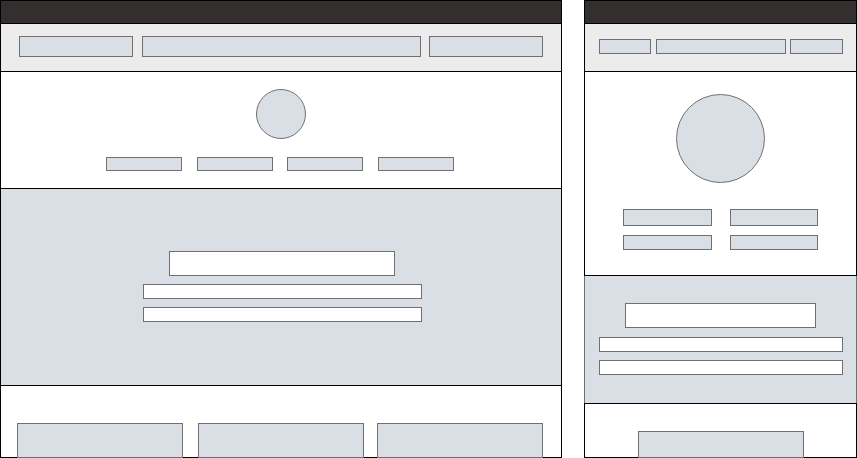
Wireframing is a vital element of the UI design process and forms one of the 5 key steps of design thinking; prototyping. Basically, wireframes are black and white templates that define the size and arrangement of UI elements on a screen. In order to keep the focus on the structure; wireframes have no colours, fonts, logos, or any other design elements.
They’re generally used early in the development process to help establish the basic structure of a webpage or application, before beginning the visual design. Usability.gov breaks it down as, “a two-dimensional illustration of a page’s interface that specifically focuses on space allocation and prioritization of content, functionalities available, and intended behaviours.”
But to put it simply, it’s a skeletal framework for a webpage. A layout that lets you depict what elements will eventually exist on that particular page or screen.
Why do they matter?
Wireframes can help you gather your ideas and functional requirements together, allowing you to see the full picture – as well as saving time. It’s easier to make composition changes at the wireframe stage rather than during the creation of the final mock-ups, when you’re likely to have lots of visual elements in play.
The main aim is to provide a visual understanding of a page early in a project, allowing you to get stakeholder and project team approval before the creative phase gets under way. Wireframes can also be used to create the global and secondary navigation to ensure the terminology and structure used for the site meets user expectations.
“A wireframe is like a blueprint in the design process that should not be skipped, just as you wouldn’t build a house without a blueprint.”1
But what effect will using a wireframe have on learners?
By utilising wireframes during the prototype stage of design-based thinking, not only will you save time and resources throughout – you’ll also be able to test whether your instructional design and learner journey helps to motivate a learner through the experience, making it frictionless.
Highlighting any major flaws this early in the development process ensures learner needs are at the forefront of everyone’s minds and makes the whole project dedicated to change – in the smallest detail. This is what a true bespoke design entails if changes to behaviour and measurable learning outcomes are to be achieved.
Design-based thinking is essential when developing learning, check out our three part series that delves into why it isn’t ‘bulls**t’. The wireframing stage generally comes once the research phase is complete, and our project team have collected sufficient information about the user’s goals and motivations.
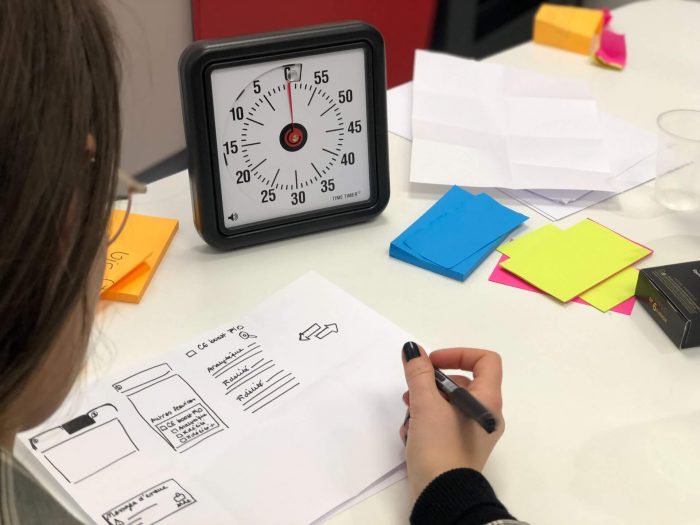
Saffron designers and developers often find that doodling whilst doing research and feeding that back to users, can help to truly understand the ‘why’ behind the functionality and flow of the page. There isn’t a hard and fast rule or fixed sequence for wireframes, but quick, low-fidelity doodles help during the early ideation stages of a project.
We often keep it simple with pen and paper drawings. Besides from being quick they can be equally as effective as digital wireframes. Rough sketches can communicate and solidify ideas, as fast as you have them. Accessible and simple, wireframes aren’t ring-fenced for designers.
But, there are also a wide range of tools and apps that make wireframing quick and easy. Balsamiq, Invison, MarvelApp, Axure, the list goes on – just find one that suits you.
Two major types of wireframes:
-
Low-Fidelity Wireframes
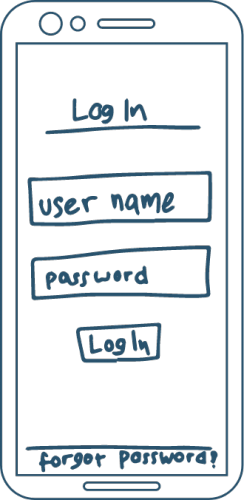
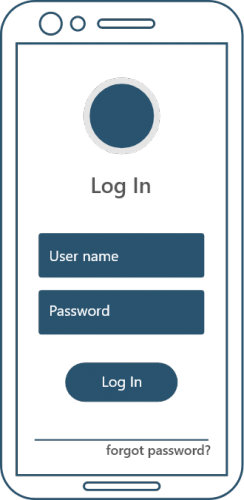
Generally, low-fidelity wireframes are black and white sketches drawn on a piece of paper. Elements of user interface are represented as squares and lines without any detail. These wireframes can help to portray an idea to developers about the general concept.
-
High-Fidelity Wireframes
High-fidelity wireframes are created using design tools or software. The main difference is that these wireframes basically look like a ready-made product with other supported elements. They can look pixel-perfect and much closer to how they would appear in the final version of the software. They’re still monochrome but utilise shading and dimensions to create elements.
How does it actually help?
First and foremost, wireframes make design changes more efficient. When designers are creating your learning’s UI design, they’re likely to spend hours agonising over each element. But you may not appreciate all this, so be open to seeing a concept rather than the full design!
At Saffron, when we start the process with wireframes, both internally and with clients, design changes can be reworked in a matter of minutes. Rather than wasting time and resources to create initial full-blown, high-fidelity designs clients and development team members can rework and approve designs, without fear of the time and cost involved in addressing design issues and clients feel actively involved in the ideation process.
What about design navigation?
One of the most important aspects in web or application design and development, is navigation. But it can be tricky for clients, designers, and even developers to evaluate navigation until they actually have an opportunity to use it.
Wireframes allow people the opportunity to test run; to see how easy or difficult it is to locate key pages; to determine whether dropdown menus clarify or confuse the user; to find out whether breadcrumbs are useful or distracting. And also importantly to address any accessibility issues.
Wireframes allow us to intuitively construct design templates, as well as:
1. Test and refine navigation
2. See the content lay out
3. Study and rapidly adjust the user interface design of web forms and interactive elements
4. Evaluate overall effectiveness of the page layout against usability best practices
5. Determine web development and programming requirements
6. Create design friendly content
In the end…
Wireframing is a key part of our design process and underlines our design-based thinking principles. Involving learner feedback and stakeholder throughout the process ensures that the learning will be a good experience and will help in embedding concepts, so that change can happen.
If you want to chat about how we can design an experience for your learners, get in touch! We’d love to talk.
Sources:

The latest on the UK skills landscape: what does learning and development need to know?
The skills landscape across the world has been facing transformation as a result of digital disruption. With COVID-19 accelerating change at an unprecedented rate, what is happening in the UK and what does it mean for learning and development?
Believe it or not it’s October, and we’ve been feeling the impacts of the coronavirus pandemic for nearly nine months. We’ve witnessed an acceleration of change across almost every industry unlike any in our recent history. From the shelves in supermarkets empty of food and hygiene essentials to the streets of all major cities and towns empty of shoppers, workers and tourists. Fast forward and we’re now entering into quarter three – shops, pubs and restaurants are back open (until 10pm at least…) and it seems most have adapted to our new normal.
But what’s happening behind the scenes in organisations across the country? With the furlough scheme ending and businesses forced to make restructures, how will the UK skills landscape emerge? What does it mean for those most likely to be effected by workplace trauma? And ultimately, how will learning and development be effected long term?
The Open University have completed their annual Business Barometer report in order to delve into the state of the current UK skills landscape; what the future might look like and how specific social, political and economic events have had an impact. It outlines where the skills gaps are likely to be and how we can combat them.
Survival of the Fittest (or most adaptable…)
Unsurprisingly, the key focus of the report was the overall impact of the coronavirus pandemic. With around 70% of businesses fearing a devastating second lockdown, it’s not a shock that over half of the pool cite cutting costs as vital to their survival. Initially, this seems like a worrying thought for learning and development within organisations, as less money overall quite possibly means less money spent on training.

This is echoed as we move through the report with 56% stating they’ve been forced to cut their training budgets due to financial fall out and the need to future-proof their businesses. But what’s most concerning is that the same percentage (56%) are also experiencing skills shortages.
Organisations have expanded their expectations from their employees and new recruits; “Adaptability and ability to learn, together with transferrable and digital skills, are priorities for large numbers of organisations who want their workforces to be ready for whatever the future holds.”. It’s unclear how organisations build resilience and lifelong learners without investing in it!
Employers acknowledge that encouraging and growing employee skillsets is likely to be a pivotal part of the rebuild. Around a third (32%) of businesses anticipate a 10% increase in investment on staff skills development moving forward. With 28% of the pool reporting they will be directly increasing staff training budgets over the coming months, choosing to upskill and develop talent in house.

At Saffron, career adaptability isn’t a new concept. We’ve been focusing on the impending workplace trauma as a result from digital disruption for some time. Working with organisations such as Nesta and the TUC, to a develop ground-breaking solution for those likely to be most effected by the post COVID-19 crisis. Nesta themselves tackle the essential emerging green economy in their Going Green report. By investing time and resources into this new area of growth and by upskilling our workforces – we can aim to create a far more stable future for those most at risk.
A lonely front for Britain’s workforce
Whilst its easy to get bogged down on the impacts of the pandemic, it certainly isn’t the only factor affecting the UK skills landscape. With Brexit a never-ending cycle of ‘will they, won’t they’, it’s easy to forget the likely skills shortage the break with our European partners will cause. One in five businesses anticipate losing talent and 43% report that they’ve found it harder to recruit workers with the skills they need, as a direct impact.
Diversity, Localised Skills Deficits and an Ageing Workforce
Diversity has always been key to achieving a versatile, far reaching and skilled workforce. But even in 2020 only 19.3% of executives and 7.9% of CEOs are women and according to research undertaken in 2019 just 3.3% of FTSE 100 chairs, CEOs and CFOs are from BAME backgrounds a figure which hasn’t changed since 2014.


In May, the world witnessed the devastating death of George Floyd. An undeniable catalyst for change, with over 67% of businesses leaders stating they are actively looking to hire candidates from more diverse backgrounds. But ultimately, the proof is in the pudding. We need to see this change followed through and more opportunities created for those with diverse backgrounds.
In addition, localised skills deficits are playing a key part in the lack of development in certain areas. It’s essential that employers are conscious of these gaps and play their part in development – whether that may be through apprenticeships or upskilling their existing workforce.
The UK’s population is ageing and so is its workforce. With advancements in health care and issues with pensions (or lack thereof) – guaranteed retirement at 60 is almost a thing of the past. Ensuring that older workers have the skills they need to keep working longer is essential. Over 34% of organisations report they have been undertaking training for their older staff, “the longer working life we all experience, coupled with increasingly rapid innovation and change, means continuous learning is now essential.”.
To recruit or upskill: are they mutually exclusive?
For businesses looking to fill skills gaps in your workforce, there’s a tricky balancing act between new recruits or upskilling the employees you have. In order to emerge into the post-pandemic world and begin your rebuild successfully, ensuring that your workforce has the tools they need to be competent and confident in their roles is essential. Investing resources into the learning and development avenues that are best placed in your business makes for a more efficient and adaptable future.
But expanding your workforce can reap huge results too. As we’ve mentioned there’s a substantially larger pool of jobseekers looking for their new role and with them, they bring new knowledge and skills that could be vital to the bounce back.
Organisations have spent upwards of £6.6 billion to plug short term skills gaps this year, with over £1.2 billion of that directly being spent on temporary staff. Whilst short term fixes are sometimes necessary, thinking long term by investing in your current workforces’ adaptability is more efficient.
Please Mind the Gap
With the UK skills landscape continuing to feel the brunt of unprecedented events, what is the key to improvement and growth? Vitally, it is businesses addressing their skills concerns and knowing how best to tackle them. As The Open University concluded, “leaders should not lose sight of the importance of developing skills to meet and overcome the challenges. […] the need to ‘grow your own’ talent has never been more pertinent.”.

But identifying these concerns and addressing them are two different things. Some of the key gaps are in areas most difficult to tackle (19% noticed gaps in soft/human skills, 34% in managerial skills and 34% in leadership skills). These are the type of skills which take time and practice to build – a precious commodity in this age. But skills acquisition can be accelerated. At Saffron we have been using the concepts of deliberate practise to significantly accelerate the acquisition of skills with a virtual mentor, Skillsbot, which utilises behavioural nudges, deliberate practice concepts and encourages the building of muscle memory.
Time – that precious commodity we talked about previously is needed to practice skills; so using point of need tools that can walk your workforce through new systems and processes will create time and remove cognitive overload to help make the time for skills acquisition.
Unsurprisingly the digital skills gap is still most worrying for businesses, “This rapidly changing environment is driving 56% of employers to say that digital skills need to be improved”. So, ensuring your workforces are up to speed with their human skills as much as the systems and tech is paramount and having ‘in the workflow learning tools’, such as Saffron eaSe to support digital skills is equally vital for an organisation’s survival.
Driving Forward
If this year has taught us anything, it’s that we really don’t know what’s around the corner. So, preparing and arming ourselves with a resilience toolkit is vital. By upskilling and allowing our workforces to increase their own adaptability, we stand to put ourselves in pretty good stead. We know that digital disruption is affecting more and more jobs every day but by investing time and resources into solutions that will positively impact our employment landscape for generations to come, we can help make a real difference.
Let’s think forward, think differently and enter 2021 stronger.
Food for thought? We’d love to chat and discuss your opinion on the future of the UK skills landscape. Book a time to speak with one of our consultants here.

Saffron Interactive Secures 13th Consecutive Year of LPI Accreditation
Saffron Interactive has received accreditation as approved Learning Technologies Provider from the Learning and Performance Institute (LPI), for the 13th year running.
Saffron is thrilled to have affirmed their position as a key industry thought leader and trusted advisor to organisations that seek game changing learning, bespoke solutions and measurable results.
2020 has been a notable year for Saffron, with consistent recognition from across the industry, alongside celebrating Saffron’s 20th anniversary. Accolades include receiving silver in the International eLearning Awards ‘Mobile Learning Category’ for developing leading luxury goods conglomerate Richemont’s ‘The Right Choice’ programme; to being shortlisted for three categories at the 2020 Learning Technologies awards – with winners still to be announced.
Ed Monk, CEO of the Learning and Performance Institute stated, “Saffron’s achievement here demonstrates their unwavering commitment and ground-breaking approach to both learning technology and the people it reaches. The LPI is proud to accredit Saffron for the 13th year, and I congratulate Noorie and the team on this momentous achievement.”
Consistently receiving LPI accreditation solidifies Saffron’s twenty-year history of developing cutting edge technology and solutions that are proven to ease cognitive stress, improve performance and engender a learning culture within organisations.
“We are thrilled to have been recognised once again by the LPI and awarded our accreditation for the 13th consecutive year,” states Noorie Sazen, CEO. “As industry thought leaders and pioneers of learning technologies since our inception in 2000, our bespoke digital tools provide real performance metrics, create behaviour changing outcomes and accelerate skills acquisition, building on transferable skills.”
Jim Parish, the accreditor for Saffron said, “With the digital landscape changing so rapidly, organisations need to provide their workforces with new, adaptable and flexible skill sets in order to meet the new demands of clients and markets. Saffron Interactive have truly stepped up to the plate and pioneered solutions to these new demands and challenges in learning. Providing their clients with the service and products that really do exceed the expectations of this new world environment.”
For any more information on LPI and their accreditation process, click here.


Why keyboard-only testing is important for web accessibility
How can developers embed equality of access into their web and learning resource design? Saffron’s very own Nabin Purja digs into the overlooked topic.
The web development industry isn’t lacking in online resources. But, it’s critically bare when it comes to practical guidance on web accessibility. While it’s not hard to find typical accessibility standards and guidelines, it’s not a topic that’s widely exposed or explored in online coding courses – no matter how skilled the learners are. This is indicative of one of the main reasons why the standards are not followed.
Accessibility can cover a wide range of issues and with over 7.15 million people with learning disabilities in the UK, this isn’t something that can be put on the back-burner. We need to be aware of not alienating this vital audience. But it’s also important to consider it from all user experiences because thinking about accessibility actually makes the user experience for everyone, better.
When considering web accessibility, developers often only cater for visual impairment and often overlook the many people who are unable to use a mouse, due to various conditions including motor and dexterity impairment and who rely on the keyboard in order to interact and navigate. This is a requirement to meet the Level A (minimum) standard of WCAG guidelines.
As a developer, the first step to solving this is a simple process of keyboard-only testing. Here’s how to get started.

Testing keyboard-only navigation
Running out tests to see if a website is navigable with a keyboard is simple. The essential keyboard commands are:
- Tab – navigate to the next focusable element
- Shift+Tab – navigate back to the previous focusable element
- Enter or Spacebar – activate the currently focused element
There are other commands required for different interactions such as checkbox and dropdown but for now, let’s focus primarily on navigating buttons.
Click on the link below to view a simple demo that will allow you to try out navigating into different elements. You’ll notice that the mouse cursor is not visible when trying to point your mouse into these elements.
When navigating using the tab key you’ll be able to see a highlight border style around the link elements, this is the focus indicator to let the user know which element is currently selected. Only one element can be focused on at a time, the two buttons after the links had no representation of being selected. When we face this kind of scenario, it’s difficult to know where we are and how to progress. This type of issue is very common because often the focus indicator is removed for aesthetic reasons.
Providing better focus indicators and implementing custom focus styles
To prevent the elimination of focus styling, the best practice is to implement custom focus styles. Not only does this improve the accessibility experience, but it also allows us to have consistent styling across browsers whilst also staying within the branding guidelines. The requirement for the custom focus style is to make it stand out with the use of a thick outline and higher contrast colour.
Check out GOV.UK Design System to see how the focus styling is handled by GOV.UK.
Use ‘What Input’ JavaScript library
Even with custom focus styles, designers and developers might still have the urge to remove them. One way to overcome this whilst keeping the accessibility feature intact is to have the focus styles only visible if the focus comes from a keyboard. ‘What Input’ is a JavaScript library that detects the current input method (mouse, keyboard or touch). This library makes it safe to remove the focus styles for mobile users, whilst ensuring that each user gets the right accessibility tools that they need for their personal user experience.
[data-whatintent='mouse'] *:focus {
    outline: none;
}
Understanding what’s focusable
Poorly structured HTML is another reason for keyboard incompatibility. The key aspect of focus is to be clear that all interactive elements must be focusable and non-interactive elements must not be focusable. By default, the focusable elements are links, buttons, form fields and the like. But is possible to make a non-interactive element to receive focus by adding the tabindex attribute.
Non-interactive elements shouldn’t be focusable
In most cases, adding tabindex in elements such as a container, is not required. It is a common misconception that adding this attribute is needed for screen readers to announce the desired text.

Use native elements
Aside from the button element, a typical method to create an interactive button is to use a div element. But, for it to be accessible as a button, the following is necessary:
- provide
tabindexto make it focusable - assign
role="button" - include an
onKeyPressevent handler to make sure the - click fires on ‘Enter’ keypress
This indicates why it’s recommended to stick with native elements as much as possible. Otherwise, you’ll have to do extra work, whilst potentially risking accessibility for many of your users.
Considerations for keyboard testing
There’s no need for a specific environment or any tools required for validating keyboard accessibility. Checking out other websites with keyboard-only navigation can give some helpful insights. These are the main things you’ll want to consider when running a keyboard accessibility test:
- Check that the focus order is intuitive and logical
- Ensure all focusable elements have an obvious focus style
- Ensure that all interactive elements are functional with keyboard only
- Ensure that focus is never trapped

Making the web a more accessible place
For many, accessing the internet in an easy, logical and usable way can offer freedom that most of us take for granted. By forgetting, or simply ignoring access needs you are potentially making life harder for millions of people, and not just those that have a disability. Becoming aware of the changes you need to make and increasing the inclusivity of your website or platforms can improve UX as well as UI for all users.
Whilst extra coding and elements that don’t necessarily fit the overall aesthetic of a project can feel cumbersome, failure to adhere to all web accessibility guidelines can be hugely detrimental. Research carried out by the ‘Click Away Pound’ in 2019 shows that 69% of users with access needs will click away from websites with a difficult user experience. Ensuring users stay on your work of art, is surely a thing to strive for!
Here at Saffron, we’re hot on Total Quality Management (TQM). We want to ensure and maintain the highest level of quality for all of our users, and with the entire Saffron team responsible for quality assurance from end-to-end we can all hold each other accountable.
Accessibility testing is a key part of our process. Ensuring we develop best practices, have the tools to implement it and the steps to make it most effective – means that all our projects will not only meet, but exceed the guidelines and our clients’ expectations.
Give us a shout to find out more about accessibility and how we can help all your learners get the best learning experience.


Challenges and solutions of transitioning a workforce to remote working
In the current COVID-19 pandemic, almost all businesses were forced to quickly transition their operations into a ‘work from home’ remote working format. This can be an easy or difficult task, depending on how prepared you are and whether you’ve previously fostered a work from home culture.
To make the transition to working from home successful for your business it isn’t just about the hardware and software. Whilst these set up employees for security and enablement purposes, as many offices continue working from home practices in the long run, there are other considerations that may need focus. These are:
- Expectations and policy
- Trust
- Communication
- Point of Need Tools and Productivity
- Hiring
- Security
Expectations and policy
It’s vital that you define to all employees what your expectations of them are from the offset. They need to clearly understand company policy on working remotely. Policies will differ from company to company however in general they should include:
- Hours of availability – Will office specific hours be enforced, or will hours be more flexible?
- Tools – Which tools will teams be using as a standard and how can they be set up?
- Data management – Which tools will teams be using to securely organize, share and collaboratively work on projects?
- Data security – What policies must employees abide by to ensure all data protection laws are adhered to?
- Productivity – How will teams keep track of each other’s progress and measure results?
The appropriate divide between work and personal life can become a lot harder to maintain in a remote working environment. By defining clear policies and expectations you can avoid confusion and ensure your employees work as efficiently as possible within their work hours.

Trust
Operating as a remote workforce requires a different mindset to when in the office. Good communication is vital and should be at the forefront of everyone’s mind, but the leadership must ensure they trust their employees in their decision making. The quid pro quo, is that individuals must be held accountable for their own actions and results.
Communication
Communication is important within an office setting however it becomes much more essential when remote working. Managers who provide regular feedback to each member of their team will be more successful and gain more from their employees than those who don’t. When not in office it’s very easy for an employee to lose sight of an organisations objectives and how their work is affecting the bigger picture. Regular meetings with managers can combat this by reinforcing the end goals and linking task progress, accomplishments to the bigger picture.
In addition, it is important to ask the right questions. Communication must be consistent and foster a culture where employees feel heard, accountable and remain productive. Enquiries should be intentional and clear enough to elicit a direct and meaningful response. This will allow issues to be resolved in the fastest time possible.
Communication and Organisation Tools
Workflows can quickly be interrupted when the correct tools are not in place. Video conferencing software, a real time messaging app, a collaborative project management tool and shared document platforms are essential and should be available to all.
Some of the most popular video conferencing software such as Teams, Zoom and Cisco Webex aim to provide their own unique experience but in general they all provide online video and audio communication between multiple parties. They give the host options to modify specifications, invite guests to meetings, offer screen sharing and the ability to chat within individual virtual rooms and recording capabilities.
Finding a project management tool that integrates well with all your company processes and suits all your needs can be hard. Some of the best in the industry are ClickUp, Wrike and Asana. Atlassian JIRA is another project management tool that is trusted by over 65,000 teams worldwide and is supported by Saffron Ease.
Many people are familiar with using file sharing services for personal reasons. This means it’s not a difficult task to bring a workforce up to speed on file sharing for business. The top business file sharing solutions involve Google Drive, OneHub and Microsoft One Drive.
Point of Need Tools and Productivity
As digital transformation gathers pace at many companies, working remotely and going through transformation can be challenging. Twinned with falling productivity, which has been a global issue for a number of years, the economic or competitive benefits that a company is seeking from digital transformation may never be fulfilled. Worse still, if adoption of the new systems are met with friction from employees, productivity levels may drop even further. This is where point of need tools can act as a great line of support.
Tools such as Saffron Ease provide performance support guiding employees through any application or new process. The assistance is context relevant and in real-time and need for helpdesk support is reduced. Saffron Ease can be expanded to support a whole host of software through easy content creation and updates. It exists as a desktop application, web client and is supported on mobile.
Using Point of need tools and similar workflow learning support is important to maintaining productivity when working remotely. Given that it’s difficult for managers to offer personal help, having systems in place that offer support just at the point of need means that uptake of systems is rapid and easily maintained. This prevents workers becoming demotivated or stressed when dealing with new systems or processes and ensuring that time is spent on more lucrative, interesting and collaborative activities that push the strategic imperatives – rather than the tactical.
You can learn more about Point of need tools and their capability to transform learning potential here – they’re going to be key for beating the economic squeeze businesses are facing.

Hiring
In a remote situation hiring cannot be kept at a standstill. Hiring strategies and methods must be revised to ensure success. An emphasis should be placed on enquiring about candidate’s soft skills such as self-motivation and communication, as these will be more valuable than ever when working from home. The onboarding and training process must also be reviewed and adjusted if needed. Completing a remote onboarding and induction brings a whole new set of challenges for a new starter. It is imperative that the same level of professionalism, competence and welcoming behavior be demonstrated by the company as would be in the office.
Security
Working outside of the office brings about a whole new set of risks. Virtual Private Networks should be used when accessing public networks and robust passwords managers should be employed to manage passwords. A clear and defined information data policy must be enforced that defines what can be accessed and what this data can be used for.
Work environments can be managed and controlled much more easily if employees are working on standardized company distributed devices. The allowance of work on personal machines varies from company to company, however it requires a lot more time and resource to manage compared to the former.
Focusing on all of the above points will ensure your company’s, as well as client data remains as protected as can be.
Conclusion
A company’s work from home procedures, setup and policies will be unique to the way they operate but by paying attention to the above areas you will be in a good position to operate as successfully in a remote working environment as you do in the office.
Want to master the changing digital workspace? Get in touch and we can talk it out.

What can barnacle geese teach us about workplace learning?
What do a certain species of Arctic Goose and the typical office worker have in common? They both develop skills best while in the workflow.
In order to leave the nest for the first time, day-old barnacle goslings must make a jump of several hundred feet, attempting feebly to flap their wings. As they continue to attempt flight throughout the first stages of their life, the muscles in their wings grow until they are strong enough to achieve lift-off. Because barnacle geese nest on cliff ledges and have no choice but to acquire flight skills through experience, they are quick to pick up the skills to thrive.
Alternatively, the Aldabra Rail lives exclusively on the Aldabra islands in the Seychelles. This sub-species emerged when White-Throated Rails landed on the Aldabra and found that there were no predators on the island so they were able to nest on the ground, removing the need for the rails to build flying experience. This lack of experience meant that the Aldabra Rail evolved to become flightless, developing stronger ankles and weaker wings, then went extinct after the islands flooded and exterminated all terrestrial life. Even though the rails arrived with the physical ability to fly, lack of experience led to the loss of the skill.

Opportunity for experience
You may be wondering how this deep dive into natural history is relevant to elearning, but we can look to the Barnacle Goose and the Aldabra Rail for an example of how learners rely on opportunities for experience to acquire and maintain skills. Workflow learning tools, in contrast to formal training sessions, make learning an ongoing habit through rapid experience building. A barnacle goose could demonstrate flying techniques to her goslings in formal training sessions for years, but until they try jumping for themselves, their wing muscles won’t develop. Similarly, workflow learning is about embedding certain skills into muscle memory by giving learners experience applying their learning without disrupting their normal flow of work.
In addition to accelerated experience building, workflow learning tools allow skills training to occur instantaneously at employees’ moments of need. Sporadic sessions of formal training won’t always cut it in an age where many of us have 24-hour access to information and guidance via a quick Google search, so businesses need to re-think training if they want to keep up. The internet is a minefield of conflicting and questionable webpages, but it’s convenience as a lightning-fast route to information on any topic means that workers are quick to fire it up when they need immediate assistance. Workflow learning provides high quality skills training and resources to employees in a way which mirrors the on-demand nature of a Google search.

The reality of workflow learning
Here’s an example of a workflow learning tool in action: an employee working on a helpdesk is thrown a curveball in the form of an unusual complaint from a customer, the employee needs to know how to handle the complaint in-keeping with company policy, and they need the information now. The learning tool would pop up with guidance on how to proceed, not only offering assistance but also providing the employee with on the job experience of handling the situation correctly.
Or perhaps a new employee is sending an email to a client and is unsure of the appropriate phrasing and tone to use? Or maybe a worker is struggling with some unfamiliar software and could use some guidance? Workflow tools like Saffron eaSe overlay your business’ online systems with visual clues and training to automatize the skills employees need to excel in the workplace. By replicating muscle memory, Saffron eaSe delivers on-the-job training at the worker’s point of need, encouraging ongoing, habitual learning.
As is the case of the Barnacle Geese and the Aldabra Rail, as the world evolves workplace training will need to evolve with it. Just as birds don’t develop wing muscles by sitting in the nest, if you want your employees to continually strengthen their skillset, the best approach is constant experience building and workflow tools that seamlessly blend these learning experiences into the working day.

Want to chat late into night about Barnacle Geese, workflow learning, and speeding up your skills? Get in touch and we might be able to help.


Saffron Interactive’s contribution to the Grant Thornton survey of the digital training landscape
Read the cutting edge digest on trends to look out for in learning and development
Grant Thornton are one of the leading professional services and consultancy firms operating in the UK. They’ve conducted a survey of the eLearning and digital training landscape, titled ‘eLearning – navigating a thriving tomorrow’. They consulted with Saffron’s director Noorie Sazen to get an expert insight on the future of training.
Investment in digital learning is to be one of the most important decisions businesses will be making to secure themselves over the coming years. Often it’s been high performing businesses that have done so, with many others relying on outmoded methods of training and develoment. However, the acceleration of digital transformation brought about by CV19 has upended this impasse. Now, businesses are coming to need skills transformations to successfully navigate out of lockdown. This makes Grant Thornton’s survey of the most cutting edge training providers and methodologies very timely.
Click here to read the paper and come to your own conclusions.

Can Coronavirus drive behavior change? Part 1: The Environment and Global Warming | Insights for Learning and Development
As the UK begins to emerge from lockdown, Saffron asks if the global crisis is enough to make us change our ways when it comes to the environment. What is it that drives our behaviours and makes us creatures of habit – even to our own destruction? And finally: how do these findings give us insight on how behaviour change can be addressed in developing learning solutions?
Our lives have been altered in ways we couldn’t have imagined. The global Coronavirus crisis has changed the course of human behaviour abruptly, and nobody is sure when things will return to normal – or what normal might become. That’s not news to you. But have you considered the impact that Coronavirus is having on the world around us?
Despite the pleasing symbolism of trees acting like lungs, plants can’t get the coronavirus. And neither can geological features, or most animals. Yet all these things are being dramatically affected – indirectly. Why is that? Because of how we, as humans, have changed our behaviour. Much of the world’s economy is based on trade, travel, and consumption.
Now that our recreational and economic activities have paused, environmental damage has dropped rapidly. An unexpected blessing from the trauma of lockdown. It begs the question, is it possible to continue this positive trend? Or will we return to our old ways without even a blink? And how can you evaluate whether a behaviour has actually changed, as opposed to being temporarily altered?
The difference lockdown has made
The true effects of lockdown are hard to measure right now, given that they’ve only been in effect for a few months. That seems like a long time when you’re stuck inside, but it’s relatively brief from an ecological or behavioural perspective. However, there are already strong signs that the change in our behaviour is making an impact. China saw the first changes, with CO2 levels dropping up to 25% in February. After accounting for other major economies in India, Europe, and America analysis suggests ‘the pandemic could cause emissions cuts this year in the region of 2,000m tonnes of CO2’.
The effect of this reduction in emissions is a slowing down of global warming. CO2 creates a rise in global temperatures that will become disastrously irreversible after a certain point. So far, it’s been estimated that the impact of our Corona-driven behaviour change will cut emissions by 5.5% (of 2019’s total). However, scientists say we need a 7.5% reduction year on year to remain within the safe margin.
What have been the behaviour changes behind the current drop? Foremost is a reduction in travel. Moreover, by closing places of work as well as restaurants and bars, demand for electricity has gone down. People are staying in and cooking rather than dining out, they’re meeting friends virtually, they’re sticking to their local areas. And most importantly, large corporations are having to pause their large-scale operations. These are the major drivers of pollution.
How to make change stick
At Saffron, we’re not new to behaviour change. In fact, it’s part of our core mission; we create positive transformations in organisations and people. So, while we can’t quite step in and solve the problem of climate change, we can share some approaches worth considering.
Our Senior Instructional Designer and Project Lead Isabella wrote about the five steps to achieving the behaviour change necessary for technical compliance. She was referring to issues like GDPR, but her five key points are universally valid. More recently Sales Executive Georgina went into detail on how digital banks are disrupting well established consumer behaviours. Both articles showcase different approaches in creating behavioural changes that go against the grain of one habit in exchange for another.
How it really happened
To make themselves safe, the general public has responded surprisingly fast with deep behavioural changes. Over 85% have reported to have adapted to the new behaviours prescribed by the Government. It’s worth noting that only 37% felt that others around them in public had made behaviour changes. This may be an important factor in making changes permanent.
But we can be fickle creatures. We don’t always act in our best interests – unfortunately, our brains are not wired up to act based on long term rewards. This is why we have so far failed to combat climate change, and why we find it hard to stick to resolutions. There’s a myriad of potential reasons for this. Some researchers think it’s to do with our brains evolving to evaluate patterns based on past experience. Others attribute it to a behavioural economy model called hyperbolic discounting. This is the phenomenon that would drive you to take £50 upfront rather than £100 in a months time.
However, there is evidence that we can adopt behavioural change. This can be seen in the long term adoption of hygienic measures after past influenza outbreaks, or support for energy saving measures after global warming induced flooding.
But these changes were in direct response to an antagonizing issue. It’s a much bigger ask to expect people to maintain a behaviour change driven by one issue (Coronavirus) to solve another (climate change). Moreover, ‘research shows that positive change generally dwindles over time’. The way to make these changes stick is subject to debate. Some say that a collectivist approach based on a shared sense of purpose is essential to entrenched behaviour change. Others posit that a strong, authority led response is most vital.

Learning Behaviours
The behaviour acquisition discussed so far clearly shows mixed results. Applying blunt pressure to the complex nature of human cognition tends to show this sort of outcome. Given that behaviour change is our remit at Saffron, we’ve spent two decades developing a range of subtle and complex methods to achieve lasting behavior transformation.
From the richly featured platform created for AVA to train users to spot abuse and react appropriately to the award winning Bribery Act Challenge course featuring immersive gamification, the solutions we’ve created have been able to create lasting change, without having to rely on carrot and stick methods. Techniques such as narrative immersion and storytelling, psychological constructs including colour modelling and the fun theory are some of the simpler ways to create compelling engagement. We’ve lectured on the interplay of graphics and nudge theory in creating behaviour change, and critically evaluated techniques such as micro-learning. This doesn’t even scratch the surface, but it should give you an idea of how constant research and development into cognitive and psychological theory is vital to reliably sustain changed behaviour.
Conclusion
Ultimately, it’s going to take a monumental effort to transform social and economic behaviour enough to combat climate change and safeguard the environment. It will take effort from the individual, government, and private organisations. Hopefully, this crisis will be the shock needed to show just how easily our delicate society can unravel. It’s been said that the Coronavirus is the tip of the iceberg compared to the looming ecological disaster. However, if we’re able to prioritise behaviour change in our private and working lives, there might be a glimmer of hope.
In the next part of this series on behaviour change, we’ll be looking at just how everyone is going to act when returning to work. What changes are planned, what are needed, and how long will they be needed for. And most importantly – how to make them happen.
Want to go deeper about changing behaviour to improve performance? Get in touch and we might be able to help.


Putting the designer back in design thinking
“Design is as much a matter of finding problems as it is solving them.” – Professor Bryan Lawson, architect and psychologist
If you’ve read the first two parts of this blog series (which I highly recommend), you’ll be familiar with the pros and cons of design thinking (cheers, Gabi) and with a whole host of successful examples of design thinking (muchas gracias, Rosie). In this third instalment, I’ll look at how you do it: how to implement design thinking to achieve your desired outcomes.
As Gabi noted, Natasha Jen persuasively criticises the dilution of the term ‘design thinking’ to essentially refer to a pretty diagram such as the one below with its straight-forward, checklist-style appeal. This doesn’t reflect or encourage the hard work, innovative thinking and, most importantly, collective and constructive criticism that should be taking place at each of these hexagonal checkpoints. These core principles of any good designer’s work have slipped away from the concept of design thinking.
So buckle up. We’re going to put them back in. We’ll walk through today’s often over-simplified design thinking process and consider how you can apply design thinking in a meaningful and ultimately successful way.

Empathise
Step 1: probably the most iconic phase of design thinking, the one it’s most famous for.
This is the stage where, instead of jumping straight into fixing the problem that’s been raised (say, employees aren’t adopting a new system very well), you take a step back to consider what the problem actually is and if the solution you’ve been asked to provide (say, more elearning to train employees on using the new system) is really going to fix it. It’s the stage at which you consciously work to empathise with end users, putting yourself in their shoes to uncover what the true barriers are. This Barrier Identification Tool (BIT) is a good place to start when considering what different types of barriers could be involved.
There’s a whole host of ways in which you could approach this step – focus groups, shadowing, questionnaires, following the end user’s journey yourself. Whatever method you choose, the difficulty lies in asking the right questions, in the right way. You don’t want to ask closed or biased questions which unintentionally lead your audience to a pre-conceived answer. For example, if you ask employees how they think the training on the new system can be improved, you’re making an assumption that there’s something wrong with the training.
Instead, the aim is to pose open, unbiased questions that leave room for the audience to raise issues you may not anticipate so you can uncover what current users are truly experiencing. Using this method, you might discover that employees aren’t failing to adopt the new system because they haven’t been provided with good quality training; instead, the problem is that they don’t have time to take this training in their working day. Or that the training itself does not reflect their reality. Apart from asking the right questions, you have to consider when you do get the response what the biases and perspectives of the group are already and do they represent the target audience accurately in terms of age, gender, geographical location, role etc? What if any data analytics do you have to support your hypothesis and is this then borne out in the responses you receive from the focus group?
It is essentially evidence-based design.
Define
Now that you’ve empathised with end users and worked out what the real barriers to success are, you can get on with working out how to fix it, right? Not so fast, my friend. After investigating the sources of the problem, any good design team will take a moment (really, much more than a moment) to pause and reflect on what you learned from step 1. To make sure step 1 isn’t just ticked off and then completely forgotten as you progress through the project, you need to define the problem based on its findings.
Taking the time to commit this to paper, typically using a Theory of Change model document, forces you to accurately and specifically describe what the problem is and what your desired outputs and outcomes are. This process helps identify any gaps or confusions in your understanding of the problem. If any are identified, you can go back to end users for clarification before design work begins.
This step is crucial to ensuring that the important work of step 1 remains centre stage throughout the project: defining its goals and then leading your thinking and decision-making so your end solution hits the mark.
Ideate
Thanks to step 2, you know where you’re starting from (what the problem is) and where you’re going (what goals your solution needs to achieve). Now you need to work out how to get there: you’re ready to start considering what the solution might look like.
Initially, you want to generate as many ideas as possible: the more out-of-the-box,the better. So, get your project team together, and, ideally, individuals outside the team who could give some good contributions.
Brainstorm together. Use post-it-notes, a whiteboard, a digital ideas board, whatever works best, to build up a messy web of ideas, some fully fledged visions, some just passing thoughts. From this broad base, you can then start to narrow down and construct a solution.
Prototype
Once you’ve identified the most-promising ideas to address the problem, you can prototype these. The purpose of this is to be sure that your proposed solution really is going to fix the identified problem before you invest time and resources into developing and implementing it in full. Hence, you develop an indicative, low-cost version of the solution. This allows you to test something tangible and collect results which can inform any amendments or significant redesigns of the solution.
Your prototype may not cover all elements of the solution but even testing parts of it is likely to highlight any major flaws. For example, if your solution is an adapted app-based training course, you might want to develop a content outline and a wireframe of mobile-first digital layouts before writing and developing the course in full.
Testing a prototype with a sample group of end-users will allow you to reconnect and empathise with them once again to see how far the solution really goes to overcoming those barriers.
Test
Once you’ve done your prototyping testing, perhaps going back to the ideating phase and prototyping again if needed, and are confident the solution is going to work, it’s time to develop the solution in full and test the real thing. Testing and evaluation to see whether the solution will actually achieve the desired outcomes is a topic in itself and will be the subject of another blog! But ideally comparator groups and quantitative and qualitative methods are all desirable. This then leads to a re-iteration of the cycle again to refine the solution.

Challenge
And finally, the most important step that runs through the entire design thinking process: constructive criticism.
Everything you do throughout the process should be shared amongst a group of peers. We all know how much a single fresh pair of eyes can help when you’ve dug yourself into a bit of a hole with a piece of work. Well imagine what several fresh pairs of eyes can achieve before you’ve even got into the hole. The more peers you share and discuss your work and thinking with, the more viewpoints you will get to inform your thinking. Each question that’s asked is an opportunity to ensure your end solution is the best it can be.
To conclude
The designer is clearly the maker or breaker of a behaviour-led design solution. At Saffron, we have been using this approach for decades and that’s why our solutions always make a positive impact and lead to performance improvement that is quantifiable. This is a longer process than banging out a rapid course, but then, the results speak for themselves
Each step follows on from the last but also feeds back into it, revising and refocusing your thinking and design as you mould your solution to perfectly target and resolve the real problems at hand.

Wondering how to address your issues with design thinking? Get in touch and we can help out.

Saffron and Richemont secure Silver in International Elearning Awards ‘Mobile Learning Category’
Saffron Interactive’s innovative ‘The Right Choice’ program for leading luxury goods conglomerate Richemont has been chosen for excellence in the Business Mobile Learning Category.
Richemont came to Saffron with a simple but important request: How can an organisation become resilient in the face of breaches in information security? This was the question they were working towards answering as part of their blended ‘Be Aware, Be Secure’ programme. They were looking for a short and engaging piece of training that would build consistent knowledge, engagement, and ambassadorship across all Richemont’s Maisons.
Employees are the first line of defence for information security at Richemont and its luxury brands, and Richemont wanted to equip them with the tools they need. The resulting 10-minute intervention presented employees with quick-fire, gamified decisions to cultivate a mindset of “I am responsible for security” and “I can learn and share”. Learners can earn points as they learn and play, including bonus rounds and hot streaks. The game uses familiar characters from Richemont’s wider creative security ‘Be Aware Be Secure’ programme, tying it in with the wider narrative that has developed around security.
Saffron Interactive’s director Noorie remarked “We’re extremely pleased to have our work recognised again by the IELA for its quality and record of success. We’ve been pioneers of mobile learning technology ever since we developed our first mobile course back in 2004, so we are confident in being able to get not only a great UI and UX experience, but be able to use our insights in learner behaviour to achieve results.”
By taking a bespoke approach that planned the learning intervention precisely around Richemont’s unique needs and circumstances, Saffron was able to make learners feel responsible for information security and equip them with the skills to confidently deal with any scenario they might come across. The mobile learning aspect prized by the IELA was particularly important for both embedding new practises and habits into learners, but also tracking and evaluating the success of the training.
Ringing endorsement
Florence Dambricourt, Richemont’s Security Awareness Manager, said “Tips on Security are based on common sense and most of the times pieces of information we all already have. Still, we forgot them or failed to put them into action. Making “The Right Choice” was about revamping our approach to create a new wave of curiosity and engagement. Kind of make “novel” known information. And it works.”
Monika Marano, Richemont Digital Learning Specialist, added “In current times, the perception of learning has rapidly evolved thanks to the rise of new technology. We can learn pretty much anything, anywhere, anytime, straight from a smartphone. “The Right Choice” is the perfect example to highlight that learning can be fun, mobile friendly, and aesthetically appealing!”.

Investigating the gender skills gap
You might be familiar with the skills gap. But who is it affecting most? The time is ripe for an investigation into the gender skills gap – find out how inequity is eroding training prospects in the office.
When was the last time you learnt a new workplace skill? Skills gap stats would suggest not very recently. Think tank McKinsey suggests that by 2030, 20% of the global workforce will be under-skilled for their jobs, plus up to one-third of work activities could be displaced forcing up to 375 million workers into new roles. Not to mention, in 2019 the CBI estimated that companies are losing around £63bn a year due to the lack of skills.
You may be wondering what these magical skills that we should be learning actually are? Well, unsurprisingly, digital tools and data literacy are top of the list. According to a 2017 study by the Brookings Institution, the use of digital tools has increased in 517 of 545 occupations since 2002 in the United States alone, with a striking upward trend in many lower-skilled occupations.
A report from the Financial Times shows a similar trend, claiming that just over half the UK population possess the digital skills required at work. A Forbes report concurs that data literacy and digital skills are the most important personal assets of the 2020 workplace.
So, it’s clear: the skills gap is a problem for both employers and employees, but what might not be so obvious is how the digital skills gap is disproportionately punishing women.
How does it affect women?
On average, women are gaining more qualifications than men, out-perform male students in their school examinations and, according to an unpublished NIACE study, are more likely to participate in adult learning than men. So why are women so underrepresented in jobs that utilise digital and data competency skills? To put it another way: women are doing so much learning, so why aren’t they learning the skills the workplace needs?
The resounding answer seems to be a lack of access to training in these specific IT and technology skills. However, there appears to be a spectrum of forms that this barrier can take.
On a physical level, less women have access to technology than men. Globally, the proportion of men using the internet in 2017 was 12 percent higher than women. Furthermore, a report from the Organisation for Economic Co-operation and Development found that there are 200 million fewer women than men who own a mobile phone. If women don’t have access to the tools needed to learn digital skills, it seems obvious that they will be harder hit by the skills gap.
What does this mean for the workplace?
Yet women who have access to technology and the internet have also demonstrated a lack of access to training in digital skills. Although women complete more apprenticeships and internships than men, men are more likely to be offered the longer apprenticeship schemes (a duration of 1 year or more) which are available in engineering and construction sectors. This leads to occupational segregation, as the male apprentices have a dramatically enhanced opportunity to develop skills needed for higher-level roles. This pattern continues to play out further down the line. In 2018, the Social Mobility Commission revealed that adult training is often only available for workers who are already highly paid or highly skilled.
Here would be a good time to draw attention to the widely quoted statistic from a Hewlett Packard internal report which states that men apply for a job when they meet only 60% of the qualifications, but women apply only if they meet 100% of them. This is supported by research which established that women remain working at a level below their competence due to social, structural or personal factors.
Combined with the increased opportunities that come with longer apprenticeships, this principle demonstrates the reality of a skills gap in engineering, construction and other IT and technology based roles which is heavily stacked in favour of men.
At this point, sceptics may point to the decreasing numbers of female students studying STEM subjects, claiming that with less women studying subjects which heavily utilise digital and data handling skills, it is inevitable that male students will be over-represented in internships and job roles where these skills are needed.

Deeply rooted causes
We might wonder why, when these skills are in such high demand, a study by PwC found that the number of females choosing STEM subjects at GCSE level dropped by 20,000 in 2018. According to a Stanford University study, the answer is in stereotyping and lack of representation. Alison Wynn surveyed 200 female cybersecurity professionals in the U.S. and the UK and found that gender stereotypes play a large role in discouraging women from pursuing a career in tech. When asked to rank skills needed for their job roles:
‘The female cybersecurity professionals surveyed ranked creativity and collaboration in the top five skills needed to thrive in the industry, alongside data analytics, analytical thinking and technical skills. Communicating the range of skills needed to thrive is paramount for successfully recruiting women, with 43% of survey respondents saying a lack of industry awareness is causing the cybersecurity skills gap.’
But does it really matter if there are less women in STEM or women aren’t being taught digital skills? Surely it doesn’t matter if these jobs are largely done by men? Turns out – it does.
A recent study by PwC and the Crowdfunding Institute showed that campaigns led by women across the world in 2015 and 2016 were 32% more successful than those led by men across a wide range of sectors, geography and cultures. This is supported by SHL research which recently found that women are substantially more likely to outperform men in 21 out of 27 leadership competency challenges
This has been demonstrated economically too; Kauffman Foundation research shows that tech companies led by women achieve a 35% higher return on investment than firms led by men and Forbes found that women tech entrepreneurs, despite having received 50% less venture capital funding, produce 20% higher revenues than their male equivalent.
To top it all off, a recent study by Nominet revealed that the UK economy could be boosted by a total of £2.6 billion a year if women were more involved in tech-based roles.

Solutions
So, we have established that the gendered digital skills gap punishes both employee, employer and the economy as a whole. But what can we do about it?
To manage the gradual transition into an online workplace, employers need to take responsibility to re-skill, up-skill and job transition their workforce by opening up digital and data skills training and development to a wider candidate base. Prioritising investment in women appears to be the key to closing the digital skills gap, and there’s no time to lose. Online training is vital for up-skilling, therefore businesses aiming to reap the benefits of up-skilling female employees should be investigating the possibility of providing their employees with bespoke online training with demonstrable results. Manufacturing firms should prioritise providing the (largely female) workforce of administrators working in manufacturing with relevant and practical digital skills training. Additionally, technology companies can close the skills gap by offering female employees, apprentices or students leadership training, bespoke to their business to accelerate their progression through the company.
Representation from the top-down is vital. Women currently hold just 5% of senior tech positions whereas they occupy over 20% of positions further down in the hierarchy. Those responsible for recruiting should ensure that women are interviewed for higher level positions as putting more women in leadership roles can help businesses to better understand how to recruit women, in addition to offering inspiration for young women who might consider a career in tech. Unconscious bias training is a hugely beneficial tool for anyone whose job involves recruitment, and online bias training tailored specifically to a business would inject recruitment decisions with objectivity and clarity, accelerate the closure of the skills gap and bring in more money for the business as a whole.
Women are being hit the hardest when it comes to the problem of the digital skills gap, but they may also be the most effective solution to closing it.
Keen to overcome the skills gap in your workplace? Get in touch and we can address it before it’s too late.

The new normal: Onboarding from your sofa
Starting a new job can be exciting and daunting in equal measure. But what about starting a new role in lockdown? How has this rite of passage changed?
Making the round of introductions – learning how to use the coffee machine – getting the hang of the filing systems. The banal realities of beginning your new role. But what happens when you must complete this process virtually? Granted, it makes learning the coffee machine easier as you’re probably quite familiar with the one in your kitchen already. But what is it like to learn a new way of working, and get acquainted with new colleagues without ever seeing them face to face?
This might be old hat to the freelancers, contractors, and digital nomads of this world. But for the vast majority of workers who aren’t au fait with flighty millennial working styles, remote working is an entirely new experience. It’s long been claimed that much of the workforce was due to transition to flexible working schedules, but the ongoing Coronavirus crisis has dramatically accelerated this.

Our induction process
At Saffron, onboarding is something we take particularly seriously. It sets up the new team member for a comfortable and productive tenure, helping them to feel confident. Moreover, it provides a chance to embed the company’s deeply rooted principles and procedures. It’s these carefully planned processes that allow us to respond so fluidly to shock events like the CV19 pandemic. Our business continuity plan, which is covered in depth as part of the induction, allowed us to continue to work uninterrupted without compromising our business or safety.
Other key aspects of onboarding include dedicated training to our systems, including DOVICO and SVN. We’re linked with a mentor, and given access to the full range of Saffron’s Point of need tools to complement this support. There’s a dedicated calendar that sets out precisely how the induction process will bring the new starter up to speed, letting them know what to look out for, and what’s expected of them. There are opportunities to meet the team, receive formal instruction and training, as well as independent learning. Gradually they are able to incorporate normal working tasks as they feel comfortable until they are in full command of their role.
Of course, training doesn’t stop here and there are regular check-ins with their mentors and skill updates. Furthermore, at the end of the initial induction process, there is a chance for the new Saffronite to present their experiences and highlights, as well as offering personal feedback on the induction itself. This feedback loop offers us a chance to continually refine and adjust the induction process to make it as effective as possible.
Given that we’ve recently recruited two new Saffronites just after lockdown started, we thought we’d catch up with them about their experiences joining the crew. We spoke to Emily Dunne, our new resourcing manager, and Lauren Savill the newbie Instructional Designer and Project Lead.
How has your induction process been overall?
Lauren Savill:
Doing my induction from home has worked well for me as I do enjoy working autonomously, reading and figuring things out independently. Having said that, I am looking forward to being able to work in the office as I don’t think I can get a real sense of company culture when working from home.
– What is your impression of the company culture currently?
Creative and sociable, quite a chilled team atmosphere- not a competitive culture amongst employees.
Emily Dunne:
Surprisingly enough, my induction process has been the best I’ve ever experienced when joining a new job despite the difficulties posed by lockdown. Everything has been very organised in terms of my induction calendar and the whole team have made a real effort to make me feel welcome (we’ve even played a few lunch break games!) My mentor and members of the team have constantly made time for me to run through any queries I’ve had as well as any induction meetings I’ve booked in despite some very busy schedules. Overall, I’d say it’s been a very successful start!
Have you ever worked from home before?
Lauren Savill:
Yes, but not full time. I generally worked from home when doing freelance writing work.
Emily Dunne:
Yes, although not as often as I have been recently! I have had the option to work from home before at different jobs so it is certainly something I am used to.

How important is socializing at work to you? Do you think ‘virtual’ socializing could ever replace the real thing?
Lauren Savill:
Socializing at work is very important to me. Working from home has compromised the social aspect of starting a new job as my internet connection struggles with video calls and I hate small talk over instant messaging. I don’t think virtual socializing could ever replace the communal atmosphere of a shared office.
Emily Dunne:
I would describe myself as a very sociable person who would usually try to find as much time as possible to spend with friends and family before lockdown. So, being able to socialize and get to know my colleagues at work in a face-to-face setting is important to me. I would categorise myself as an outgoing person who would jump at the chance to take part in any social activity during or after work and loves a good chat during a tea break!
I do feel that there are some positives that come from ‘virtual’ socializing; the most important being that it allows people to communicate with others when, a few years ago, this would have been impossible. However, in my opinion, nothing can ever replace a round in the pub after work with your friends!
Do you prefer working from home or in the office? Do you feel like you can be productive at home?
Lauren Savill:
I am undecided. In terms of atmosphere and socializing I prefer working in an office, however working from home has allowed me to re-purpose 3 hours of my day during which I would normally have been commuting, so I have enjoyed the flexibility and convenience of working from home.
Emily Dunne:
Although working from home has its merits and allows me to focus more, my role at Saffron makes it necessary for me to reach out to all members of the team throughout the day to check on their progress and their projects. So I do feel that it is easier for me to be in the office where I can easily ask questions to other colleagues without finding a time in their diaries to give them a call on Teams.
What were you most nervous about before starting?
Lauren Savill:
I don’t get nervous about work.
Emily Dunne:
I think I was most nervous about starting in lockdown. It played on my mind a lot that I probably wouldn’t meet any of my colleagues for a while and I was definitely worried I wouldn’t feel as included as I would want to be because I was new. It’s a lot more difficult to introduce yourself to someone who is new when they aren’t a few steps away at the desk opposite! However, after my first week, this was no longer a worry as I was able to access all systems almost immediately, had appropriate training on my first few days and even had ‘icebreaker’ meetings with both teams in London and India before I’d really had a chance to worry about being left out further.
Do you feel you’ve been able to start to get to know your colleagues, and the company culture?
Lauren Savill:
Yes – to an extent. I have enjoyed having time to chat to everyone and get to know different personalities. However, I feel like I communicate a lot better in person and online video calls aren’t a substitute for face to face conversations.
Emily Dunne:
Yes absolutely! I’ve already had a few work-related and social catch ups with multiple colleagues which has made it easier to settle in. I do think this is something that will take time as I take on more and more of the role, however I do feel I’ve made a good start in getting to know people. I also feel like I’m starting to get a good idea about company culture in that I have learnt that everyone has a voice and an opportunity to change and improve processes and transparency is key throughout the company.
What would you do differently if you were responsible for onboarding someone new now?
Lauren Savill:
Maybe prepare more extensively for technical problems as my induction calendar has moved around a lot due to internet connectivity issues in my local area.
Emily Dunne:
There aren’t many things I would change about onboarding at Saffron as I really enjoyed the process and found it extremely thorough. The only aspect I would change would be to allow for more time to take in information presented during the first week.
I did find there were a lot of meetings in which I would note down new pieces of information about company processes and my job role but would not necessarily have enough time to read through my notes. Therefore, I would probably schedule in this time in the calendar and move other meetings to the second week if possible.
What has been most challenging about starting for a new company totally online? How do you think this would have been different in person?
Lauren Savill:
I have definitely missed the social side of working in an office, but overall, I have been surprised by how well working from home fits with how I like to work. I have probably had to work more autonomously and therefore picked up certain things faster as nobody is physically there to help you do it. It suits my style of learning well as I quite like being left tasks to get on with independently, however someone who prefers to learn through demonstrations and coaching may have found virtual onboarding very challenging.
– Did you have the option of using your mentor for coaching and demonstrations?
Yes my mentor put in plenty of time to guide me through anything I was confused about.
Emily Dunne:
The most challenging part for me has been working out when people are free to have a chat or clarify something I am unsure of. Although people are always happy to help, when they are not physically visible, it can be very difficult to tell whether they’re available to help or in the middle of a piece of work with an imminent deadline. Once we can return to the office, this will be much easier to work out.

The new normal: not quite the same
So there you have it! The social aspect of onboarding remotely just isn’t the same. As Saffronites, we are pretty social animals. Pizza and beers in the office on a Friday to celebrate the week’s successes is common. This is an aspect that quarantine quizzes, group online art classes, and digital group games just haven’t been fully able to breech. Human interaction that is face to face is still important and can’t be easily replaced with even the best conferencing tools. We’ve also learnt that it takes a lot to make Lauren nervous!
But perhaps most importantly – working and onboarding remotely is perfectly viable. However, it is a fraught and labour-intensive process for managers and can leave the starter concerned about the support that’s available to them. This points to the importance of digital tools that will be just as vital in the onboarding process as messaging software or cloud storage.
Point of need tools offer deeper support, guidance, and digital mentorship that can remove the stress of onboarding, and continue to be a vital asset throughout the duration of a role. They can allow starters to hit the ground running and maintain strong productivity with little stress. This leaves all the more time to crack the problem of after-work drinks with no pubs open!
As you can see, we’re super keen on all things inductions and training. Feel like you might be missing a trick? Get in touch and we can talk it out.


Creating solutions with design thinking in action
Design-based thinking is solution-focused. Not that any of us are in the business of problem-focusing or orchestrating (or at least not intentionally). Yet, so few can truly articulate the rationality and advantages of the solution-focused, human-centric approach that design-based thinking induces.
As chapter two in a three-part series on design-based thinking, this piece follows on from my colleague Gabi’s examination into Natasha Jen’s illustrious question: Is design thinking bull***t? I don’t think so; hence this installment of our three-part series focusing on design thinking in action.
To illuminate how design-based thinking has been used to create and progress, I’ll focus on the real-world examples of how a human-centred, ethical and empathetic approach has delivered innovative, sustainable solutions. Picking up the puck from Gabi, or the feathered quill so to speak, this piece will showcase how listening to your learners makes a sustainable and advantageous difference.
Design thinking with Airbnb
Airbnb. I’m safely presuming that you’ve already heard of this online marketing space which lets you rent out a room or rent a room for a night or two. Although fervently successful now, the triumphant fate of Airbnb was not immediate or inevitable1. The company was on the verge of bankruptcy in 2009, cashing in a weekly revenue of only 200 dollars a week. The founders, friends and tech graduates from San Francisco, were prompted, mostly out of panic, to start questioning the slow uptake of users booking rooms on their website. Rather than focusing on issues with coding or commission, Paul Graham took to the company website to identify the current problem. It was obvious – after he assumed the mindset of his users when searching on the company website.
The photos were blurred and low quality as many property owners were using their smart phones. Therefore, customers couldn’t see what they were paying for. So, they weren’t paying at all. This is a clear-cut example of how empathising with users enables you to identify what is obstructing or de-motiving them. By defining the problem, you can then brainstorm how to resolve this issue in a creative and human-centered way.
In the case of Airbnb, they wanted a scalable, low-cost solution. Luckily, they had Joe Gebbia at hand. He was one of the founders, and had given up computing for a period to enrol in the Rhode Island School of Design. On identifying the problem, Joe and Paul envisioned a quick solution: go to the properties listed on their website and take pictures of them themselves. This way they could connect with their users, both the property owners and renters, to get a sense of what enticed them to rent out and book properties. Moreover, they could also take pictures of the properties themselves, ensuring they were clear and inviting. Plane ticket bought, they set off for New York with a camera. Within a few weeks, revenue leaped to 400 dollars a week. Continuing to grow, the company boosted a profit of $200 million in 2018.
Now, please don’t let my penchant for storytelling distract you. Of course, other factors were involved in the evolution and success of Airbnb. However, this example and execution of design-based thinking gives credit to the power of empathising with your users and designing creative yet simple solutions for them.

Design thinking with national parks
Turning back the clock, another example of effective design-based thinking can be found at Morristown National Park, the strategic military home of the American Revolutionary War. Surprised? Stepping out of the business and digital realm, this historical site can be used to demonstrate how design-based thinking has been applied to classroom learning experiences.
Sarah Minegar, the lead Archivist and Museum Educator, explained in a recent article for Design Thinking for Museums how their team has re-coordinated their approach to put teachers and the students first2. As a former teacher herself, she wanted to make sure student voices were included as part of the heritage learning experience: just as designers, following a design-based thinking approach, seek to make sure users’ voices are included in the design process. Usually, students are passive recipients of heritage learning; instead, Minegar spoke to various groups who came to the park and ask them what they liked about the experience, what they found overwhelming and what they would do differently.
Based on their feedback, they ‘realized that there were issues of learning intimidation, relevance, and trust’ that were obstructing audience participation. In response, the museum developed a more active, informal format that was co-run with teachers. Abandoning the traditional ‘classroom layout,’ chairs were arranged in a circle to keep energy, attention, and most importantly, provide an equitable space. Like Airbnb, their solution was almost painfully simple, but effective.
Students were more willing to speak up in historical discussions and found it easier to grasp key lessons regarding the primary materials. When teachers were included in coordinating the activities, ‘99% of them return(ed) with their students and participate(d)!’ This exponential boost in engagement levels attests to how design-based thinking is inclusive and conducive to positive learning experiences. It shows how the principles of empathy and innovation can be applied to so many user-experiences, whether its business or history, technology or face-to-face sessions.

The tentacles of design thinking
There are, of course, other examples I could explore. Take UberEATS for instance – they follow a human-centred approach when expanding their food-delivery service to new areas3. Rather than sitting in the offices, designers walk amongst the people and culture of the area, learning its logistical challenges and culinary demands. Or take Apple, or Nike, or the sanitation systems in Cambodia; the tentacles of design-based thinking can expand widely. They reach many spheres and create solutions that are about people, for people, by people allowing for crowd-sourced responses that target specific needs.
It is not a fad. Or a fantasy. Design-based thinking is a formidable approach to so many different problems4. And yet, there are so many instances in which it is eschewed. These examples, although great and diverse, are in the minority compared to the business, social and political problems perpetuated by weak audience engagement.

Conclusion
At Saffron, we pride ourselves in how we draw on external examples to act as an innovator and pioneer. We don’t work in a bubble but are observant and reflective; we see design-based thinking as a key to unlocking better relationships with learners and excelling in our ability to develop award-winning learning solutions. From Airbnb to Morristown park, there are lessons to be learnt here about how adopting the mindset of our users and enabling them to have a collective voice in the development process is imperative to great design.
We don’t want to blow our own trumpet, but many of our projects are great examples of design thinking in action. Get in touch and Rosie can show you how to solve problems with design thinking.
Sources
- Airbnb, a Design Thinking success story, BBVA
- Design thinking for equity in a national park: an interview with Sarah Minegar of the Morristown National Historical Park, Design Thinking for Musems
- How We Design on the UberEATS Team, Medium
- Design thinking in action … 35 great examples of companies using “design thinking” to drive innovation and growth, The Genius Works


Design thinking explained: what, if anything, can we learn from design thinking?
What even is design thinking? In this article, we’re going to dig into the good, the bad, and the ugly. Once you’ve had design thinking explained, you’ll be able to evaluate when design thinking is a vital tool – and when it’s a waste of time.
At the core of design thinking is a simple idea: when you’re designing something, learn from real people who will use it. Although the idea is simple, it requires a lot of patience and insight. First of all, you need to know who you’re designing for. Then, you need to gather a solid understanding of how they use things or do things, what their habits are, their likes and dislikes. This deep engagement s is followed by prototyping a rough, low-cost version of your final product. Here you once again bring your target demographic into the fold by getting their input while you progressively perfect your product.
Using these insights to guide the design of your product instead of taking a stab in the dark is a way to avoid painful and costly backlash (or a complete lack of response) on your product later and deliver something that has meaningful value to those who use it.

Design thinking in practice
There are many great examples of this principle being used in designing solutions we can learn from. One such example is The Good Kitchen project in the Municipality of Holstebro, Denmark. Holstebro’s meal preparation and delivery organization, the Hospitable Food Service, was in charge of providing food for the 125,000 senior citizens who rely on government-sponsored meals. Studies at the time indicated that 60% of Denmark’s seniors in assisted living facilities or residential care units had poor nutrition, and 20% were malnourished1.
A six-month-long innovation project was led to improve the experience of those using the service. The research was extensive: the project team accompanied employees into people’s homes and watched clients prepare the food and eat the meal. They also studied those who had discontinued the service and people who might soon qualify for the subsidized meals. They didn’t stop there, though: they also dove into the experiences of the various employees responsible for preparing these meals and found pain points there as well.
Various stakeholders were involved in workshopping ideas and customers were involved in the prototyping and testing stages. By the end of it, the entire experience of government-sponsored meals had been transformed. They created a new meal service with higher quality, more flexibility, and increased choice; new uniforms for staff and a new system through which employees and customers could have more interaction. The first week alone showed a 500% increase in meal orders. There was an increase in customers from 650 to 700 in the first few months and they saw a spike in unsolicited job applications as their reputation improved.
Early years
The notion of design thinking as we tend to think of it today was mostly popularised by Stanford’s d.school in the early 2000s when they started teaching design thinking as a general approach for businesses. The 5 steps can hypothetically be used by anyone: Empathise, Define, Ideate, Prototype and Test.
Design thinking is quite simple when you boil it down, and though it was revolutionary at one time, it’s no longer new. It soared in popularity and these ideas became more widespread. With the popularity of design thinking as a tweetable diagram, it has been argued that its main strengths have been watered down and lost. Have we lost track of what it actually means?

The case against design thinking
Over the last several years, there has been a growing backlash around design thinking. This isn’t a huge surprise. It tends to happen when an idea becomes widely popular.
Many critics gather around the idea that Design Thinking in its current form prepares people to think about design, but not actually do it. It gives them the confidence to go out and conquer a problem, without any of the skills and knowledge needed to back that up and really deliver. Others go further to say it is an empty means of commercialisation. If that’s the case, we’ve strayed far from the empathetic, deeply engaged way of designing elegant and meaningful solutions to real problems.
In a conference in 2017, Natasha Jen quite boldly declared that “design thinking is bulls**t”. But in her talk, it is clear that she believes in the underlying principles of design thinking, just not in the ways they have been popularly adopted2. She is calling us out for watering down a complicated process full of detailed, thoughtful, and often downright messy approaches into a series of oversimplified, sterile steps you can tick off your list.

Where design thinking falls down
Overall, many of the criticisms of design thinking boil down to this: it doesn’t capture the hard work that needs to go into making something good and valuable. From designers reviewing and criticizing each other’s work to researchers spending days or weeks observing daily actions – shortcuts just won’t cut it. Using some ‘Empathy Lite’ and putting yourself in users’ shoes for five minutes will not make an award-winning solution or change lives.
Jon Kolko says it best in his thoughtful article on the divisiveness of design thinking: “When viewed from the historic roots [of meaningful design thinking,] today’s design thinkers lack craft, lack intellectual foundations, and can’t make things3″.
Let’s not throw out the baby with the bathwater
One of the main advantages of the popularity of design thinking is that it highlights the important work designers have been doing behind the scenes for years and makes it legible in a mainstream way. Most designers have always known that user experiences could be improved and have been annoyed by little things that most of us don’t think about, yet make a big impact.
If we want to avoid the shortcomings Natasha Jen cuttingly points out, we need to remember the ‘design’ in design thinking. The making, and the craft, cannot be washed out by grandiose ideas and buzzwords. We need something tangible we can criticize so that it can be improved.
The question for me, as an instructional designer who loves to think and connect with people, is this: how can I use my brain to help create concrete, well-crafted solutions? Design thinking helps me connect the insights I have (a client’s needs, who their audience is, what the raw content is and what the key aspects of the material need to be communicated) with the insights that designers and developers have.
When I work with a team, I can appreciate how essential their craft and in-depth knowledge is to making anything. Lock me in a room with a problem for a few hours and I’d likely come out with a lot of post-it notes. But place me in a room with designers and developers and by the end of it, we could have a beautifully crafted, thoughtful piece of technology.

The key to successful design thinking
The key here is collaboration. Collaboration between ‘design’ and ‘thinking’ is essential, but the end-users themselves are the glue that brings it together. Only they know how well you’ve been able to connect the two pieces. When the technology is to a high standard but the thinking behind it lacks empathy, they feel it. When the ideas are grand but the execution is poor, they feel it. So how can we bring them into the conversation in a meaningful way?
The superficiality of just slapping some empathy on your process has been rightfully called out. On the other hand, while initiatives like The Good Kitchen project have proven the value of their methods, this kind of depth and access is not always available. How can we make it a habit to put audience, learners, and users back at the heart of what we do to create experiences that solve real people’s needs with deep engagement?
In the next article in this series, we’ll explore how to meaningfully engage with users and how to apply the key principles of design thinking to make a real difference.
Want to hear more about how we use design thinking in our in-depth, consultative practise? Get in touch and Gabi could be able to help you out.
Sources:
- How an Improved Food Service Creates a Better Life Quality for Elderly People, This Is Design Thinking (https://thisisdesignthinking.net/2016/05/the-good-kitchen/)
- Natasha Jen: Design Thinking is Bullsh*t, Vimeo (https://vimeo.com/228126880)
- The Divisiveness of Design Thinking, Interactions (https://interactions.acm.org/archive/view/may-june-2018/the-divisiveness-of-design-thinking)

Saffron celebrates: Women in learning, featuring Kate Graham, Florence Dambricourt, Hayley Jay and Louise Cooke
Learning Technologies is a thriving industry, and women make up some of its most capable and accomplished figures. We spoke to some of our training heroes for motivation and insights
Saffron works with organisations all across the world. This means that we have the privilege of working with some of the most talented individuals in almost every role you can imagine. us.
Moreover, strong and intelligent women have always formed a core of Saffron’s management team, and we’re immensely proud of this. Lately, we’ve been inspired to reflect on the achievements of the high-achieving women we’ve been working with recently. We asked a select group of our friends and clients to share some of their career highlights.
Enjoy reading some motivational and insightful words from Hayley Jay and Louise Cooke of Australian lifesaving charities Surf Life Saving New South Wales and Surf Life Saving Australia, thought leader (and change management specialist for Richemont) Florence Dambricourt, as well as elearning influencer and head of content at Fosway Group, Kate Graham. They spoke to us candidly about their highs and lows, who’s inspiring them and their hopes for the future.

Career Highlights
First of all, we wanted to ask about career highlights. It’s important to reflect on these moments to see what you’ve achieved, and how you can better them in the future.
Hayley Jay of Surf Life Saving Australia was able to reflect on an early moment that took her by surprise, and then appreciate where her career path has led since. considered the gravity of her current role, while Kate Graham describes how a multi-tiered path has created fulfillment for her.
Hayley Jay (Surf Life Saving Australia)
One career highlight was during my first employment after university in a very male-dominated industry. There was a surprise visit during the Christmas holidays by a client whose multimillion-dollar contract our sales team was trying to close. A few weeks later I was called into an office with many top-level managers. Unbeknown to me, the client was there as well. As soon as I entered, the client pointed at me and said: “This woman is one of the three reasons why you have been awarded the contract”. I went in there scared and came out with a free dinner at a fancy restaurant and pay rise – a big deal following 2-minute noodle uni student days. It was then I really felt the importance of a good support team and acknowledging them for their contributions.
In recent years, I managed to become employed by my favourite charity, Surf Life Saving Australia, doing a job I love. While in this position, I’ve had the privilege to trial and introduce new ways of doing things to make the lives of members and their support staff easier. The cherry on top was coordinating the design and development of the new Surf Rescue Certificate and Bronze Medallion courses and their course resources. These are the 2 entry-level Australian lifesaver awards, which makes me feel like I’ve contributed to both the history and future of Surf Life Saving in Australia.
Florence Dambricourt (Richemont)
There are many highlights, small and large. Last October, with the team and our provider, we won the 2019 Award for a Communication Campaign ‘Against the Clock’. Small things like a learner mentioning an e-module he took and how it enjoyed it… four years after completing the module. That ranks high, as you can see an enduring impact. The publication of three books, one on communication, one on public speaking, one on self-leadership.
Louise Cooke (Surf Life Saving New South Wales)
I am so proud to have worked as a senior manager and leader for some iconic not-for-profit organisations in my career including The UK Scout Association and Surf Life Saving in Australia. Career highlights include working with some amazing teams to redesign the core training course for lifesavers across Australia, and designing a member welfare framework to better support the psychological wellbeing of volunteers exposed to critical incidents.
Kate Graham (Fosway)
Running my own successful business is something I look back on with pride. I’ve made some mistakes along the way as everyone does, but I wouldn’t take them back because I wouldn’t be where I am now without them. I love working for Fosway, I am learning so much and in an incredibly privileged and interesting position to see all the trends and data about the industry before anybody else. I am also proud of the backchannel I run for Learning Technologies every year; it’s really become a part of the event in its own right. And more recently, working on the #WomenInLearning initiative is exciting and feels like we are going to impact some real change for the gender balance in L&D.

Biggest challenges
Naturally, not everything is rainbows and butterflies. Hayley and Florence candidly detailed some challenges they had faced. Ultimately their responses illuminated how important it is to take learning from difficult situations, emerging stronger.
Hayley Jay (Surf Life Saving Australia)
One of the notable difficulties I’ve faced is overcoming the challenges of collaboration in a role that relies heavily on facilitating collaboration among volunteers and paid staff members. This frequently involved bringing people together with different mind-sets, knowledge deficits and perspectives; uniting working groups through their shared values and goals; fostering high levels of interaction, information sharing and understanding; and building strong relationships through compassionate feedback and conflict resolution.
Having experience as both a volunteer and a paid staff member, I was able to empathise and identify with both viewpoints. I believe this helped with stakeholder management and communication strategies. I love the challenge of bringing people together for a great cause and enjoy learning from it every day.
Florence Dambricourt (Richemont)
You get departments with very different perspectives and objectives to agree on one single approach to create a seamless experience at the communities receiving all the information created. It’s well known, communication is much more about what is being understood that about what is being said and creating seamless experiences does help communication to actually be understood.
Proudest moments?
It’s so important to give yourself credit for what you’ve achieved. We asked the group to think about when they had been proud of the work they’d done. Always take time to reflect on these moments, as they are a powerful driver of success and self-esteem.
Hayley Jay (Surf Life Saving Australia)
When I saw the feedback results from people who had participated in the new Surf Rescue Certificate and Bronze Medallion pilot courses. The scores were a lot higher than I thought they would be due to the number of changes to the course. There were also many positive comments from trainers, assessors and course participants that were really heart-warming to read.
I felt proud to have been part of the massive collaborative process that lead to the pilot, and part of something that really makes a positive impact within my home country and local community.
Florence Dambricourt (Richemont)
When I asked someone to be my mentor. Knowing when to ask for support is such a strength and something to nurture. And yes, the person said no, but still I asked.
Louise Cooke (Surf Life Saving New South Wales)
Working closely with Saffron to bring my vision of blended learning for the organisation to life has probably been one of my proudest moments. I’m sure they cursed my name at times(!), but I am so proud of what we achieved together with some great SMEs from across Surf Life Saving.
I was also part of the team which introduced the first mobile-enabled eLearning course in the UK Scout Association back in 2012 which was a pretty big deal at the time! Outside of the learning space, I have had some proud moments streamlining and digitising processes such as CRB checking and volunteer recognition processes to reduce bureaucracy and to save time for volunteers – these projects are so important to ensure that volunteers spend their time doing what they love, and what adds the most value to their communities.
Kate Graham (Fosway)
I think it’s so important to take pride in your work and I also take pride in the achievements of others I’ve worked with. When I was just starting out in my early 20s I was unexpectedly put in charge of a quarter of a million-pound project with board-level stakeholders and the reality is I had no business doing that role at that time, but I pulled it off and I’ll always be proud of that.
More latterly, I had a huge burst of pride at the 2020 Learning Technologies event when the #WomenInLearning session was so full we had to bring in more chairs for the 150+ people in attendance. The buzz and energy in the room was incredible and knowing I played a role in bringing everyone together was a truly emotional moment for me.

One thing about how attitudes to women in your business are changing for the better
Unfortunately, the society we live in isn’t as egalitarian as we’d like it to be. Almost every woman (or indeed minority group) in the workplace will have had an experience where they felt sidelined or discriminated against, personally or institutionally. Hearing these responses from such accomplished women has really made us think about all the different ways the industry has changed, and how far it has to go.
Hayley Jay (Surf Life Saving Australia)
It’s interesting to think about this, as women were only permitted to fully participate in Surf Life Saving (SLS) activities in the early 1970s. Even when I first joined Newcastle SLSC in 2008, there didn’t seem to be many females and it felt like a bit of a boy’s club, especially in the gym. After a few years absence and almost 10 years later, I moved cities and transferred my membership to North Bondi SLSC. I was amazed to see so many more women involved in all areas of SLS and thrilled to learn about more women in positions of leadership and governance –through all levels of the organisation. There had definitely been an attitude change for the better with the increasing numbers of women wanting to get involved at all levels of the organisation as proof.
I think that women still face challenges in some areas against a lingering ‘boy’s club’ mentality, especially in governance roles and at higher levels of the organisation. As with many volunteering organisations, there are some members with big egos and strong opinions out there, people who have been doing the same thing for a long time because they enjoy it, and many who like to hold onto old traditions that may now not be as inclusive as others. However, I definitely think attitudes to women in SLS are changing for the better as the gender balance in the wider membership and governance slowly becomes more balanced.
Florence Dambricourt (Richemont)
I have not been asked to make any coffee recently! And I have not been asked if I may go on maternity leave, though I’m not sure if it’s a change of attitudes or my age showing a bit more. I have not seen it much yet, but I would really like more neutral language, that we start getting out of the gender boxes we created for ourselves.
For instance, it’s not like this is ‘a masculine or feminine management style’, this is actually an ‘assertive or collaborative management style’. Once we get out of those boxes we created, we can have women, or men, truly using their potential without having to question their gender identity. And this is so important when talking to teenagers, young adults and young professionals.
Louise Cooke (Surf Life Saving New South Wales)
I think that attitudes towards flexible working is the key thing that I have noticed changing. As more and more organisations embrace flexible working arrangements for both men and women, women might find themselves at less of an advantage. The move towards increased flexibility ensures that work practices are set up to ensure effective engagement and equity of opportunity for all workers. For example, many (such as myself) are balancing children, work, and home lives and would not be able to participate as effectively as we do in the workplace if flexible working wasn’t possible.
Kate Graham (Fosway)
Working for Fosway is the exception rather than the rule. We have more female employees than male and work so flexibly that I honestly couldn’t wish for anything more. They’ve also been supportive of my involvement with the #WomenInLearning movement which I can see is helping change attitudes towards women across L&D. I see men having their eyes open to some of the gender imbalance women have experienced for years. I see women no longer willing to put up with being paid less or being treated with disdain. People now know there is an issue with women not reaching the top and collectively we are working to bring about real and lasting change – and that’s truly transformational.

Inspirational figures
Of course, it’s vital to pay tribute to the people that keep us strong and offer support. This could be inspiring peers, modern-day icons, early mentors or a great boss. Find out just how these characters impacted our group:
Hayley Jay (Surf Life Saving Australia)
I’d like to name both a man and a woman if I may, you can never get all you need from one person:
- Brooke Cherfils, the Education Director from the Canadian Lifesaving Society – BC & Yukon Branch. I recently met her during my stay in Canada while I was exploring ways to support my favourite charity internationally as well. To me, she demonstrated such strong professional, resilience, and pro-active leadership qualities that all organisations in any industry should greatly value, reward and recognise. Her actions and dedication to the cause were only outshone by her amazing personal character, which is definitely required to coordinate and work with so many volunteers from all walks of life. There is so much we can all learn from Brooke
- Chris Jacobson, Chair of the SLSA National Lifesaving Committee. I have had the pleasure of working closely with Chris over the last 3 years during every stage of the SRC and Bronze Medallion review. As a volunteer, Chris gives so much of himself to membership while also working Monday to Friday. He is remarkable at bringing different people and departments together, across all levels of the SLS organisation. Moreover, he is incredible at helping them to resolve any conflicting priorities and overcome any fears to make informed, pro-active, and timely decisions for the future of SLS in Australia. Chris always puts on a smile, ensures everyone is recognised, and lets them know he can be approached anytime no matter what life and work challenges are occurring that day. Chris is a great role model for current and future lifesaving leaders both in Australia and internationally.
Florence Dambricourt (Richemont)
Who to choose? Today it’s Sheryl Sandberg – I just loved her book ‘Lean In’.
Louise Cooke (Surf Life Saving New South Wales)
Early on in my career, I was lucky enough to be managed by the current General Secretary of the National Federation of Women’s Institutes (The WI), Melissa Green. Melissa taught me so much about supportive, responsible, and values-based leadership and was, and still is, a real inspiration to me. I have also been privileged enough to work with some outstanding volunteers in my career – too many to name!
Kate Graham (Fosway)
My boss, CEO of Fosway, David Wilson was just recognised for his services to learning with the Colin Corder award from the LPI. I’ve known David for most of my career and now working with him every day, I’m constantly inspired by his integrity and his vision. He isn’t scared to say what he thinks or to do business the right way, and that is all too rare I’ve found.
More broadly, I am surrounded by inspiring women in both my personal and professional lives. My mum is a strong, confident woman who inspired me to be whatever I wanted to be. My friends constantly back me up and support me – but also challenge me to be my best self. And I have too many peers and colleagues who have become friends to mention, who all do the same.
Most important goals right now
This is a great opportunity to highlight how important setting goals are to achieve your career aims. By having goals to work towards you can make sure that you’re on the right track, rather than stagnating. The group shared some great examples of different kinds of goals to be working towards.
Hayley Jay (Surf Life Saving Australia)
Professionally – ensuring the Surf Life Saving volunteers and staff supporting them feel confident in rolling out and delivering the new SRC and BM courses. They were designed and developed based on member feedback and current best practice, yet change can be scary even if it is a change you have asked for.
Personally – building a tiny environmentally and economically friendly house while finding the right work-life balance during the roll-out of the new SRC and BM courses. My friends, family, and wider SLS community are all equally important to me.
Florence Dambricourt (Richemont)
If we go back to that language point I talked about previously, I want to help people to embrace that change, help to widen the conversation that we can approach the situation from outside the box. And ideally as early as we can, in school. Don’t ask me how to achieve that goal – it’s a work in progress!
Louise Cooke (Surf Life Saving New South Wales)
I would say that my most important goal right now is ensuring the sustainability of some of the exciting work that is currently in progress within Surf Life Saving. I am currently leading some work to grow the leadership capability of volunteers and working closely with some academic partners to ensure we are adopting an evidence-based approach. This work, along with every project we are working on, has a strong focus on sustainability to ensure that we can maintain momentum during increasingly challenging and changing times.
Kate Graham (Fosway)
Striving for balance across my work and family life remains a perennial goal and one I hope I am managing to achieve. In terms of my professional goals, I am always learning more – whether it’s about industry subject matter, honing my craft as a writer and communicator or interpreting and understanding data and trends – and whilst I am not necessarily on a traditional career path, my goal is to always be the best version of me and embrace my unique skills, experience and character traits.
I also always aim to pay it forward. Whether it’s connecting people, recommending people, listening to people- it’s rewarding to support others, especially newcomers to the industry or younger people starting out in their careers.
One thing to be adopted across the industry you work in
Nothing is ever perfect, and healthy critique is valuable for any industry. We wanted to know what changes could be adopted to make the world of learning and change management a better place.
Hayley Jay (Surf Life Saving Australia)
I feel that greater succession planning and more leadership training is needed as many countries have an aging population and the future of volunteering, in general, is often a cause for concern. People are also spending less time on average with the same employer and mental ill-health is becoming an increasing issue. Looking at the silver lining, I am excited to learn what member feedback and outcomes result from the organisational youth and leadership reviews that aim to alleviate such concerns.
Florence Dambricourt (Richemont)
As I mentioned before, a more neutral approach to the gender theme, neutral in terms of language. If we are moving to the theme of Change Management, it would be great to see approaches using the latest research. I still see so many references to outdated industrial or business models. We do know so much more about us, as humans, so let’s use it.
Kate Graham (Fosway)
The gender balance we’ve discussed currently relates to the fact that two-thirds of senior roles in L&D are occupied by men – and I really want to see that evenly spread for women sooner rather than later. In the current times, I hope more organisations are able to adopt remote and virtual working as this is something I’ve been doing for years and it saves precious time and resources.
I’d also like to see L&D jump onto fewer bandwagons. As an industry, we often get over-excited by shiny new tools and technologies like AI and VR, but lose sight of what really matters, like the performance impact of what we’re doing. Donald H Taylor has referred to 2020 as a ‘watershed year’ for the learning and development industry – let’s hope this is one of the things that really shifts in the next 12 months.
Hopefully, these experiences can instruct and motivate you in your career. If you want to learn more about securing your career, subscribe to our newsletter. And if you want to share your own story or join our network please get in touch.
Saffron Interactive and TUC’s unionlearn tackle the UK’s skills gap with support from Nesta and the Department for Education
Having successfully built the Value My Skills personal assessment tool with unionlearn, Saffron has been selected to further this work in aid of the National Retraining Scheme.
Nesta is delivering the CareerTech Challenge in partnership with the Department for Education to support a cohort of 11 innovators with a package of grant funding alongside non-financial support. They have selected Saffron Interactive to develop a pioneering elearning solution to help those most at risk of redundancy.
Saffron previously developed (with the TUC) an innovative card-based assessment tool that incorporates a virtual assistant. This helped users to reflect on their transferable skills and apply them to a changing job market. It was widely implemented and has been translated into 11 languages.
Whilst the original project targeted perennial workers, Saffron is now using design-thinking principles to support the cadre of workers who are in insecure roles. This project will link in with and support the National Retraining Scheme currently being developed by the Department for Education and Nesta.

Nesta research suggests that more than six million people in the UK are currently employed in occupations that are likely to radically change or entirely disappear by 2030 due to automation, population aging, urbanisation and the rise of the green economy. This will only be exacerbated by the Coronavirus crisis. The solutions being funded through the CareerTech Challenge are designed to support people who will be hit the hardest by an insecure job market over the coming years.
Noorie Sazen, CEO of Saffron Interactive, was emphatic about the project’s importance: “Only the most innovative, cutting edge solutions will be suitable for this growing issue. We’re looking forward to delivering our proposed solution and seeing the impact on people’s lives, and the industry as a whole”.
Saffron Interactive is supported by DfE and Nesta through the CareerTech Challenge
About Nesta:
Nesta is an innovation foundation. For Nesta, innovation means turning bold ideas into reality and changing lives for the better. They use their expertise, skills and funding in areas where there are big challenges facing society. Nesta has spent over 20 years working out the best ways to make change happen through research and experimenting and applied that to their work in innovation policy, health, education, government innovation and the creative economy and arts. Nesta is based in the UK and supported by a financial endowment. They work with partners around the globe to bring bold ideas to life to change the world for good.
Want to hear more about how we’re working to create a more secure future for workers? Don’t be shy – just get in touch for a chat.

Lessons from Nelson Mandela: turning isolation into opportunity
Wherever you are in the world, there’s a good chance that you’re under some kind of state-mandated lockdown. Doesn’t that give you a sense of international unity?
Perhaps not. After all, with the lockdown comes a host of negative consequences. Many can’t work. We can’t (physically) socialise, or visit family. There’s the fear of the virus; fear of uncertainty. Most evidently, there’s an expanse of time spreading out ahead of us, stuck for the most part indoors.
It’s fair to say that most are trying to make the best of it, to survive in any way they can. There’s no right way to endure the isolation, no matter how many sourdough loaves and home workouts your peers are smugly churning out. Some of us simply aren’t geared to pivot our lifestyle so drastically while staying productive. However, it might be helpful to look to history for inspiration in your strategy for dealing with isolation.

All is not lost
Whether your career is continuing apace indoors or has been put on hold, now is a great time to work on securing it. Career adaptability will be the defining criteria for those that march into the post-pandemic era with confidence and resilience to not just withstand the aftershock of Covid-19 but also digital disruption and the workplace of the future.
At Saffron, we’ve focused on how transferable skills can be recognised so that career adaptability has a framework to which individuals and organisations can build learning paths.
In this article, we’ll be evaluating the example set by one of history’s most famous survivors of isolation – Nelson Mandela. A political prisoner, Mandela was jailed for 27 years for his activism against apartheid in South Africa. He went on to become the first black Prime Minister of South Africa and has become a symbol of strength and defiance. We’ll look at some of the ways he bore his repression, and how they might translate into ways we can protect ourselves.
It’s important to consider the importance of his legacy and the relative hardship he went through. There’s no intention of demeaning his struggle by inviting comparison to our circumstances. While it is largely inappropriate to liken the relatively privileged experience of social isolation with a gruelling prison sentence, it feels right to learn from Mandela and draw inspiration from his example.
Not the best learner
Aside from being an activist, statesman, and sometimes boxer, Nelson Mandela worked as a lawyer. He established South Africa’s first black-operated law practise in 1952. But did you know that he only gained his law degree 37 years later? By his own admission, he was a poor student, failing maybe half of all exams that he took.
While in prison he took the opportunity to study his craft, eventually gaining the qualification through a distance learning course from the University of London. As well as this achievement, he took pains encouraging his fellow prisoners to study. He led efforts to learn languages and lectured his peers, in what was called ‘university behind bars’. This was alongside the toiling they had to undergo in the daytime as part of their prison labour.
What can we learn from this? Well, first that it’s never too late to learn and that lifelong learning is a characteristic of great men and women. Mandela was passionate about the law and found success but was never complacent. Even when it could have been the furthest thing from his mind, he worked to sharpen his mind and hone his craft. More than that, he was clearly undeterred by his early struggles academically. And finally, it’s important that we learn from his desire to share learning. When we teach others and let others teach us what they know, knowledge is shared. Mandela was keenly aware of this. Perhaps when you’re using time in isolation to strengthen your knowledge, create an exchange of learning with your colleagues, family and friends.

Fail to plan or plan to fail
Mandela was held not just in captivity, but in secrecy. During his time on the notorious Robben Prison Island and other institutions, Mandela was separated from the growing media attention focused on his case. On his release, nobody even knew what he looked like as it had been over 20 years since he’d been sighted by the public. No pictures had been allowed.
But despite this extra layer of isolation, Mandela continued his political activities in secret. He wrote letters and smuggled out messages, working with his compatriots inside and outside the prison to further the struggle against apartheid. This meant that on release he was ready to swing into action and re-join the political sphere. Shortly afterwards, he was the leader of the nation!
What can we take from this? It’s important to draw a line between our actions now, and opportunities outside of isolation. This doesn’t mean that you should feel oppressed but instead be empowered by how you can set yourself up for success down the line. This can be in larger or smaller ways. Start a project now, visualise your goal and take this time to plan the steps towards it. Whatever can be achieved now, get started. This will give you much-needed momentum down the line.
Endurance
Despite the cruelty of his punishment, Mandela remained gracious and pragmatic. He noted that it was essential to his mental wellbeing that he did not treat his jailors with animosity. Instead, he viewed his stay as a necessary stage in the journey to equality for black people in South Africa.
He worked to slowly improve conditions within the prison, eventually achieving a safer and more comfortable situation for all. Exercising four days a week, he drew on his past hobbies as a boxer and runner, which had kept him agile while working as a lawyer. He once wrote ‘I found the rigorous exercise to be an excellent outlet for tension and stress. After a strenuous workout, I felt both mentally and physically lighter’
Does this mean you should start knocking out 100 press-ups per day, glaring at the wall with cold determination? Maybe. However, it might be more productive to interrogate what are the best conditions for your own productivity and mental wellbeing. The answer might not be what you expected. We’ve all had the adjustment period of eating biscuits and lolling around on the sofa. And if this is what works for you, then fantastic. But I’ve found that daily exercise and cleaning is essential for me to concentrate and stay positive in isolation. I preferred the biscuit and sofa regiment, but it was ultimately counterproductive.

Collaborate
The political circles Nelson Mandela moved in were complex and fraught. There were many factions within South Africa and beyond who each had different ideologies. They had a common purpose of dismantling apartheid but had different means. Mandela had socialist inclinations but was not so dogmatic as his communist colleagues. He steadily worked on achieving an accord with the differing interests, which played to his favour after his release.
Moreover, he showed solidarity with his fellow inmates. Together they had strength, and this was how they steadily achieved improvements in their prison conditions. Prisoners of different races came together to create mutually beneficial arrangements. And finally, he even collaborated with the government that was keeping him in prison. Towards the end of his sentence, he was regularly called to meet with the increasingly liberal, reformist politicians who were gearing up to release him and relax the apartheid laws. While never compromising his principles, he began to work out the accords that created a peaceful transition of rule after his release.
While you or I might not be getting called from our home offices to chair COBRA meetings or hold power to account, we can still take a proactive collaborative approach. Reach out to your colleagues or peers to ask for advice or just to open a dialogue. If there ever was a time to seek out new ways of doing things that have always raised tension before, surely now is the time to do this in a calm and pragmatic way.

Execute
Nelson Mandela was primed to capitalise on his release. His first public appearance on that fateful day saw him confronted with huge crowds of supporters. Different political groups were hanging off his every word, fearful that he had given up his beliefs to secure release. But he was unmoved. He declared the vitality of their struggles while appealing to a broad collaborative effort.
‘Today, the majority of South Africans, black and white, recognize that apartheid has no future. It has to be ended by our decisive mass action’ he declared in a rapturously received speech. Shortly after this event, he was fully embroiled in the negotiations that led to a transfer of power from the former government of The Nationalist Party to the ANC, and eventually to democratic elections. In short, he was successful in transitioning from the great period of isolation to achieving his goals in the wider world, without a civil war.
It was a climactic moment, that laid the foundation for South Africa’s future. But it wasn’t easy. He later wrote ‘Frankly, when I saw that crowd, I must confess that I didn’t have the courage, the confidence to speak to them. It rather took me by surprise’. So if you feel apprehensive, you’re in good company. But there’s no reason that you can’t take the end of isolation as an opportunity to improve your own resilience and prospects, daunting as it may seem.
Leaving isolation stronger
With the help of planning, study, collaboration, and self-care we can all leave isolation stronger and resilient. That’s not to say things will be better than they were, or that there will be no repercussions. But career adaptability is all about responding fluidly to a changing environment and propelling yourself forward. By constantly seeking to develop, innovate, and collaborate you’ll find yourself able to come out of uncertain and challenging situations better than if you remain static.
Even before the CV19 pandemic, economic changes were threatening job security. If anything, this crisis has served as a wakeup call, and the isolation period we’re enduring can be an opportunity to learn how to become adaptable and resilient – and that is really the only form of long term security there is likely to be in the future.
Sign up here for more insights on career adaptability and skills for the future workplace.


Why graphic designers need to be problem solvers
What role do designers play in creating elearning and other digital content? Hint: it’s not just making pictures. Graphic designers need problem solving skills to add value to projects.
As a graphic designer for a niche company like Saffron, I have diverse responsibilities. I create design work for both print and digital. One day I’ll be working on designing a bespoke learning intervention, then I could be creating designs for physical promotional materials.
Should you be designing or solving problems?
Some would say that graphic designers are primarily artistic people with a creative bent – anything else detracts from the artistic and technical requirements of the role, which should be naturally free spirited. But others consider themselves to be problem-solvers. As is often the case, the truth is probably somewhere in the middle. I would argue that problem solving is a process that you need to develop as a designer and actually need to master. Once you’ve managed to gain enough experience problem solving in your design work, it becomes a valuable tool. In fact, it’s a skill that every employee should encourage in their creative process.
Problem solving in this case is not supposed to be a solitary achievement. When you’re working in an organisation, problem solving is a shared responsibility. This means it’s part of your job as much as everyone else’s.
A successful graphic designer has the mentality of a problem-solver. Problem-solving is about finding the issues, understanding them, and then generating alternative solutions.

How to start solving problems
For this to happen, you first need to be your own harshest critic. Think pragmatically – is this design improving the project, or is it riding on the strength of other elements? Step back and try taking off your designer’s hat and think like a project leader instead. This is the first step to becoming a designer that has problem-solving embedded into your practise.
The next step is to engage your team. This is hugely important – when you’re solving problems as a designer, it’s to help the whole team. So, you must involve them in the process. Let them offer feedback and work with them to make the design process transparent, so that they understand what you can offer. Moreover, you must ask the same of them. Pay close attention. If you can’t understand the foundational processes you’re working with, you won’t be able to find the precise angle where your design work can offer solutions.
Solving design problems with prototyping
When you’re designing marketing assets, the problem solving process is about more than a good looking final product. It’s about the thought process and experimentation that occurs beforehand. The design input is one element of the marketing strategy, and often it’s a crucial part. This means there needs to be an iterative process, where design and marketing work together in stages towards a finished product.
The best advice is to try to see how your current progress would look like in the final form. This ‘protoyping’. It could be in a physical form – say by printing it on an A4 page so that you can review the design in its intended context. or digital. For example, when designing for a digital learning intervention you could design a mock up.
Using this prototyping technique is part of the “take one step back” process discussed earlier. This is where you let yourself consider and critique your own progress. This way you are putting yourself in the position of the target audience. You’ll be able to limit any miscommunication that could occur during the development of your design. Having taken this measure, you have the opportunity to spot necessary changes and if necessary, experiment to find a better approach.
Prototyping case study
For example: recently I was designing the graphics for the stand and the promotional materials for a major exhibition Saffron was showing at. This meant that I had to follow certain requirements and limitations, regarding the budget and the use of materials. So after I came up with a few ideas I made sure to get them printed as early as possible in the process to test them. This resulted in a clear path as to what design elements should be avoided and what worked well. This also helped the marketing team to see their own limitations, in terms of the content they had created.
Earlier I mentioned how important it is for different parts of the team to be as transparent with their process. As I was transparent with my design process; the marketing team had a valuable opportunity to review their own work and make changes before handing it back to me. After I had created a prototype print of an early concept, it became clear that the copy wasn’t suitable. In this way we were able to go back and forth with a tactile and digital copy.
In the end, I constructed a miniature scale replica of the stand, out of cardboard, with the printed designs stuck on it. It was an unorthodox and DIY approach, but prototyping was so effective in the design process that it becomes a vital tool in creating a successful end product. Everything from people flow and eye contact level, as well as design issues, could be considered.
Solving design problems with teamwork
When designing for digital environments, there are other tools you can use to adopt a solutions-focused approach to design. Great user experience is the key outcome for most digital products, and this must be at the front of your mind. The design process must be structured around clear visual communication and rewarding interactions.
In the digital environment you discover first-hand how the designer is not an island. Rather, you are part of a team of equally important skillsets, and rarely is the designer the main authority. Collaboration is the driver of success here. Everyone in the team brings not just unique skillsets, but unique perspectives that will allow you to solve even complex problems through a cross-disciplinary effort.

Teamwork
Last year I was working on an immersive bespoke elearning course that had been commissioned by an important lifesaving organisation. They needed a highly accurate and immersive replica of their daily environment to quickly train their team members. We were using many innovative technologies and methodologies simultaneously in the development of this course.
To make sure that we stayed on track and were able to manage the complex techniques used to create such a unique course to high standards, we leaned hard on our communication skills. Following an internal catchup, the design, development, instructional design and marketing teams each took opportunities to share ideas on how to approach the project.
This informal, mood board style approach led to a variety of ideas that informed design and development concepts. Through brainstorming a combination of disciplines at once, we were able to prevent problems arising through miscommunication, as well as creating a product that satisfied clients’ needs in terms of time and budget.
Graphic design and problem solving
To summarise, it’s clear that problem solving is key to creating design outcomes that are satisfactory to all stakeholders. If you’re interested in an aesthetically pleasing product with no regard for other measures of success, then you might forgo problem-solving in your design practise. But I feel that as a designer, my job is to contribute to a product that creates measurable results through successful user experience.
To achieve this, I have to always keep in mind the foundations of openness and collaboration. I’m always considering the end-user, and this will often mean that I take my designs out into the wild to rigorously test them. And when I’m testing them, I make sure to involve other members of the team to encourage a variety of viewpoints.
Ultimately, solving problems through design is about controlling the design process through continual revision and experimentation, and making this process open and collaborative.
Want to hear more about how we work to create award winning digital learning solutions? Don’t be shy – just get in touch for a chat.

Turning self isolation into self development
Even if you didn’t have self development days before, you or your employees have a lot of free time now. So how can you improve knowledge and skills to be ready for a new era?
What’s that squirrelled away in your employment contract? A development day? You stumbled across it while checking your holiday allowance for the foreign break that’s now a staycation. Or, you’re a consummate L&D professional who regularly takes development days already, create a continuous learning culture.
The current climate is forcing a change, even if they’re not currently prescribed where you work. Furloughed employees can train and develop themselves under the government’s Job Retention Scheme. Indeed, there’s not much else they can do – working is verboten. But how do you make this time for development fulfilling and exciting? And what will it offer in terms of productivity? Let’s talk about creating an enriching development day, a week or even longer.
What is a development day?
First of all, what are they? Typically, a development day is an opportunity to spend a working day engaging in activities outside of your usual tasks, away from the office environment. The key thing is that should be self-organised by the individual. The objective is to create curiosity – a brain break; to enliven and nourish a learning passion; even if it is only tangentially related to their normal day to day job. But to truly benefit from this as an organisation, a successful development day taken by one person should also be beneficial to the rest of their team as well. I’ll go into how this is achieved further on.
Naturally, every successful organisation has learning and behaviour transformation embedded into their working culture. That will be seen in the hallmarks of a robust learning framework – an accessible LMS, bespoke elearning, and Point of Need tools. These are the very foundational tools of a high-performing, adaptable, and reliable workforce. That’s a given.
However, the purpose of a development day is not to replace this system. Instead, it is a chance to find unexpected, original and inspiring learning experiences that might not fit in a rigid structure. Being outside of the workplace, away from stresses and pressure, means that the learning has a great chance of being retained. And the refreshing change means the learner will come back with a renewed zeal and appreciation for company culture. Curiosity spawns innovation.
What does a development day look like?
The benefit of a development day is that it takes precisely the form that’s suited to each person’s need. If you can apply some creativity to your role, you’ll find a wealth of opportunities for development. Make use of the cultural, academic, and social resources where you live, or search on the internet.
Right now, we’re all online and there’s more than ever to choose from. Museums you might never have been able to attend are showcasing their works online. Speakers you never could have seen are recording videos. Now is the time to take advantage of this, make it work for you, and expand your horizons. Freeform learning can be priceless and shouldn’t be neglected as a tool. There is a compulsion to cling onto structured learning practises or enforce them rigidly. While this has a place, as we described above, it is not the be all and end all. A development day should encourage skills of self-determination, creativity, lateral thinking – just what the World Economic Forum has said will be the important skills of the future.
Case Studies
A recent example would be Supriya, one of our quality assurance analysts. She recently went on a self development day, to improve her understanding of the Agile framework of Scrum. This took the form of independently led research, allowing her to gain a clearer picture of how the process could be used in her daily teamwork. Being able to manage her own experience meant that she was able to fit a large amount of focused practise and learning into just one day. She used resources such as YouTube tutorials and guides on Scrum’s website. It then led her to look at our own working practices where we use Scrum and see what adjustments could be recommended to the team to make things work better. She produced a useful article that has been a great resource for the rest of the team and taught them something different and new.
Another case would be Niko, one of our graphic designers. He attended an exhibition and workshop at Central Saint Martins, part of the University of Arts London. The event was focused on theories of design and how they relate to human cognition and psychology. Given how our bespoke elearning materials are prized due to their focus on design-led thinking and basis in behavioural science, it was extremely relevant to his work but was an area that he wanted to have more time to see in practice how designers had reproduced this in design. The following week he was able to present key takeaways as part of our weekly Designers meeting, sharing printed resources that he had picked up. Like Supriya, he was able to produce an informative article about the experience that we’ve been able to refer to and learn from.
Isabella is our lead instructional designer and project manager. She’s also a connoisseur of literature and the performing arts. She took a development day to attend a matinee performance of a play at the Young Vic theatre. It was a piece of experimental theatre that had been receiving rave reviews in literary circles. Seeking out and attending this performance exposed her to innovative and fresh forms of narrative and story construction. Given that she crafts stories every day for our world-renowned elearning courses, this was incredibly helpful in finding new ways to create cutting-edge elearning. Part of the reason she’s so successful as an instructional designer is her past achievements as a scholar. It only makes sense for her to continue seeking out artistic and culturual nourishment to create professional growth.

Before and after the training day
If you’re an employer, you might be keen to let your team go out in search of these opportunities. But at the same time, it’s important to be part of the process. This means that there needs to be an open dialogue around the planning of a development day. It’s best that a team member applies with at least four weeks notice detailing what they plan to do and how they will share what they learned.

Conclusion
For those on furlough, every day could be a development day right now. This is in fact, the perfect time to build a learning culture within organisations. But learning also needs to be social and by allowing personalised unstructured learning combined with activities that allow learning to be shared; for skills to be nurtured – it will generate excitement about how they can implement new knowledge and skills into the workplace- benefitting themselves; their colleagues and the organisation,
We’d love to talk to you about other ways to create a learning culture within your organisation, so don’t be shy – just get in touch.


A Balancing Act: Leadership in Volatile Circumstances
A core tenet of good leadership is the ability to adapt to changing and volatile circumstances. The leader in the digital age must refocus priorities, be flexible in their leadership style, and be open to learn from others.
Last week, Bill Gates stepped down from his position on the Microsoft Board and resigned from the Board of Berkshire Hathaway to focus on his philanthropic endeavours. In his words, he did this “to effectively prioritise my commitment to addressing some of the world’s toughest challenges.” Gates has chosen to refocus his influence and time during these unprecedented circumstances. Working out what is most important and where you can add the most value is something that leaders of all organisations can adopt during these extraordinary times.
The triple focus

When a leader has focus, they’re able to put a spotlight on any of the goals they’ve set. They won’t let anything distract them from reaching these goals. Laser focus demands prioritisation.With that comes the skill to still be able to see the bigger picture and the flexibility to re-focus priorities to fit extenuating circumstances.
However, it’s important to remember that leaders do not just run a business – they are leading a human team. Daniel Goleman, in Emotional Intelligence, states that having a single-minded focus on goals isn’t enough. Leaders must develop a triple focus to address human concerns in three areas. These are self (inner), people (other), and system (outer) awareness. “Inner focus” refers to managing your own time and your personal priorities. “Other focus” builds our connections to the people in our network, and “outer focus” lets us navigate the external world. Goleman states that the challenge here is finding the right balance. Knowing when to use the right kind of focus at the right time, sensing emerging realities and opportunities.
The current circumstances will be new to so many leaders. How will they respond to leading virtual teams and a virtual workforce? Perhaps at a time when human connections are physically restricted, a good leader should prioritise “other focus” and relational support within the team. At a time when digital disruption, as well as physical threats, affect us, a visionary leader would look at how to strengthen the workforce during this extraordinary time. One clear way is to build resilience and career adaptability in the workforce. As events unfold it will be the resilience of people to able to cope with what comes may that will not only sustain them, but the business, the economy and society at large.
There has never been such an optimum time as now for everyone to consider their personal development and career goals. Leaders should encourage this.
You must be able to make a good judgement of which ‘focus’ you should be prioritising at any one time. Once these priorities are straight, they will be able to inform other aspects of your leadership – such as your leadership style.
Taking a step back

Another lesson that we can learn from Gates’ example is found in his justification that “the leadership at the Berkshire companies and Microsoft has never been stronger, so the time is right to take this step”. And prior to that he gave up his position as CEO on the basis that other people would be better suited at directing the company, and he was better at looking at the technology. This evidences the importance of knowing when to step back. Know what you are good at and understand where you can deliver the best value.
We have seen very direct examples in Donald Trump and Boris Johnson of what ‘leading from the front’ means in true Churchillian style. This boasts multiple benefits: by moulding your employees to your style of working, you can ensure that your vision is carried out and they stay true to brand values.
This front facing management style can be successful, but is unlikely to lead to long term loyalty. The alternative is to ‘lead from behind’. When leaders move out of the way and let their team take over, real growth can take place. Great leaders build teams of individuals that can operate on their own in almost any environment. This type of leadership will build a team of individuals that can be autonomous, solving problems or adapting as necessary to find solutions on their own. The more decentralised, the more potential productivity has to increase.
More recently, we have seen the growth of the ‘adaptive leader’. This is when you may begin with ‘leading from the front’, and over time transition to ‘leading from behind’. Leadership, in this sense, is more closely identified by both methods over a transitionary period of time. It may also be subdivided into states that teams go through in order to grow. A leader may find themselves in one stage with one group and another stage with a different group at any one time.
When a leader can take the initiative as to what works best at what time, and even tailor this for different teams of people simultaneously, they are able to manage changing circumstances. This is where having a priority on “other focus” comes in. Taking the time to know your team as individual people will help inform your decision on which leadership style to take and with whom.
It is therefore having the flexibility in your leadership style to know when to press down and when to hold back, that will carry your team through unprecedented times. When this is combined with knowing how to balance the focus of your priorities, the leader is ultimately performing a balancing act – and must learn from others to help navigate the way.
Learning from others and the environment

As John F. Kennedy said, “leadership and learning are indispensable to each other”. When things are rapidly changing, it is important to constantly learn and challenge yourself.
In Ten new leadership skills for an uncertain world, Bob Johansen listed having an immersive learning ability and ‘bio-empathy’ among the most important skills that will be needed in the future. When Johansen wrote this book in 2009, he probably didn’t envisage that the future he described would be as we see it today. He describes ‘bio-empathy’ as the ability to see things from nature’s point of view – to understand, respect and learn from nature’s patterns. The UN’s environment chief Inger Andersen and leading scientists have said that the Covid-19 pandemic was a “clear warning shot” at how humanity’s abuse of the environment is leading to diseases jumping from wildlife to humans.
This time of isolation and remote-working, highlights that as a species we are deeply dependent on each other. One way to use Johansen’s ‘bio-empathy’ in our current context, is to learn from the aetiology of infection. Just as the virus spreads so seamlessly and uncontrollably between humans, so does the infectious rate of morale and leadership. How leaders respond and react will trickle through the workforce. This will eventually come to shape the resilience of your organisation as a whole.
Furthermore, this interconnectivity also highlights that leaders can no longer ignore the impact of their business operations on the wider community. Leaders must craft business goals and strategies to integrate social impact and environmental concerns at the core of their business operations. This is what Michael Porter and Mark Kramer call a ‘Shared Value’. Whilst these may now be old business theories, perhaps the global crisis will see a greater appreciation for ‘Shared Value’.
Conclusion
The world and external circumstances constantly change the economy, the corporate world, and how our everyday lives are governed. This shows how fragile all of the structures that seem so permanent really are. In these uncertain times, a leader must have the knowledge and wisdom to adapt and learn from their surroundings. They must build resilience and adaptability in themselves as well as their workforce.

What are the 6 latest elearning trends? The word on the street at #LT20
If you missed last month’s conference, or haven’t had a chance to reflect on what you took away, here’s your chance to hear about the latest elearning trends and hot topics for senior HR and L&D strategic thinkers.
Saffron Interactive was on the ground at #LT20, the industry’s foremost annual conference and exhibition in London. As well as holding court at our famous orange stand, we were recognised in seminar discussions by Rob Lang and Shivani Patel-Solanki of ACCA, and Ian Borkett of TUC’s unionlearn. They mentioned our ground-breaking work creating content that is learner-centric and gets verifiable engagement, as well as dealing with real-world problems such as identifying transferable skills. This is of particular importance in an age where automation will result in the disintegration of many job roles. We also had interesting discussions with senior members of high performing organisations about their focus for the coming year. Read on to find out more about the latest elearning trends.
-
Data and analytics
The ’20s, roaring or otherwise, are set to be the decade of data. Major corporations are already squirreling away as much consumer data as they can get their hands on. They use this data to create more effective product and investment strategies, and for increasing revenue.
It’s dawning on the L&D industry that consistently measuring the results of training provision is key to creating reliable success. This has been something that Saffron has always encouraged from its inception. That’s why we help clients periodically measure the effectiveness of the training after the program rollout.
At our stand, we were inundated with questions about just how we do this. We were quizzed on what internal quantitative and qualitative measures of success could be used to validate results as well as how we use random control testing to get reliable data analysis. Of course, there’s no one-size-fits-all solution. But since we’ve been doing this for over 20 years, we’ve developed a great methodology. We’ll be sharing tips on securing your data strategy in our newsletter. Sign up here to make sure you don’t miss out.

-
Soft skills
The seminar we presented at the exhibition discussed not only the importance of soft skills in the fourth industrial revolution (that we’re currently inhabiting) but also how these can be acquired at speed. We proposed techniques such as deliberate practice and creating time for learning through easing cognitive load.
The main topics of conversation surrounding soft skills right now are securing employment for experienced workers and developing skills in younger workers. HR departments are no longer just relying on strategies to get the right skills within an organisation. Now they’re incorporating multi-tiered approaches that look to keep older workers in employment for longer.
-
LMS, LXP, or something else?
Every year at LT20, LMS and LXP systems seem to multiply in numbers. But many of the people that came to us were thinking outside the box. They asked what can be done through Tin Can API mixed with robust marketing analytical tools This is exactly what we’ve been talking to clients about over the last year. We’ve recently started implementing these types of bespoke solutions – three in the last month alone.
-
The science of learning
You might notice a theme amongst the latest elearning trends presented here. Clients are demanding a higher standard of accountability with the learning they are being supplied. Training and development are rightly being recognised as a vital part of business success. As more money is invested, leaders need to be sure they’ll get a strong return on their investment.
That’s why Saffron uses behavioural science to inform our products and services. Relying on hard research to shape the nature of elearning courses means that training is built in response to human behaviour as opposed to rational thought. Incorporating behavioural insights and digital learning pedagogy into learning content means that business leaders can be more confident of its success, and better understand how it will work to upskill their employees. Measuring these outcomes and testing and refining them is key to getting that ROI to keep increasing.
As Saffron is a training consultancy, this approach has always been at the heart of our learning design – we codified it back in 2009. All of our designers are steeped in learning this methodology, which speaks to the transformative results that we have achieved for such clients as Michelin.

-
Point of need/ performance support tools
Point of need and performance support tools have started to become part of the L&D vocabulary again. We have been promoting learning in the workflow for the last three years, developing our own response to this need through Saffron eaSe. Point of need tools come in all shapes and sizes, but we saw a great response to our unique systems and processes software. It overlays any system to provide support just when needed and facilitates learning within the workflow. This is the sort of efficiency that business leaders are looking for when creating their training strategies.
As technological disruption and the pace of international trade increases, businesses are looking for solutions that will make sure their workforce can compete globally. In a time when productivity rates are dropping, Point of need tools are an attractive prospect. It’s becoming increasingly clear that agile, modern solutions are required to plug the skills gap urgently.
-
Chatbots
Like we discussed in our seminar, Chatbots are everywhere in the retail sector. They’ve been widely adopted as customer service agents by businesses looking to cut costs on human operators. But one of the latest elearning trends is to deploy these chatbots internally, to assist employees rather than customers.
Chatbots can be a very effective tool in assisting users to complete complex tasks, depending on what data and conversation flows they’ve been populated with.
It’s important to choose the right bot for your requirements. The Q&A bot is the bread and butter of the chatbot world – you’ve probably spoken to a few. It’s stocked with answers and can recognise certain phrases, but beyond that, they’re not intellectual heavyweights. Chatbots like these are great to support users in areas where they might have been trained already, to help remind them of finer details.
Saffron’s Skillsbot is a more sophisticated proposition, much more like speaking to a human mentor. These can offer the power of an entire learning solution, all in a conversational format. Examples might be a chatbot that coaches you to develop leadership and other soft skills, mentoring you through how to have a difficult conversation or negotiate a deal.
Conclusion
If you weren’t lucky enough to make it out to #LT20 or any of the other recent conferences in the L&D industry, now you’ll be up to speed with the latest elearning trends. The demand for quality training is huge and companies are under pressure to improve performance and productivity. That’s why the savvy elearning provider needs to use a combination of cutting-edge technologies with tried and tested methods. This is the way to hit the sweet spot between proven results with great value for money.
Why not come and visit us at the LT Summer Forum, coming up in a few short months.
If you want to hear more about Point of need tools, the science of learning, chatbots, and more then get in touch here and we’ll help you transform your training. We don’t do sales pitches – our learning solutions advisers simply solve problems.

How Will Artificial Intelligence Affect the Way We Learn?
Artificial Intelligence is poised to take over – but will it benefit learning technology, or compromise it?
Fearing the machine
Renowned theoretical physicist and futurist Steven Hawking considered Artificial Intelligence (or AI) many times throughout his life. At one point, he said “AI could be the biggest event in the history of our civilisation. Or the worst. We don’t know if we will be helped by AI… or conceivably destroyed by it.”
The very fear of AI ‘taking over’, in the style of the terminator, triggers a basic fear – the loss of free will. While we’re light-years away from being overcome by robots, perhaps these fears aren’t as sci-fi as they seem.
AI algorithms surround us. They show us Google content we are most likely to read, play us songs we are most likely to listen to, and show us clothes we are most likely to wear. The issue is if we only experience content which an algorithm has decided we’ll like, are we exerting our own choice? Or is free will being supplanted by commercially controlled AI?
Understanding the machine
What does this mean for elearning? Intelligent elearning is based on behavioural and neuroscience to embed change by discerning how humans make choices. But if our choices are decided by AI, what relevance will behavioural insights have in our learning and development?
The key fact is that human engagement, creativity, and emotion isn’t going anywhere. The benefit of using behavioural insights in elearning is in its ability to present information in a way that is emotive. This makes it more likely to create knowledge transfer, retention and application in the workplace. In this way, the use of behavioural science isn’t invalidated by AI.
Behind the discourse on whether AI is detrimental or beneficial to humans, is the human creating and controlling the AI. It’s vital to consider this actor in the AI question. Frankenstein’s monster was created by Dr. Frankenstein. The Universal Turing Machine was created by Alan Turing. And Saffbot was created by our developer, Ali.
In each case, it is human cognition which has created AI. Thus, it’s human cognition which lies at the root of AI behaviour, and will be consistently informing its behaviour. So again, using behavioural insights into the design of learning technology will remain vital.
Embracing the machine
Before he passed away, Hawking shared another thought: “Perhaps we should all stop for a moment and focus not only on making our AI better, but also focus on the benefit to humanity.”
AI’s current aim is to aid human productivity and boost human potential. PwC estimated that by 2030, advances in AI will add an astonishing $15/7 trillion to the global economy. Similarly, Accenture, whose research finds that a full 85% of business and IT executives anticipate making significant investments in one or more AI-related technologies by 2020, also concluded that organisations “will use AI to amplify human existence and improve how we live and work”.
The medical industry is a great example of how this could work in practice. The internet has given medical researchers around the world instant access to one another’s detailed papers and studies on various diseases, however, no practitioner has the time to read them all. An AI platform can ‘read’ hundreds of related papers in hours instead of months, cherry-picking the salient facts and common findings. In this case, AI is accelerating key discoveries and treatment improvements, which have the potential to save lives – and therefore humanity.
Loving the machine
The AI offered in elearning has similar far-reaching potentials. Skillsbot and Chatbot, your automated learning and development trainers, also save valuable time and money for organisations. Forbes found that 53% of managers don’t want an AI-powered coach, until they actually work with one. This data was collected in 2019 suggesting that corporate managers still feel an initial bias against the increased use of AI. Importantly, once they were formally introduced to “her”, 83% reported that they “liked” their AI-Coach. Furthermore, the potentials of machine learning could allow us to unlock insights to better understand the effectiveness of our learning materials, and predict how our learners might behave. In this way, when AI is combined with behavioural insights, the optimal learning experience can be individually presented to each user.
The time we overcome our innate-human fear of giving control to inanimate objects is when our productivity potential is unleashed.
If you want to hear more about how AI and cognitive insights can create measurable skills boosts, get in touch here and we’ll help you transform your training.


Progressive Web Apps for Better eLearning
We’re always investigating the latest digital trends, to see if they can improve learning technology. Progressive Web Apps are all the rage right now, so we had to give you the lowdown.
What are Progressive Web Apps?
A Google Chrome developer called Alex Russel coined the term Progressive Web App (PWA), but it all started out with Apple and the original iPhone. When they released their iPhone in 2007 there wasn’t an app store, they instead wanted developers to build web apps that could be installed through the built-in Safari web browser. Developers weren’t so keen though, and only 4 months later Apple announced the App Store and a software development kit that mostly replaced web apps for iPhone.
After that, web apps fell to one side – that is, until HTML5 and JavaScript improved. In 2015 Google spearheaded a new push for web apps to be used on mobile and desktop, including their new operating system Chrome OS. Web apps could become Progressive Web Apps by including features like Service Workers and Web App Manifests which allows these apps to do more than web apps ever could originally.
Chrome is continuing its effort with PWAs and is constantly adding new features to Chrome. For example, you can now share images from your PWA in the same way that you can share images from any other app.
What can they do for me?
A PWA is like a website with extra steps. They can be installed like regular apps but are cheaper and quicker to build than a native application. There are a few limitations compared to native apps though, some of which will likely be deal breakers for many developers. However, the capabilities of PWAs are constantly improving.
Using HTML5, CSS3, JavaScript ES2018, and now also WebAssembly, developers can create amazing applications that work on every operating system and device. Here are some examples of PWA’s that make clever use of the format:
- Squoosh is a web app that can compress images using web technologies and the latest codecs.
- Figma is a powerful and collaborative design tool build using Web Assembly to make it as fast as a native application.
- Proxx is a game similar to Minesweeper that can be played on any desktop or smartphone, and it’s tiny at only 25kb for the initial load. You can read more about it in the announcement post
Web browsers are being continuously updated to add new features like Bluetooth, access to USB connected devices, notifications, and offline storage. You can follow the statuses of Chrome, Safari, and Firefox to see upcoming features.
A huge advantage is that you can write one app and make it available to people on so many platforms. Your PWA can run on Android, iOS, iPadOS, Windows, macOS, Linux, and Chrome OS which makes it accessible to a massive audience.
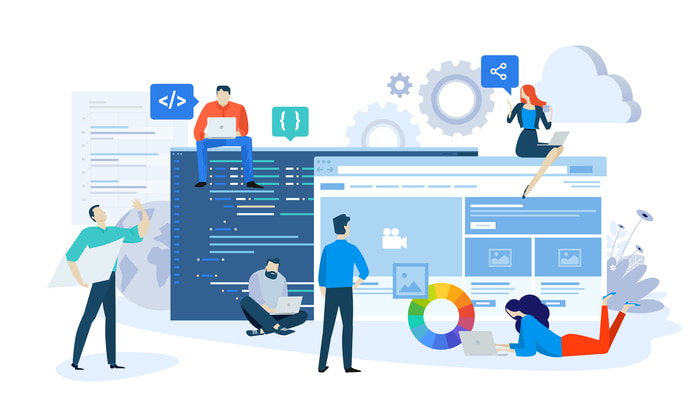
What are the drawbacks?
The biggest disadvantage of PWAs (in my opinion) is that their available features are limited to those of the web browser used to install it. In comparison, native applications can get permission to make use of most of the device’s features. For example, notifications are available in Chrome on Windows and Android but not in Safari on iOS. You’ll want to keep things like this in mind when thinking about choosing to build a PWA over a native app.
When you’ve finished building your PWA and are about to submit it to the app store, better get ready for the long processing times and a chance of rejection. Well hold on a second, these are PWAs! All you need is an install button on your website. Clicking it will get your app installed in seconds without ever having to submit anything to the app store, and your user can get started with using your app even sooner. But, if you still want to submit it to the Apple App Store, there is a good chance it would get rejected.
Apps that provide core features and functionality dynamically with web technology like HTML5 are best delivered to everyone in Safari, rather than through the curated App Store.
iOS has some of the biggest limitations currently. You can’t send the user push notifications, can’t run processes in the background, and are limited to up to 50MB of storage (which will be cleared if the user doesn’t open the app for a few weeks).
Google has been one of the key players in deciding what directions PWAs should head, and therefore Chrome support for new features is much better than other browsers.
Microsoft Edge is lacking in many of the features that are available in Firefox and Chrome. This should be improving soon as Microsoft are developing a new version of Edge that is built on Chromium, which is what Google Chrome, Brave, and Opera are built on.
What does this mean for elearning?
If you have had an elearning website built for training users, then there’s a good chance that it can be converted to a PWA with relative ease. Content can be synced to be viewed offline which is not possible with regular websites and even with the storage limit imposed on each platform, a course’s content should all fit as long as images are compressed properly.
Web technologies are getting faster and more featureful all the time (Chrome gets updates every month or so) and with WebAssembly becoming the fourth language of the web, new web apps are able to be faster than ever. Figma is one of the first big web apps to be using WebAssembly and it feels almost like a native program.
With accessibility and flexibility being a key advantage of elearning, it’s likely that PWAs will be used more and more. Being user-friendly and dev friendly (as well as budget-friendly) they may become the first choice for many learning applications. That’s not to say native apps and platforms will be made redundant – rather PWAs are a useful new tool.
What next?
The web is constantly evolving and it’s doing so at a rapid pace. Some of the things talked about in this blog might be out of date by the time you read this.
It’s always worthwhile investigating new and emerging technologies. PWAs may help to efficiently distribute elearning materials, particularly among user bases with diverse forms of web access and unreliable connectivity. Furthermore, the ease and speed of development may mean that materials may be developed that were previously out of budget or scope.
Nonetheless, as with other enticing new digital prospects, PWAs are not likely to be a magic bullet. Effective behaviour transformation and skills management will always result from a studied, consultative approach that seeks measurable outcomes. Emerging web technologies can form a part of this approach, but won’t be effective outside of a strategy based on set goals and studied cognitive insights.
If you want to hear more about how PWAs and other technologies can create effective learning solutions for your organisation, get in touch here and we’ll help you transform your training.

Interest on Behavioural Insights: What can the growth of disruptive banks tell us about the elearning industry?
Behavioural science can explain the multi-billion pound digital banking boom. The same rules can also apply to elearning.
Future historians will remember the 21st century as the era of digital upheaval (unless climate change continues to be avoided by world leaders). We’re all witness to the digitisation of practically everything, and most of us appreciate it. Startup banks such as Monzo, Starling and Revolut, are shaking up the banking sector by pushing a digital-first strategy. But why are consumers buying into these disruptive digital banks? Is there more to this than an infatuation with technology? And will our answers be relevant to the elearning industry?
Our area of expertise is to use insights from behavioural and neuroscience to analyse behaviour. We find the intrinsic motivation for learners to increase engagement, productivity and skills acquisition. So we thought we’d look at the rapid growth of these digital banks through that lens. In fact, many of these factors also apply to a successful digital learning experience. Let’s look at them both together.
Make it easy
These disruptive banks emphasise convenience. One of the most common reasons people buy new products is that the experience is faster, easier, or more satisfying to complete.
Not having to get up from your sofa to set up a bank account is a very enticing prospect. As research has shown, there is positive correlation between reducing the effort required to complete an action and an increase in completion rates. Monzo have integrated this thinking into their bank transfer feature. Gone are the days of memorising account numbers and sort codes and reciting them out loud until your traditional banking app loads – or, god forbid, visiting a bank in person.
Digital Learning offers a similarly hassle-free experience. By getting rid of face to face training sessions and offering mobile learning, completing a mandatory course requires less effort from the learner. It can be done from their mobile phone on their train commute home, or on their desktop to break up the working day. But just making it convenient and faster doesn’t cut it. There are other things at play – the whole experience has to be easy, fun, motivating and transferable to the workplace. This is where the behavioural science insights really come into play and where a bespoke experience is needed to really make a transformational change in the business.

Make it timely
Another unique selling point of these digital banks is the time that they save. Research shows that we are more influenced by costs and benefits that take effect immediately than those delivered later.
With digital banks, you receive a push notification instantly after you’ve tapped your contactless card. Despite the heart-wrenching feeling of watching your money whittled away, consumers enjoy being able to keep track of exactly where their money is going. This push-notification feature also means that, in the case of theft, you would immediately know to freeze your card before any further damage – another innovation.
While we can’t fight crime, elearning takes advantage of the human preference for immediacy. Digital learning provides immediate acknowledgement when you complete a course, and potentially instant accreditation at the end. But the real gratification from digital learning comes into full effect if you can put learning in the work flow or just in time. This is where point of need tools such as our chatbot or Saffron eaSe really take advantage of this need for immediacy. They allow learning to be synchronous with working; creating confidence, increasing productivity and enabling engagement as well as time and space for creativity and innovation.
Make it reactive
There is often a gap between one’s intentions and actual behaviour. A proven solution to this is prompting people to identify barriers to action and develop a specific plan to address them. With digitised banks, this can take the form of a ‘savings pot’ that rounds up your purchases and saves the excess. For digital learning, this manifests as a Skills Bot. Skillsbot will send you gentle nudges to remind you what you need to practice and to apply it at your very next meeting. It can also provide insights on areas that you’re finding difficult, identifying behaviour and knowledge gaps.
These features would suggest that learners are more motivated to consume digital learning if it offers them immediate results and gratification, as well as helping them navigate around real-time barriers.

Make it attractive
We are more likely to interact with something that is visually appealing. Ways of doing this include the use of images, colour, or personalisation but also use of use and functionality
Monzo generated a lot of interest with their eye-catching cards. In fact, they were originally designed for the beta testing period, with the intention to be replaced with a more traditional design once the trial period was over. But the cards proved so popular that Monzo opted to stick with the hot coral design. This indicates humans’ natural attraction to bright and shiny things.
Science has substantiated that “humans are visual creatures”: the brain can identify images seen for as little as 13 milliseconds. Successful elearning courses must include carefully considered user experience elements. This is recognised but sometimes to the detriment of the learning content being inferior to the “bells and whistles”. At the heart of good learning is good design.
Make it real
It is important to note that even in today’s all-encompassing digital world, human connection has not been totally abandoned. Plenty of studies emphasise the importance of human interaction on brain development and in learning strategies. However, even more studies have proven the benefits of incorporating the two together. The US department of Education stated in 2017 that blended instruction has been more effective than conventional face-to-face classes.
Even these digitally driven banks haven’t eliminated human touch completely. Monzo’s customer service has proven to be excellent, precisely by promising effective communication with their consumers at times of potential crisis. Monzo delivered a masterclass in dealing with customer crisis by informing customers of data breaches with both British Airways and Ticketmaster, in September and June 2018 respectively. Reviews claim that it is precisely this swift customer service which contributed to Monzo’s massive growth rate.
For similar reasons, blended learning approaches, especially those that are more creative than just a combination of instructor led and digital, can truly lead to transformational behaviour change.

Conclusion
Since the year 2000, the elearning industry has grown 900%. Over a shorter but more recent growth period, digital-first banks have an 88% satisfaction rate today compared to 12% in 2018. We’re putting this down to a shared ability to harness behavioural insights in a world that relies on technology more and more. Whether it be in banking or elearning, combining technological innovation and behavioural insights is key to surviving this age of digital-first content and increasing consumer engagement and satisfaction.
If you want to hear more about how behavioural insights can benefit your organisation, get in touch here and we’ll advise you on how to transform your training strategy.


Solving Cognitive Overload with Point of Need Tools
Why are workers struggling with cognitive overload? How do we recognise this issue, and what tools can overcome it?
We all know that life is changing at an accelerated pace and this is unlikely to slow down whether we like it or not. At Saffron, we’re interested in identifying solutions to how this pace of change affects learners and organisations so that in a complex world, things can be made simpler and more effective. In particular, we are looking at how the changing world affects working lives, performance and the learning of new skills. Let’s start with the background of why cognitive overload has crept up on us.
An abundance of information and a culture of immediacy
The digital revolution has placed the internet at the centre of our lives. We don’t just socialise and relax in a digital space, we work in one too. Our lives are becoming fluid, with work and non-work converging. The demand for convenience grows with technology’s ability to provide it, creating a culture of immediacy in the consumer market. We want dinner, we use Deliveroo. For music there’s Spotify, for TV there’s Netflix or on-demand TV and even more common is the use of AI in the home – the use of Echo or Alexa as a virtual assistant to control the temperature in your home, answer your doorbell and so on.
The amount of data associated with our new digital infrastructure is unimaginable. It flows in every direction. From your actions being recorded and processed by a computer brain, to the sheer know-how we need to acquire to stay on top of the digital output that is being produced.
Similarly, to stay afloat businesses must be agile and so must their workforce. That can be extremely difficult for some organisations to achieve. How do businesses mobilise strategy quickly and effectively when they have a large workforce? New technologies that brings efficiency appears to be the panacea that most companies foresee as the way of holding on but then they need to implement that and see if it reaps rewards. But how does this affect the workforce?
The consequences of rapid societal and technological changes in the workplace
If you take this whirlwind of change and factor in political and economic uncertainty, it’s little wonder that job security is plummeting as mental health issues are on the rise.
As digital systems constantly shift beneath our feet, the rapid change leaves some workers out in the cold and potentially redundant, while others have a vastly increased workload. Getting things done during periods of change is difficult, leading to frustration and inefficiencies in transition periods. This is the stage we’re at globally – right now, productivity worldwide has dropped to 13%. Do not adjust your set – you read correctly, only 1 in 10 workers are ‘committed to their jobs and likely to be making positive contributions to their organizations’.

Information silos and passing the buck
The silos we’re talking about represent the stagnation of corporate intelligence, kneecapping company-wide productivity. When different departments or individuals within an organisation hoard their resources, tasks, and intelligence, they function as an independent body rather than a unit in a smoothly operating machine.
But silos are not necessarily caused by selfish or territorial behaviour from employees. That would be an easy way to dismiss the problem. Rather, they are a symptom of structural issues.
It’s a response to an overload of work, an overload of data, an overload of responsibility. Apply too much pressure and fail to provide the necessary support and your poor squeezed and anxious worker bees will complete their tasks in a totally blinkered manner. They won’t share their skills, they won’t collaborate, and they won’t be working for the greater good. Matthew Toren pointed out that: ‘The most painful and silo-revealing phrase you’ll ever hear is, “My team did that too. I thought it was our responsibility.”’, and this is the behaviour you will see.
This complete vacuum of confidence is fatal for accountability. It’s not my problem. Right now, Wells Fargo is embroiled in a devastating corporate fraud case that’s running into billions of dollars in fines. Employees were pressured to reach impossible targets, leading to accounts being falsely opened. Would this have happened if anyone stuck their head out and asked this simple question: Why are we opening all these accounts for this client?
The Needs of the Modern Workplace
So, what’s the solution? We should consider what the modern workforce needs. Since this is generally needed at scale; let’s look at technology – although non-technological solutions including HR policies etc have a place. And we must be careful to avoid quick-fixes, leaving everyone to walk away feeling cheated. Instead, let’s investigate the behavioural science of why productivity is plummeting and look at precisely how these issues can be addressed with learning technology.
So, the modern workplace is one where information is critical. Knowledge and training are extremely valuable commodities that need to reliably reach precise segments of the workforce to close skill gaps. Success here results in the tumultuous nature of the markets being harnessed for good, without swathes of an organisation being left behind to work backwards. Bells will ring out and we’ll all join arms to celebrate a new era of transparency and togetherness. The robots will help us to manage the great flow of data and resources.
What is needed is a training and knowledge management system that is in the background, available on-demand, and personalised. It needs to be accessible across all stages of an organisation. Overstressed workers might think there’s too much information, too little time. But they’re wrong. Here’s why.
It’s not about time, it’s about cognitive overload
Cognitive load theory was developed in the late 1980s out of a study of problem-solving by John Sweller. What’s that got to do with our data flooded, disillusioned workforce? Well, it’s because they are suffering from cognitive overload. It’s a rather simple process.
Recently, we’ve learned that there are two parts of the brain responsible for learning. First is the working memory (or short-term memory). The working memory is a wonderful tool, and it processes everything that we learn and experience. However, it has a limit. It can hold 4-5 bits of information at one time and that information only lasts about 10 seconds. If you feed too much into the working memory, it’s just going to come out the other end. You’ve got a hole in your bucket.
The suave older sibling to the working memory is the long-term memory. Here, information is structured and organised. The long-term memory has an unlimited capacity, and loans the knowledge it stores back to the working memory to help make sense of incoming information. Moreover, the working memory helps to construct schemas, which are the mental structures used to store knowledge in the long-term memory. It’s a knockout partnership.
Memory falling apart
When the working memory is overwhelmed by information, it can’t work in tandem with the long-term memory to make use of the brain’s incredible potential for learning. Instead, the data floods out, and all you’ve created is stress and confusion. What you do know is siloed as a defensive reaction to the pressure to learn in impossible circumstances. Example: the new blockchain CRM system makes no more sense than when it was first introduced, and your chest tightens when the boss asks you where the quarterly reports are? Haven’t you read the user manual? Slow down, take a deep breath.
Sweller argued that instructional design can be used to reduce cognitive load in learners. Let’s make cognitive load theory work for us, rather than against us.

Cognitive ease with Point of Need support
Cognitive ease occurs when absorbing and processing information is effortless and straight forward, without stress or frustration. This allows time for learning skills and growing. When you create a situation wherein the learner can self-serve their training needs, and they have unlimited potential to revise and reinforce their learning – then you’re creating cognitive ease.
Point of need tools can facilitate cognitive ease by providing localised help, offering concise and specific information when it’s needed and giving opportunities for repeated practice and feedback. They also make mundane tasks more efficient and reduce frustration while creating time for learning and creativity and boosting workplace performance and productivity.
For example, Saffron eaSe is an unobtrusive assistant that sits on the user’s computer, able to be pulled up to offer help at any time. It will be populated with useful data about any systems, processes or technologies that the user needs to be able to use to get their job done.
A helping hand
Let’s go back to that blockchain nightmare your boss has been bothering you about. How do you create reports on it? Where do you import the CSV files? eaSe would walk you through each of these issues, at any time, and it won’t be a time-consuming process. It offers just the help you need, just when you need it. This controlled learning process creates learning that, according to Daniel Kahneman’s framework for cognitive ease, ‘feels familiar, feels true, feels good, feels effortless’. So suddenly, the influx of new data and technologies stops being something to fear, and instead feels like a world of potential.
Point of Need tools are predicted to create some stunning improvements in performance. Remember the 13% employee engagement statistic the world is currently facing? Using Point of Need tools, employee engagement shoots up by 84%. Revenue per employee goes up by 218%, and performance per employee can be up by 92%.

Summary
The workplace is changing rapidly, and we need to think about ways to adapt. The mass of information in the modern workplace, largely generated by digital resources, can be beneficial or it can be destructive to workers’ self-esteem. If you are not equipped with the right tools, the volume of data will result in cognitive overload rather than successful education or training. This is particularly true in a larger organisation, where there is less scope for repeated personal assistance. Ultimately the exponential growth and saturation of digital technologies is having a counterintuitive effect where they damage human confidence and ability.
However, the same mechanisms that create this problem (demand for convenience, a great volume of data, fixed nature of human learning) can be used to empower the workforce. Point of Need tools allows the learner to work in a condition of cognitive ease, where they can confidently gain skills and manage new systems. This reverses the global trend of declining productivity, firmly reinstating technology as an ally to business performance.
If you want to hear more about how Point of Need tools can reduce cognitive overload in your organisation and supercharge productivity, get in touch here and we’ll help you transform your training.
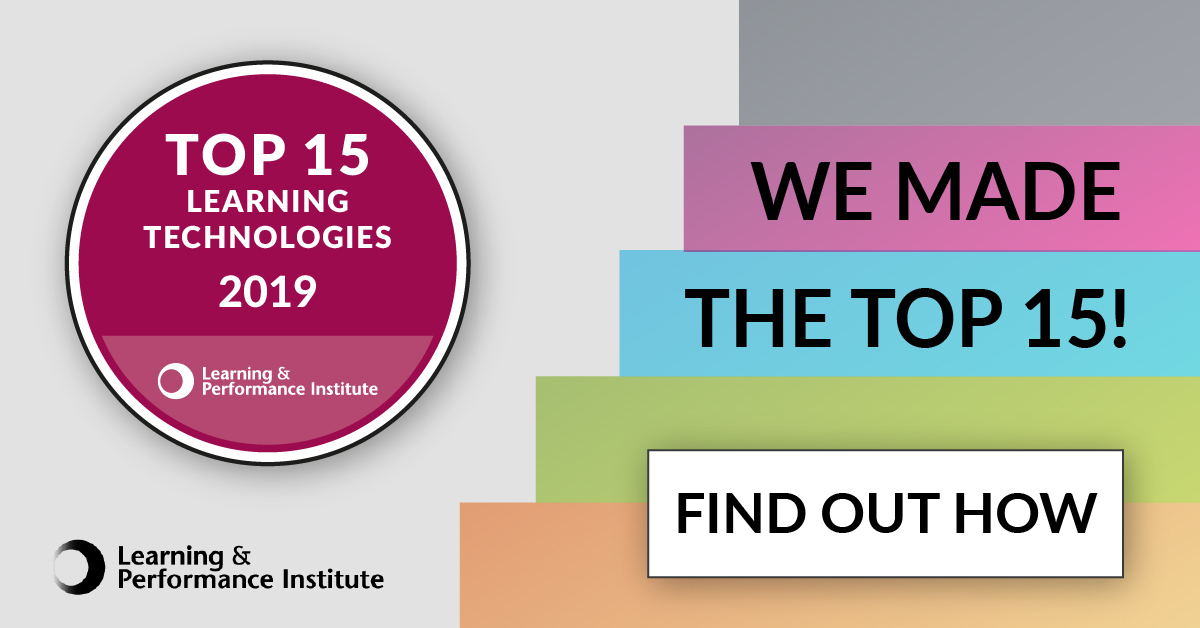
Saffron Interactive secures place in LPI’s ‘Top 15 Highest Performing Learning Technology Providers’ list for second year
Saffron Interactive has been featured again in the Learning and Performance Institute’s new eBook highlighting the very best providers in the learning technology industry. This distinction cements Saffron’s reputation as one of LPI’s most consistently trusted and accredited organisations.
The LPI has been evaluating learning organisations since 1995. As the leading analyst and industry body for learning professionals, there’s no institute held in higher esteem within the field. In publishing their essential guide to the best and brightest of learning technology providers, LPI reviews leading eLearning suppliers to discover the best and brightest.
Edmund Monk, CEO of LPI, has commended these top performers, stating they:
“provide the highest quality of service and the best user experience. They are trusted business partners, acting always in the best interests of their clients and, as such, fully endorsed by the Learning and Performance Institute”.
Accredited for 12 consecutive years, it’s only natural that Saffron Interactive would be earmarked as an outstanding performer. To be selected as one of the ‘Top 15 Highest Performing Learning Technology Providers’, LPI investigates key indicators such as Quality Management, Learning Technologies Consultancy, and Business Stability, among others. By processing these factors in a unique formula, they create an accurate picture of who can offer the “Best Overall” service.
Speaking on Saffron’s recognition as a leading provider, CEO Noorie Sazen said:
“We’re very pleased to be included yet again in LPI’s roundup of the best and most trusted in the learning industry. It’s a prestigious placement, but one that clearly reflects our industry-leading standards and pioneering approach to learning technology. Our clients have consistently been delighted with the very real, measurable changes in behaviour and skill development that we’ve created for them. We approach every single project as our next opportunity to lead the industry, and it’s satisfying to have this recognised.”
You can read more about the selection criteria and Saffron Interactive’s reasons for inclusion in the publication itself, available on LPI’s website.

Tuning into the learner: A lesson on practise from Wolfgang Amadeus Mozart
Think of sounds that splinter the human ear
The bagpipes, played by a panting, puff-faced amateur with no idea how to squeeze a tartan bag to produce a booming tune. The violin played by shaking hands screeching down the strings like cat-claws down a chalkboard. The horn, bassoon, clarinet, oboe; a chorus of noise played by a dry-mouthed, wide-eyed orchestra of disinterested and ill-prepared musicians.
Now, think of Wolfgang Amadeus Mozart, a musical genius celebrated across the world for his gorgeous melodies and exquisite talent. Producing over 600 works in 35 years, his art is used to accompany moments of tragedy, triumph, love, comedy, hope and many more octaves of human experience.
What separates Mozart from the masses of musical hopefuls? Passion and practise.
Of course, innate talent and a family pre-occupation with music contributed to his success. But passion – a passion for music and its possibilities – explains his obsession for the stave and repeated practise – accounts for why he became one of history’s most accomplished musicians.
With all the hard work and perseverance possible, it is highly unlikely that many, if any of us will become musicians of Mozart’s talent and calibre. And what does any of this have to do with learning?
Well, there are lessons to be learnt from the great composer about the infectious passion of learning and the importance of practise when nurturing skills/talents that enrich us as individuals.

I wanted to use Mozart as a metaphor to explore the importance of developing new skills and the energy required to master a skill. It’s clear that in the age of digital disruption, we should and can create time and energy for creative pursuits in the workplace and I really do think that this can be affected through point of need tools.
What are point of need tools?
Point of need tools are a type of resource offering knowledge and support as and when it is needed. The name reveals all: they help with situational needs, for example working out a troublesome equation or using a puzzling new software, taking you through a change in process or procedure. Like a doting music teacher, they sit over the shoulder, interjecting when necessary to explain, demonstrate, nudge and give feedback.
The central characteristics of point of need tools are personalisation, in the back-ground locality and on-demand help. Very similar in fact to how we operate as consumers in real modern life!
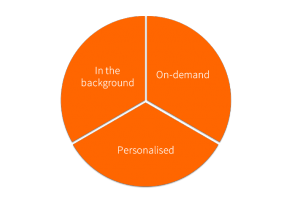
Common examples include calculators, navigation systems, magnifying glasses, Uber! In the workplace, when support staff waltz through the office offering help with a new software or system, this is a point of need resource. However increasingly, point of need tools in the workplace are digitalised, harnessing the technology consumers are accustomed to in our growing culture of societal and technological immediacy.
At Saffron, we believe point of need tools are the solution to the evolving, more elaborate needs of the modern workplace, securing efficiency and stimulating productivity. This is why we have developed point of need tools such as Saffron eaSe.
Saffron eaSe, named for its ability to ease learner’s cognitive load (the processing and absorption of information), helps people to efficiently carry out tasks which should be quick and straight-forward, but in the normal work environment take longer and are more painful than they should be. Essentially it guides learners through on a step-by-step basis to complete a process or task in a system. It immediately recognises where on a page, system or field the user is and provides assistance – if needed – and can be personalised by the user to add notes, rate content and delete information etc.

Saffron eaSe has for our clients been a performance accelerator on two-levels: helping with the swift completion of necessary, if mundane tasks and therefore creating time and energy for creativity and development in the workplace; and secondly ensuring a process or system input is standardised across an organisation so that the quality of management information is more accurate and enhanced- allowing strategic decisions to be made in real time.
Adopting new processes
Mozart’s story is one of dedication and creativity. He was learning instruments from the age of three and touring across Europe at the age of six. Under the guidance of his father, Mozart practised tirelessly; practisinig and repeating, rehearsing and performing. It was painstaking energy and effort that cultivated his talent, echoing one clear lesson: professionalism takes time and rehearsal!
Deliberate practice was key to his musical methods (like many budding musicians today). This is when you focus on the bits you don’t know by repeating, challenging yourself and improving. You conserve energy by channelling efforts on areas most in need of improvement and continuously replay a phrase until it can be integrated into a fluid melody. Mozart would revisit each section of a piece until he could champion the score and then start to build and innovate on note patterns. Overtime, he would progress from mastering a piece to using it as inspiration for a revolutionary new musical score.
Point of need tools can instil and facilitate deliberate practice. They identify areas of need and offer guidance, support and opportunities for feedback. Moreover, by increasing the efficiency of certain tasks, they free time for revisiting and improving particular skills. If we don’t re-engage with learnt knowledge within 48 hours, it is lost. Hence, with more time and energy available, skills can be rehearsed and improved. Other point of need tools such as Saffron’s Skillsbot can incorporate deliberate practise principles in honing a skill.
Think of the symphony of skills that can be potentially added to your workplace!
Mozart did not contend with the hustle and bustle of the modern workplace or with its vast quantities of digital information and complicated systems. His life was led by writing and researching to produce music that would redefine generations of sound. Yet, his talent teaches us an important lesson about passion and rehearsal:
Practise is critical for the development of new skills.
Point of need tools, like a resourceful music teacher, focus on sections of need and support us in completing and improving on desired tasks. By increasing efficiency and productivity, they free time and energy for the cultivation of new skills – so that we all can practise our passions, musical or otherwise, deliberately and repeatedly.

Saffron Interactive partners with Nile Academy to extend presence in Africa and the Middle East
Award winning digital solutions provider Saffron Interactive has partnered with one of the most ambitious training providers in Egypt and the MENA region, Nile Academy to be able to provide digital and blended learning solutions to the region.
Saffron already have a presence in London, Pune and Calgary and will now extend this through Nile Academy to cover the MENA region. Nile Academy already provides face to face training and with Saffron’s digital offerings will be able to provide cutting edge solutions to the marketplace.
Mohamed El-Shahad, General Manager commented “this partnership will help us bring a new era of learning to the region. Saffron bring a fresh approach to our clients and targets and one that we have already seen is yielding results.”
“We’re delighted to be working with Nile Academy” Says Saffron CEO, Noorie Sazen. “Each party brings its own unique skills to the table and the joint offering is extremely powerful for clients, especially in the current digital revolution.”
About Saffron
Your people are your greatest asset. At Saffron, we’re passionate about harnessing their abilities to increase performance and enable your business to grow. We use our deep understanding of behavioural science and ground-breaking technology to create inspiring bespoke learning experiences and workflow performance tools. These accelerate business performance, turn thought into action and allow change to be adopted seamlessly. We don’t just say that. We measure the impact of our programs on your people and your business as part of our solution; because we only succeed if you do.
About Nile Academy
Nile Academy is one of the most professional and ambitious training providers in Egypt and the MENA region. We offer highly interactive and customised executive training programs, provided by professional experts to fit the needs of different market segments.
We spare no efforts to provide the corporate and individual sectors, with effective world-class training solutions, and operate hand-in-hand with our customers and partners to offer the most valuable training programs that support their need to excel and outshine.


Less training, more learning in the workflow

This webinar is finished now, but click here to watch the recording.
Download the slides
Grab your copy of our latest webinar slides to understand how to:
- What kind of workflow tools support workers
- How they can be incorporated to generate a continuous learning culture to create perpetual learners
- Improving performance and using data to show the increase in productivity and performance

Saffron Interactive to help usher in the age of learning in the workflow with performance support tools
Saffron Interactive, to showcase pioneering learning in the workflow and performance support tools at World of Learning Conference and Exhibition October 15 & 16, NEC Birmingham.
Award winning and innovative digital solutions provider Saffron Interactive will be at Stand E20, showing how learning can be incorporated into the workflow and at the point of need. Visitors will be able to see actual client case studies as well as be shown the tools in action. Those organisations who need to improve employee performance, increase efficiency and productivity, and create a culture of continuous learning, should visit the stand to be shown how Saffron’s clients have been able to show these hard metrics as well as how these tools have generated that most precious resource- time. Time for employee creativity, innovation, engagement and satisfaction.
“Saffron has always combined innovation and learning design to create powerful and effective learning” said Karim Ladak, COO, “but now we’ve not only incorporated insights from behavioural and neurosciences into these tools; we’ve made them easily deployable and editable”.
The tools that will be featured are: –
- Saffron eaSe – a context sensitive performance support tool for use in the workflow
- Saffbot – a virtual learning assistant
- Skillsbot- a virtual coach that accelerates skills acquisition
- Skills assessments – game-based skills assessments that define future learning paths
- Simulations – that immerse learners in extended narratives and allow deliberate practice to embed behavioural change
In addition, visitors can take away Saffron’s Digital disruption survival kit and book a free consultation to help design a customised learning strategy for their organisation.
Register for this free event here and book a meeting with Saffron here.
Saffron Interactive breaks records with 12th consecutive year of LPI accreditation
Saffron Interactive awarded 12th consecutive accreditation as approved Learning Technologies Provider by the Learning and Performance Institute (LPI).
Saffron’s position as a trusted advisor to organisations that seek to improve performance has been affirmed again by this accreditation. It distinguishes Saffron as a leader in the industry at developing solutions that create behaviour change within an organisation. These results are truly bespoke and measurable.
Since 2009, Saffron has been incorporating insights from the behavioural and neurosciences in its functional, user and learning design, as well as performance metrics that can be verified as part of each and every bespoke solution for clients. This unique approach is combined with cutting edge technology to ease cognitive stress, improve performance and engender a learning culture within organisations.
“We’re very proud to have been able to build on our achievements from last year” says Noorie Sazen, CEO. “As a pioneer of digital tools that can be used in the flow of work, we are able to close skills gaps and accelerate performance- a key attribute needed for workforces and companies that wish to succeed in the digital age.”
The accreditation follows other awards from the industry this year. Training Industry have nominated Saffron as one of their Top 20 Gamification companies for the sixth consecutive year, and the IELA have also presented Saffron with the 2019 E-Learning Award (Business Division).
Jim Parish from the LPI who accredited Saffron said “Saffron Interactive’s approach to the development of learning is different from the norm. Real consultation and dialogue combined with innovation and leading-edge technology is a standard in the Saffron approach, ensuring measurable results that exceed expectations.’
For more information on the LPI accreditation process, click here.

Learning on the Job – digitised for the workflow
I’m a newbie at Saffron and to the learning technologies industry, although a fairly recent graduate. So, learning itself has been more hands on…or rather theorising has been. As a new entrant, I’ve undergone an induction programme, similar to the one most new hires go through at a company, although Saffron’s is wide ranging and very structured.
I recognise that having a good induction plays a big part in the performance of new starters and affects how quickly or slowly they can be competent in their roles in an organisation – helping them to start contributing quickly or be considered a drain on existing staff.
I found the traditional elements of the training (face to face, elearning, webinars, podcasts) pleasant, manageable and effective. Everything made sense and I thought I had understood everything until it came time to putting my newfound knowledge to the test. The problem wasn’t the method of training, it was the lack of practice. I hadn’t practiced saving and committing my work on our versioning system or setting up a new account in Salesforce, outside of a training session.
Cognitive overload
During the induction period, new starters are usually given a whole lot of information to take in. If these new starters aren’t given the support they need, they may begin to suffer from cognitive overload which could significantly hinder their performance going forward. Cognitive overload is a common phenomenon and quite literally the brain shuts down and a person can’t physically perform because their brain can’t process and can’t make decisions.
Performance support tools like Saffron eaSe and Skillsbot can help ease the pressure new employees face and even help them learn faster. The way that these tools do this is by enabling the person to do a task as and when they need to do it. There is no embarrassment factor of having to ask someone else; no waiting around or frantic searching of the intranet or internet and no feelings of stress that they are not up to the job. Workflow tools build confidence and reduce the stress of having to remember how to do every step across many different systems and processes. They support the person to be able to do all those nitty gritty things that any veteran in the organisation takes for granted.
Are workflow tools just a fad?
It might seem that everyone is suddenly talking about these tools in the same way that VR was going to revolutionise the learning market two years ago, but as a learner myself, I see the value of these tools at a practical level. They are “on-demand” in the same way that my films, videos and music are. I’m genuinely delighted when I accomplish something from start to finish on my own (using the workflow tools!). They give me the confidence to be able to put things into practice and build on what I’ve done already. They make me feel that I’m adding value to the organisation because I can be self-sufficient. They give me time to be more creative or to learn more about different things such as Google Analytics!
And the benefits to employers? Aside from giving my managers more time to get on with their day job rather than having to be stopped every 2 minutes to answer my questions, it allows a quicker time for new hires to get settled in, ensures that common standards are followed in processes, reduces mistakes, makes employees happy to learn more and contribute more.
It fully supports the 70 in the 70/20/10 model whilst letting the mentorship aspects of the “20” be more rewarding for both the mentor and mentee and the 10 be more targeted towards real developmental needs. So personally, I don’t think workflow tools – whether you call them point of need or Electronic Performance Support (EPS) – are a fad. I think they are an absolute necessity in the modern age to create a continuous learning culture and to encourage innovation in the workforce.


Immersive Storytelling – the behavioural benefits of a good yarn.
Gasping, giggling, action, suspense, intrigue, elearning… which is the odd one out? The misconception that elearning is only ‘click next’ interactions is (hopefully) behind us. But do many people think elearning can be playful – even emotional? At Saffron, narrative has always been a fundamental feature of our instructional design. We tell stories that hold the learner’s attention, throw them deep into drama, make them laugh; recognise themselves in the narratives and lead to real-world behaviour changes.
Let’s talk a little about the power of immersive storytelling.
Learner retention
Stories are more than a bit of fun. Jerome Bruner was an educational theorist who dedicated his career to examining the relationship between learning and culture. Bruner found that, at a statistical level, a learner is 22 times more likely to remember information within a narrative. Being memorable, structured and personal, stories can increase learner retention.
Stories also tackle that massive hurdle – learner engagement. Because who doesn’t want to get involved in the drama of a good story! When you turn on your computer and suddenly become the protagonist in a film-noir-esque story, or find yourself embroiled in an unfolding scandal, you invest in that learning experience. In one of our webinars James Tyas spoke about the psychological concept of ‘flow’ – that state when you get absorbed in what you are doing, loose sight of time and momentarily switch off your reflective self-conscious. Stories in films, novels, conversations and now, elearning, can bring about that ‘flow’ state and lead to increased learning focus.
So, where does the ‘immersive’ bit fit in? For a lot of people ‘immersive experiences’ might mean big budget VR headsets or extravagant performances in giant warehouses. But immersion is really all about being inside something. When we are immersed in a task, or a play, or a football match we feel entirely involved in the event.
The narratives we build at Saffron are immersive because they are all about throwing the learner deep into the narrative. They become the agent and protagonist in a growing story. They don’t just watch, they act.
Application
Educationally, immersion is all about participation and negotiation.
Although educational theories on active participation usually revolve around children’s play, participation is still crucial to adult learning. When learners participate, they are given what adult learners need the most – autonomy. Having control of their choices, actioning their sense of self and following the consequences of their actions within an immersive scenario leads to personally invested autonomous learning.
But what good is this learning if it is happening in the fictional narrative world? Well, immersion allows for negotiation. Yes, learners do throw themselves headfirst into a rich immersive simulation. But this safe fictional play space is very much linked to the real world. Just like children pretending to cook dinner, adults get a chance to practice real world behaviours in play. As Bruner points out, through narrative engagement we, as learners, get the opportunity to ‘construct a place for ourselves in the possible worlds we [have yet to encounter]’ and can relate our play to real life.
An old tale…
I’m new here at Saffron and I was inspired to write this blog post when I looked back at one project in particular. Saffron had made this course to improve a client’s customer sales service. But rather than creating a realistic scenario, our instructional design team got really creative…
The learner was introduced to an immersive fairy-tale narrative full of their favourite fictional characters. Guided by an optical fairy godmother (OFG), learners interacted with a twenty-first century Prince Charming who ‘wants it all’ but had a ‘significantly diminished fashion budget’, and an ‘outburst prone’ Rumpelstiltskin.
Charmed by the magical world around them, the learner then performed real life behaviours, like greeting the customer or picking up the telephone. The immersive storyline made the experience more engaging, memorable and thought provoking!
The end…
You don’t have to use VR technologies to create an immersive learning experience. Immersing our learners means creating a story so rich that they feel like an invested protagonist. Stories are powerful educational tools which can bring about increased engagement, retention and real-world behaviour change.
And by allowing learners to lose themselves in playful encounters with content, Saffron have created highly engaging narrative-based learning experiences which learners want to explore.
If you fancy hearing some of the stories we’ve told, then check out this case study or get in touch.

Accelerating performance with point of need tools
Saffron Interactive gives seminar on accelerating performance using performance support tools at Learning Technologies 2019 Summer Forum
What do fax machines, Blockbuster video and click next learning all have in common? They’re outdated. Today, you either adapt, or become obsolete. With automation fast approaching, your workforce needs to be prepared to evolve, or risk a similar fate.
Digital skills and higher cognitive skills will be in demand as the rise of automation creates a void in this area. High performing organisations and their L&D teams need to fill these skills gaps in order to remain ahead of the curve.
However, these skills need time and practice to develop – a commodity most of us lack. This is where performance support solutions such as point of need tools can help to aid skills practice and make sure that employees can carve out the time that is really needed for learning. This not only ensures employee engagement but increases productivity and makes change easier to adopt.
This seminar will look at: How to prepare for the future of work and avoid cognitive overload, as well as how to increase productivity and embrace change with your workforce.
Watch the video and take a look at Saffron’s performance support tools: Saffron eaSe and Saffbot. If you’re intrigued by what you see, click here to arrange a free product demonstration.


Saffron Interactive and Natural Resource Governance Institute win Gold International E-Learning Award for business
Saffron Interactive and NRGI have developed an interactive serious game named Petronia, which won the business category of the IELA Awards announced in New York on 14 June 2019. The serious game has already been dubbed “grand theft petro” by The Economist and has been designed to make the complex and interdependent concepts of resource governance accessible to everyone.
NRGI partnered with Saffron Interactive to develop a globally available serious game, that would empower current and future change makers in resource-rich countries. One that would reach learners in environments where it’s not easy to get information about how the country’s oil, gas or mineral resources are being governed – but where it is essential to find out. A game that would embed that information, using a media-rich environment so immersive that learners would truly feel the power and great responsibility that comes with managing the resources of a whole country.
Twinned with a reporting platform that shows the impact and reach of the game, it is attracting audiences in not only the target countries that NRGI wanted to reach, but also where they do not have a physical presence.
Lisa Morris of NRGI said “There is an urgent need for countries to manage their natural resources more efficiently. We know that when citizens understand some of the priorities, risks and challenges involved in governing resources and are trained and empowered with the knowledge and skills to play a role in this, the governance of natural resources can benefit all citizens, not just the few”.
“Saffron’s approach to gamification is unmatched because we use insights from all the behavioural sciences to design exciting, but impactful serious games that put learning into action.” said Noorie Sazen, CEO of Saffron interactive. It consolidates and affirms Saffron’s inclusion in Training Industry’s Top 20 Gamification Companies list for the last 6 years consecutively.
You can access the Petronia simulation course at petronia.games. You can also visit Saffron’s website to learn more about their award-winning approach to gamification, schedule product demos and arrange a free consultation.

Saffron Interactive named in 2019 Training Industry Top 20 Gamification Companies list for 6th consecutive year
Raleigh, NC – July 25, 2019 – Training Industry today announced that Saffron Interactive has been named to the 2019 Top Training Companies™ List for the gamification sector of the learning and development market. Training Industry, the leading research and information resource for corporate learning leaders, prepares the Training Industry Top 20 and Training Industry Watch List reports on critical sectors of the training marketplace to better inform professionals about the best and most innovative providers of training services and technologies.
Selection to the 2019 Training Industry Top 20™ Gamification Companies List was based on the following criteria:
- Gamification features and capabilities.
- Innovativeness of offerings.
- Company size and growth potential.
- Quality and number of clients/users.
- Awards, recognition and competitive differentiation.
“This year’s Top 20 Gamification Companies continue to showcase the latest gaming designs and concepts to corporate training, making them engaging and entertaining for the learner, while focusing on moving the needle on their clients’ KPIs” said Ken Taylor, president of Training Industry, Inc. “These companies are enhancing their products and services, including training simulations, serious games and leader-boards. Learners can compete against each other or participate individually in an interactive experience that rewards learning and development.”
“Saffron Interactive’s gamified interactions use behavioural and neuroscience principles to target intrinsic motivations,” said Danielle Draewell, market research analyst at Training Industry, Inc. “Saffron uses its learning chatbot, Saffbot, and its virtual assistant, eaSe, to add a layer of realistic natural language processing.”
“We’re delighted to be on Training Industry’s list of Top 20 Gamification Companies for the 6th year in a row. Here at Saffron, we’ve been creating serious games and simulations for our clients since 2004. It’s our use of insights from behavioural science, innovation, immersive narratives and our learner-centric approach that keeps our name on this list year after year”, says Saffron’s COO, Karim Ladak. ‘From behaviour changing games, to game-changing behaviour’ is our mantra and we hope to continue to lead the industry by staying true to the values that have brought us this far.”
View the 2019 Top 20 Gamification Companies and Watch List
About Training Industry, Inc.
Training Industry (https://trainingindustry.com) presents news, articles, webinars and research reports focused on supporting the corporate training leader and offers complimentary referrals to training professionals seeking to source products or services at https://trainingindustry.com/rfp.
About Saffron Interactive Ltd.
At Saffron we’re passionate about using digital technologies to improve performance, increase revenue and excite your people. We’re not interested in adding to the mountain of dull, mind-numbing ‘e-telling’ that often masquerades as elearning or platforms that are impersonal. We want your people to be inspired, to be energised, to make the right choices and to take action. This is what drives us.
Our business is based on our belief that learning is natural, that a love of learning is normal, that real learning is passionate, and that learning should be fun. We value questions above answers…creativity above fact regurgitation…individuality above uniformity…and excellence above standardised performance.
We pioneered mobile learning, blended learning and behavioural learning design. Our bespoke solutions are tailor made to achieve your business outcomes and we’re not bound to any specific technology. This leads to tangible results which are recognised in our many awards.
Recently Saffron has been the proud winner of the International Elearning Awards 2019, Top 20 Gamification Company 2019 and Learning and Performance Institute Top 15 Learning Technologies Provider.
Contact us today to start improving performance at your organisation.

Want to empower your workforce? Meet Skillsbot
You may have got fed up with the chatbots on your favourite retail sites and I have to admit the first incidences of these were pretty annoying. Almost akin to that pesky shop assistant that kept on asking you if they can help – which was one of the great advantages of shopping online!
But things are changing. For those that aren’t familiar with chatbots, they’re essentially computer programmes that are designed to have a natural conversation with users – just like asking an assistant what you need and getting a helpful answer. We’ve been looking at how advances in technology, our award-winning instructional design and our own technology innovation, can increase workplace competency and performance through this medium. How can we do this without adding stresses to your workforce, or costing the earth and how can it be measurable?
Not all chatbots are built the same
We can’t say that chatbots are currently that widely used and if they are, then they are essentially information banks. They’re filled with all kinds of information about the specific software and programs used in the workplaces they’re installed in. Once the information is there, you can interact with the chatbot programme and ask it questions to help you navigate and direct you to what you need. This is helpful – just like a good shop assistant. It can engender a feel-good factor for the learner and potentially increases productivity. So these are, at best, search engines with a “human” face.
That’s pretty good, and we’ve done that – we call it Saffbot. But then we thought we could do better than that. We think that what’s missing in the modern workplace is the traditional people manager. That person who taught you the ropes, the one that mentored and coached you – the one you actively sought out for a conversation and the one who consistently made you think deeper about things, made you practice your skills and who nudged you into getting better and better. That’s why we designed Skillsbot.
Now we’re not saying that Skillsbot can replace your manager, (as much as you might want it to), but in the absence of time-poor managers or less skilled managers, or simply absent people managers, this could be a good alternative. Skillsbot does what it says on the tin- it helps users practise a skill, coaching them through their approach, planning and doing exercises as and when you need it. It reminds you about opportunities coming up, asks you how those interactions went and what you could do better next time. It propels you to put learning into action.
What’s the Advantage?
We all know that face to face skills training can be amazingly energising, but we also know that unless that knowledge is practised pretty much straight after and continuously, that the effectiveness of it drains away as quickly as water down a plughole. Skillsbot is most effective when following a knowledge transfer. It can be used to aid deliberate practise; giving learners confidence to put their newly acquired learning into practise and when the day to day takes over, Skillsbot sends out gentle nudges to keep reminding learners about what they need to do to keep up that practice and apply it at the next meeting, performance review, or presentation.
Moreover, it provides great insight on those areas that learners are finding difficult by giving aggregated and insightful reports about user behaviour and knowledge gaps. It turns great face to face training into action led practise.
If you want to see how Skillsbot works in action and its practical use cases then drop us a line here. Or, if you just want to have a chat about all things learning, then drop us a line at info@saffroninteractive.com – just like our Skillsbot- we love a good conversation!

How can organisations solve the productivity puzzle?
We’re falling behind. There’s a yawning gap in productivity between Britain and the rest of Europe, commonly referred to as the ‘productivity puzzle’. Indeed, it seems the UK is missing a piece of the jigsaw. It all started a short while before the 2008 financial crisis, when our productivity began falling behind other countries. We also experienced a comparatively more severe decline throughout and the impact of this plummet can still be felt today.
After the crisis, employment recovered well; in fact, the growth of employment exceeded the more slow-to-recover growth in demand. And yet, productivity is still somehow lagging. Why?
What exactly is productivity and why would it matter to HR and L&D?
Productivity refers to the efficiency of a process. It’s measured by how much we get out from what we put in, or the input-to-output ratio. Remember those playdough spaghetti-making machines you had as a kid? You get back what you put in, with an added benefit (you now have spaghetti!).

Let’s apply that on a wider scale: when a nation is more productive, this results in more spending money. Nations aim to maintain that growth so that purchasing power gets higher and its inhabitants hopefully get happier.
Imagine making ever-increasing spaghetti from only one playdough container, but in this metaphor you’re the playdough and the spaghetti is your company’s net value. That’s what we call productivity growth: the input stays the same, but your output grows exponentially. This is what all companies are seeking and it’s important for HR and L&D to see how they can amplify it… read on to find out.
Could you be more productive at work?
There’s a good chance you’ve jumped to answer yes to that question. Your mind has probably already started playing a protesting showreel of how hard you’ve worked and the hours you’ve put in but be honest. Productivity isn’t about brute force. It’s about output.

As McKinsey have illustrated, increased hours worked (column 2) does not always result in higher productivity (column 3). In fact, the only country above to see an increase in labour productivity between 2000 and 2015 is also the only one that saw a reduction in the average hours worked.
Good news for the tired and overworked: working harder is not the key to productivity. So what other options are out there? How can we all work smarter instead of working harder for the same results? Let’s step out of the economics classroom and look more specifically at how HR/L&D can use increased probability to gain a seat at the Board table.
Where to start
I’ll be focusing on two major puzzle pieces that fall within the HR and L&D remit. These will contribute to boosting the UK’s productivity over the next decade or so.
- Accelerating the adoption of digital technologies as part of a wider solution
- Collectively investing more in training and skills development
These are essential to help us adapt and make the most of the energy and efforts of any workforce. This is particularly vital because Britain’s is unlikely to expand significantly as its population continues to age.
These two aspects (digital adoption and skills development) are about meeting the needs of a rapidly changing digital economy and sociopolitical landscape. We must give people the tools they need to grow and make the most of their potential in an unpredictable world.
Training is key to productivity
Reskilling and retraining each generation to prepare for the future of work is a must. This starts early, but that doesn’t mean it stops when we leave school. The successful individuals will be those who can adapt and change – lifelong learners. To close the skills gap, we need to re-educate and reskill not just the new wave of employees but also current workers of all ages.
As part of a collaborative project between Saffron and the TUC, we recently developed a skills assessment tool targeted toward the 50+ generation. This is an invitation to value the wealth of experience older workers have accumulated, rather than dismiss anyone over 25 as ‘outdated’.
This tool, whilst a self-assessment, was based on behaviours. It includes an algorithm to detect those that are less boastful about their skills and those that are overly confident. The tool also asks pertinent questions about when that skill was last used rather than just a simple quiz or survey.

Shifting our focus to soft, transferable ‘essential’ skills should be a big part of skills development. We’re living longer lives than ever before and going through multiple careers as the demands of the market change at speed while job security becomes increasingly uncertain for most.
The ability to learn and be cognitively flexible may soon prove more valuable than any knowledge set or area of expertise. Though most of the studies on cognitive flexibility (the ability to switch between tasks and concepts) have been done on young children, some studies have suggested digital training programs and video games can impact the brain functioning of adults, too (sources below).
Digital transformation
There isn’t just a skills gap in the UK; there’s also an adoption gap when it comes to technology. We’re not currently making the most of the technology available, particularly with digital and next-generation technologies like machine learning. These have the potential to significantly boost productivity growth.
Here’s the thing about us humans: we don’t like change. Unless we see a clear way that a certain change will benefit us, we’d rather stick to our less efficient but familiar ways than take a leap into the unknown.
Add to this a lack of awareness about technology and how difficult we’re finding it to trust the information we receive, and you’ve got some solid barriers to adoption.
So how do we overcome those barriers and break free from the status quo?

Saffron has been overcoming this resistance using behavioural science-based change campaigns for years. To get people on board, it’s vital to tap into people’s intrinsic motivators (what’s in it for them?) and create a collaborative environment in which to explore their learning and skills. Without this, they’ll switch off and it doesn’t matter how good the technology is or how expensive the training was.
Beyond initial training, point-of-need learning tools (like Saffron eaSe, wink wink) can guide you on the job as you try to figure out how a new system or technology works. Instead of getting frustrated, overwhelmed and needing to wait for someone with free time (which no one has because we’re all working so hard without being more productive!), you can seamlessly get the answer to your question and carry on.
Making change easier to process is part of overcoming resistance to it. Wider infrastructures in the form of investment and academic research are also needed to make the most of the UK’s digital transformation, but it’s important not to lose sight of the real people who will end up using these tools every day.
The end of the productivity puzzle?
There are a lot of open-ended questions when it comes to productivity. But what’s clear is that HR and L&D can effect change in their organisations.
In their breakdown of the productivity puzzle, the authors of the McKinsey discussion paper ask: “How can reskilling and upskilling be delivered affordably and at scale?” I’d argue digital solutions like the ‘Value my Skills’ tool make reflecting on one’s skills, and in the context of how they behave, more easily accessible, particularly for adult workers who don’t necessarily have learning at the forefront of their minds.
Another question they raise is: “How can firms overcome change resistance and inertia in adopting new practices and technologies?” One of the main barriers to adoption is change resistance. Having help on hand in the form of supportive tools like eaSe or bespoke systems training can hold the hand of each learner and help overcome resistance for successful adoption.
In many ways, increasing productivity is a never-ending puzzle. Every completed jigsaw merely reveals a larger picture that needs to be filled. Nevertheless, for those of us in the L&D industry that thrive on this kind of challenge, it represents a constant opportunity to seize competitive advantage – and to prove ourselves to the business. There’s a lot of satisfaction to be gained by experimenting with new ways of adding value where it counts and working with organisations to efficiently train, upskill and reskill workers while adopting digital tools that boost productivity.
To get things off to a flying start, get in touch to discuss what can be done in your organisation.
Academic sources
- Klimova, Blanka (September 2017). “Online brain training programs for healthy older individuals”. In Frasson, Claude; Kostopoulos, George (eds.). Brain function assessment in learning: first international conference, BFAL 2017, Patras, Greece, September 24–25, 2017: proceedings.
- Tetlow, Amber M.; Edwards, Jerri D. (December 2017). “Systematic literature review and meta-analysis of commercially available computerized cognitive training among older adults”. Journal of Cognitive Enhancement.
- García-Betances, Rebeca Isabel; Cabrera-Umpiérrez, María Fernanda; Arredondo, María T. (January 2018). “Computerized neurocognitive interventions in the context of the brain training controversy”. Reviews in the Neurosciences.


10 essential digital learning design principles
Designing for learning is different to designing for other digital mediums, but that doesn’t mean we should ignore tried and tested design principles. In fact, designers could do with reaffirming some of these foundations to avoid the kind of experience that feels clunky or “over-designed”.
However, design for learning does differ from other forms of digital design. Learning design shouldn’t grab the user’s attention, but rather create an environment where the user can focus more on the content. And in learning scenarios, user will usually have a longer seat time than on the average website, so balancing user engagement without distracting them from the content can be quite a challenge.
So here is an in-depth look at the ten most important ones to help you navigate it– the ten design commandments!
1) Create a learner persona
You can start by asking yourself some simple questions:
- Who is my target audience?
- How comfortable are they with technology?
- How familiar are they with the content?
- Is it the first time they’re being introduced to these concepts?
- What is their job role?
Answering them can help begin to build an idea of who your user really is, and this can drastically impact the style of design.
By creating a learner persona, you can easily avoid missing your target audience. For example, if the learning is aimed at recent graduates, they won’t relate to you talking about things in the world of work. They’ll instantly feel like the content isn’t appropriate and you’ll have lost them before they’ve even learnt anything.
Building a persona before starting design can dramatically change how the design should function. If the target audience consists of stockbrokers, for example, you can incorporate things from their everyday work life to deliver content to them.
Scrolling information across the top of their screen like a stock ticker draws a smile and makes the user feel more comfortable in their environment, enhancing their ability to learn. It also makes the learning feel tailored to them, increasing engagement.
2) Know your audience
Intrinsically linked to the first point, knowing your audience allows you to accurately identify the visual tone of voice. If your learner works in the legal department of a bank, for instance, using elaborate animations probably doesn’t reflect their everyday work life. Although this doesn’t mean your design has to be boring and grey!
On the flip side, if you’re designing a course aimed at 20 year olds in the general public, using a vibrant colour pallet with snappy animations and giving the course game-like qualities will engage them.
This is all a part of speaking the same language as your learner, communicating in a way that they’ll understand and allowing them to relate to their environment.
3) Consistency builds confidence
Within traditional user experience design, one of the key tenets is making interactions and movements feel similar. This encourages the learner to explore how things work, and it’s also one of the most important learning design principles. After seeing how something works a couple of times, they become familiar and inquisitive about the learning point.
Being consistent with design means limiting the number of ways you present the learner with actions. This means that they don’t have to think about how to make a selection can focus on what to select – hopefully the correct option!
Users often come into a learning experience with the expectations of how something should work. This is why following learning design principles and creating learner personas is so vital – you need to match those expectations. For example, if you’re creating a mobile-first solution for a user base who spend a lot of time using Twitter, it would be beneficial to use a similar layout. Think useful navigation that’s easy to access from the bottom of the device and a menu in the top right corner to mimic Twitter.
4) Break the system
The previous point was all about building consistency in designs and allowing the user to feel comfortable in their environment. So how is breaking that system going to help!?
Well, sometimes it can be an essential tool in your arsenal to communicate that this content is in some way different without having to actually say anything (classic Ronan). It gets the learner to sit up and take notice.
If they’ve been presented with content being delivered in a particular way throughout the course and then suddenly they receive feedback or instructional text that’s visually different, that acts as a sign that this content is important.
Another advantage for having feedback delivered in a different visual style can help break up the content to let the learner catch their breath. This can prevent cognitive overload and promote assimilation of the prior learning points.
5) Whitespace is your friend
Far too often, screens are overloaded with content to reduce interactions. You need to strike a balance, as too much content can have an equally negative effect on the learner.
A risk you run when using every bit of space on a screen is that when the learner arrives on the page they’re greeted with a wall of text. That makes the content far less appealing and harder for the learner to digest.
The solution to this problem is allowing the page to have whitespace, defined as ‘the area between design elements’ by the Interaction Design Foundation.
Whitespace is something that good websites use to create a premium feel to the experience. By allowing the content to breathe, the user is can focus on the message.
As well as decreasing distractions and acting as a barrier for overloading screens, whitespace can also be used to highlight key pieces of information. Instead of just making a button bigger or text flashier, by increasing the whitespace the eye is naturally drawn to the element in the centre.
6) Reduce clicks
This is another thing that websites do well, but learning often doesn’t. Learning design principles are still catching up! Letting the user navigate through content with as little resistance as possible makes the experience feel well planned. This can be translated into design for learning quite simply.
Say, for example, you’re designing a testing interaction using a multiple-choice question that requires a single response. It’s not necessary for the learner to select an option and then confirm. You can just remove the confirmation click and automatically submit the answer once learner selects the option.
This is where keeping interactions consistent is key. By using this same method throughout all previous interactions, the learner will know that as soon as they click the button the response will submit.
This kind of simple click-saving can be applied throughout interactions in a variety of ways to drastically reduce the amount of clicks a learner will make over the duration of the course. Let them focus on the things that matter – the learning.
7) Understand the content
It’s all too easy as a designer to ignore the content that is going to populate a screen and just craft a sleek looking piece of digital design. However, a learner’s experience can be greatly improved by being aware of the type of content that is going to be delivered.
For example, if you know learners are being introduced to a concept for the first time, having a busy screen with lots of layered assets is just going to distract them. In this case, it would be far more beneficial if the screen contained a subtle background with a minimal feel where the elements aren’t trying to grab the user’s attention.
8) Give the learner a break
We’ve talked a lot so far about all the different ways we can get the learner’s absolute focus. But even though we’re trying to impart as much information as possible, sometimes they just need a break!
Giving a learner a change of pace keeps them on their toes. Providing fresh interactions that deliver content in a new way enables the learner to take in more information. An effective way this technique can be applied is through video or animation. This lets the designer to take control of the pace of the learning and gives the learner a break from having to read content. They’ll love you for it.
9) Use sound to immerse the user
Sound is such an underrated tool and one you don’t hear about enough. It makes up a large part of really selling the experience through immersion. Audio cues such as listening to a voicemail left by a colleague who is running late into work are great. But think about the small details that take it to the next level. How about adding the background noise of a train station to add further realism to the scenario?
Strong sound design takes pressure off your visuals and your learner. Any boost to immersion lets them act more like they would in real life, supporting true behavioural change.
10) Allow the learner to take control
Where possible, give the learner a choice to make and a sense of agency. Optional content that provides deeper knowledge on a topic does this. Or even making every unit or chapter available from the offset can work particularly well in longer learning interventions.
Taking the example of a course with a 60 minute seat time, a learner may not have time to sit down and go through the whole curriculum in one go. Indeed, it’s often detrimental to learning; splitting into manageable chunks helps with knowledge retention. By enabling the learner to craft their own learning path it encourages learners to consider their own strengths and weaknesses and gives them ownership.
It also lets learners pace themselves. If they know they’ve only got 5-10 minutes, tackling a unit they’re unfamiliar with is probably unwise. But taking a unit on a topic they’re used to will act as a recap or top up on knowledge.
Learning design principles – a summary
Overall, when designing for learning it’s important not to ignore the principles of design that would be applied to any other form of digital design. However, you’ve also got to focus on what makes learning different and use these differences to your advantage. That’s why following these learning design principles is so important.
This all starts with understanding your learners needs and the kind of digital experience they’re used to as this can uncover elements from their daily working lives that can make the experience feel more natural or comfortable, and by understanding this you can speak to them in a language that they’ll understand. Don’t be afraid of whitespace, it’s your friend and will stop you overloading the screen with content and greeting your learner with a wall of text. Encourage exploration by being consistent with functionality to give learners confidence. Break this occasionally as a device to introduce important content in a way that stands out to users. Provide the learners with a variety of pace throughout the learning and deliver content in a number of digestible ways. Finally, give the learner the freedom to carve their own path making them feel like they’re in charge of their own development.
Combine all of these and learning outcomes will rocket – as if by design!

License to skill – how to identify, develop and accelerate skills development


This webinar is now over. You can watch the recording here or download the slides and try some of the tools discussed below.
Download the slides
Grab your copy of our latest webinar slides to understand how to:
- Diagnose skills and performance gaps in your workforce
- Enable your people to acquire new skills
- Accelerate performance, acquisition and application of skills in the workplace
- Embed a culture of continuous learning
- Use the new generation of digital learning tools to help every generation of employee reach their full potential
Performance-boosting walkthroughs