


Would you build a wooden horse? – 5 ideas for making change successful in the digital age
Think about the person you were 10 years ago. You can probably notice all the changes that have happened between then and now: more wrinkles, more freckles, maybe more patience, less hair – change is part of our normal biological and psychological life. Change is also an inseparable part of business, now more than ever. We change products to meet our clients’ demands, we change our structures to accommodate new employees, we change the leadership when we need radical new direction. In the digital age, the age of instant Twitter feedback, 24/7 news feeds, and live Snapchat channels, that change becomes faster and more frequent than ever. One of the COOs I met, for instance, estimated that it takes about 3 minutes from the moment their website or paywall stops functioning for the Twitter “storm” to begin, and 8 minutes before the phone calls from TV reporters start. Her company needs to be ready to act and change their operations immediately. Shouldn’t change in the digital age be a little easier then? Despite the fact that technology and the world around us change so rapidly (10 years ago, who would have suspected that their entire life’s worth of data would fit in their pocket?), the frequently quoted statistic that 70% of change programmes fail is still proving true. Over the past few years, coinciding with the digital revolution, I’ve been privileged enough to work on change initiatives that fell into the successful 30% bracket. Below, I’ve gathered my top 5 insights into driving successful change in the digital world.
Check your ground and chuck out the guidebook
Preparing for a change programme can be like walking over thin ice – you need to check carefully before making each step. The approach to introducing change in any business will depend on several individual factors. Indeed, the individualisation of approach is something that matters now more than ever. Employees and customers alike are used to being treated as unique individuals, meaning that before making any decision on change it is worth assessing several factors:
- Are people in the impacted teams sceptical about new initiatives?
- Is the team still bearing scars from any previous negative change? Or perhaps the team is agile, consists of daredevils, and is up for lots of innovation?
- Are there any strong influencers and personalities that can affect the change impact?
- Is the team hierarchical and responsive to “command & control”? Or perhaps they make decisions more democratically?
All of these factors will affect how you make your steps in the change journey. This is why a change methodology that worked well for large corporate may not land well in a “unicorn” start-up. The makeup and nature of your team should inform which approach you take, and how you want to go through it – slowly, quietly and carefully, or with a big bang and celebration. Perhaps a certain amount of marketing/PR for your change programme will be needed, or maybe the team would react better to a “stone cold” business case. Whatever the scenario is, the change approach has to be individualised and adjusted to whoever is on the receiving end of it.
Talk to your customer… and involve them
Bringing a customer-focused mindset to change initiatives can bring some extremely powerful and positive results. Many successful businesses stay on top of their market by putting customer service and experience at the centre of their initiatives. Think about John Lewis, Natwest, Apple, Emirates airlines. Interacting with them is a pleasant experience for their customers, and this should also be the case in change initiatives. One of the large clients that I worked with managed to successfully create a whole suite of career pathways for various branches of tech experts. They did so by making the target audience an indispensable and crucial part of the design team, using focus groups continuously through the process, and building in multiple feedback loops for stakeholders. During the initial planning phase, for example, they produced multiple designs of the manager’s guide and presented all of them to the focus groups to find out which one was the most user-friendly. This kind of consideration of the customer paid off massively – the career pathways were successfully implement through the business, and became part of the technologists’ professional development (and the 30% of successful change programs). And, as in the case of real business customers, the employees affected were more likely to stay with a company.
“Emotional data”
In today’s world, data science and analysis can bring some tremendous insights into how employees work, what increases their motivation and how changes affect their productivity. Thanks to big data, we can even see if employees are likely to leave, before they make that decision themselves. Because of this data capability, any self-respecting change leader or project manager always has to back up their case for change with a stack of graphs and as many numbers as the paper can physically handle. For business leaders, data and hard evidence is essential, but there is something else – something much more elusive – that can convince them to support the change. Something that is very often forgotten in the business world: emotion. Neuroscientist Tali Sharot says that it takes ‘very large amounts of data to convince someone to change, but it takes just a little bit of emotion to make the shift’. This is why, during the American election, convincing Trump’s supporters to dismiss “fake news” proved impossible for his well-prepared opponent. The reasons for that are twofold:
- People are evolutionary conditioned to stick to what they know and believe in. For our ancestors, changing their mind could pose a serious risk to their survival.
- We make all decisions, whether big or small, in the emotional part of the brain. Not in the rational frontal cortex, but rather in the deeper layers of the brain, those governed strongly by emotions.
That is why building a personal and compelling story, referring to people’s own feelings and experiences, and invoking empathy when presenting a case for change can have some very transformative results. Which would you prefer, an emotionally resonant narrative, or PowerPoints riddled with numbers?
Incremental change vs “Big Bang”
The appearance of the first cars was a quantum leap from a technological and societal perspective. At first, cars shared the road with other users – horses. This created a lot of issues, as horses scare easily. In early twentieth century horses killed 200 people in New York City. To deal with those issues, one of the inventors at the time constructed a car with a wooden horse head fixed to the front of the car like a mask. The idea behind this design monstrosity was that horses will be less scared of a car that looked a bit like them. The design was never successfully adopted. However, this story told by John Berger highlights one important thing to remember about change underlined by researchers: people generally handle an incremental change more easily than a complete “big bang” style revolution. For this reason, companies often launch new products with only few, marginal changes, rather than introducing a revolutionary technology to unsuspecting customers. The difference between models of new iPhones is often slight (think different colour scheme or bigger screen), yet each model sells like hot cakes. At the same time, radically new technologies such as smart watches or smart tattoos are still trying to reach mass market; and it has taken VR nearly 100 years to surface the mainstream. When designing a change initiative, it is key to assess the degrees of change needed to make it happen. Think about the change as your final destination, and spread it over time in incremental steps. This gives people time to accept the change and deal with emotional and practical consequences of it, but it also lays solid foundations for the next change to come.
Use UX to break down complexity
User experience design often resembles the work of many change agents. It involves psychology, business acumen, usability, project management, and testing. It’s also built on an understanding of what makes employees more productive and likely to stay for longer, and what holds them back from doing great work. Introducing some basic principles of user experience (UX) into change programmes can make a stark difference for its stakeholders. One team I worked with was preparing a massive, complex and long-term project affecting thousands of employees and multiple company processes (learning, internal comms, systems, data analytics, career progression, internal certification, and most important interactions between people managers and their teams). In order to understand how all of this would come together, the team created a “user experience journey,” deconstructing the everyday work experience. They designed exactly what they wanted their employees to feel and experience at each step of the journey, and then looked at what would need to change to make this happen. This approach really resonated with the thousands of individuals affected, as reflected by a towering adoption rate of almost 90%. Another program in that successful 30% of change programs.
Change and transformation is never easy. Whether it is a change of products, behaviours or business, big or small – it does not matter, it will always be a challenge, and in the digital era, we are faced with it every day. This new digital era needs a new approach to change – a blend of commercial, digital and neuroscientific considerations. There are certain steps that anyone can take to make the change easier and increase the probability of success, but in order to do that, we need to look outside the outdated methodologies and start to innovate our change approach. Customize and individualize it, treat those affected by the change as an integral part of the process and as your customers and users of change – and you may even get away without having had to build any horses.

Jasmina Mularska
Change Management Consultant, BT
Jasmina Mularska is a change management consultant with experience in strategy, change management, org design and development in the technology and telecoms industries. She has led her team to nominations for two prestigious change management and transformation awards for design & implementation of technical career frameworks. As a neuroscience and technology enthusiast, she is able to combine both in her work by offering innovative approaches to change. Her passion for technology has also led her to learn coding, and she was named winner of the Code First Final Project Competition for professionals.


“You know nothing”– 7 things Game of Thrones can teach us about learning
Winter is here. The long dark wait for the next season of Game of Thrones has begun. This break from the action allows me time to ponder a question that I’ve been asking myself for a while now. What exactly makes it one of the most popular TV shows in the world?
The Game of Thrones Season 7 finale set another ratings high with 16.5 million viewers of the live airing alone, and this insane popularity shows no sign of abating. George R.R. Martin’s best-selling book series, ably brought to life by HBO, has been compelling enough to capture the hearts and minds of people around the world. In the digital age, it may just be the most streamed and downloaded TV series of them all. Not bad for a fantasy epic set in a magical medieval kingdom.
But what have dragons and drama got to do with elearning? How might we take the elements that make it such a phenomenon and use them to make learning that’s just as popularly consumed? After all, using pop culture in learning can have tangible benefits.
Read more


Saffron named Top 20 Gamification company for fourth year running
Saffron Interactive has once again been acknowledged as a ‘Top 20 Gamification Company‘ by Training Industry, remaining on the list since its inception.


10 ways to use heuristic evaluation for the perfect learner journey
It’s accepted wisdom now, at least in enlightened circles, that a learning or content management system needs to have the learner’s user journey and experiential needs at the forefront of their minds. At the basic level, every platform should ensure users can easily navigate and interact with the system and, in the age of the social LMS, with each other. But let’s look at 10 ways to use heuristic evaluation to make that user experience so smooth that learners will just keep coming back for more.


Don’t behave like a tool – start using one
40% of your staff could be thinking of leaving…
If they’re not getting the right training, that is. If you’re not developing your team properly, they’re 12 times more likely to leave. And if they leave, good luck replacing them, as the chance to learn new skills and grow professionally is the #1 driver for talent to join an organisation.
That 40% is a frightening number. Yet it’s easy for those of us in the learning and development community to become complacent and think it couldn’t possibly apply to our organisation, given how much of our time is taken up by delivering training. However, two out of every five employers have provided no training at all within the last twelve months, and for the three out of the five that have, plenty of it isn’t hitting the mark.
This deficiency in learning provision not only reduces productivity and efficiency, it also disengages employees, leaving them feeling both stranded and uninspired. In the worst cases, they can become a drain on others’ time by requiring frequent guidance, or just stop trying to develop entirely.
How can we, as learning professionals, remedy this disengagement stemming from insufficient or inadequate learning opportunities? The truth is that for learning to be truly effective, you can’t just put your learners through a formal training session and send them off into the workplace, to be dragged back in another six months.


How to prepare for the disruptive HR revolution
Over the last few decades, HR has been afflicted by bad press. Labelled with questionable misnomers like “human remains,” it’s suffered from employees and board members’ lack of faith in its:
- Business acumen
- Financial capability
- Global perspective
- Customer focus
In short, it’s not been perceived as adding value to an organisation, but rather as a cost. Sweeping changes to the world of work in the near future will mean this perception needs to be changed, but how can it be?

Saffron Interactive stays at the cutting edge with 10 years “Accredited Learning Technologies” status
Saffron Interactive, a leading provider of transformational digital learning experiences, is entering its tenth consecutive year of accreditation by the Learning and Performance Institute (LPI).


Why you need to try using pop culture in learning
I was lucky enough to have really cool teachers at school – you know, the type who taught game theory using the bar scene from A Beautiful Mind, or aspects of US government systems using episodes of The West Wing, or Freud’s idea of the Return of the Repressed using the opening episode of the 2nd series of Buffy the Vampire Slayer. Making a connection between whatever you were learning about and the big TV shows of the day, a classic film, or a national sport would instantly attract the full attention of us pupils and automatically attribute a degree of Awesome to the teacher. Suddenly something we already cared about was relevant to the lesson; so of course, we were going to be more engaged, pay more attention and be more likely to recall that lesson. They were using pop culture in learning.

Saffron Interactive to bring behavioural expertise to World of Learning
Saffron Interactive, award-winning provider of digital learning solutions, will be exhibiting on stand B160 at the free World of Learning two-day event on 17 and 18 October at the NEC Birmingham.

Why we need to relearn mental health
Today marks World Mental Health Day, an awareness day that seems to become more important than ever as mental health issues become more and more prominent in modern society. But are we aware enough?


This is why AR will take your learning to another dimension
Now that the final version of iOS 11 is available to download complete with ARKit capabilities, the app store is overflowing with AR apps to explore. Apps such as Ikea Place have been spearheading the flood of AR puzzles, games and tools making their way onto consumer phones across the globe in the last few months.
As much as I’m excited by the prospect of adding random AR GIFs to my surroundings, the sparkle of some of the more frivolous apps will begin to wear off very quickly. Once AR fever dies down, we’ll be left asking an important question: what value does AR add to an experience?


How to enable an agile approach in your organisation
Agile, adj. – able to move quickly and easily. Is that how you would describe a standard approach to project management? Probably not. However, the agile method is an increasingly popular mode of project management and software development that tears up the process rulebook. It represents a method that’s more suited to the fast pace of the modern business environment, where requirements and risks can change at a drop of a hat. Taking up an agile approach allows your organisation to adapt to these changes much more quickly than any traditional method.

Saffron Interactive and Amec Foster Wheeler shortlisted for Learning Technologies award
Saffron Interactive, award-winning provider of digital learning solutions, has been shortlisted for Best learning technologies project – international commercial sector at the Learning Technologies Awards. The nomination comes for their work with Amec Foster Wheeler on developing a global programme entitled Pathway to people management.

Why you need to know the science behind accessible colour design
Whether designing websites or learning experiences, one of the issues a developer needs to consider is accessibility. This means being able to design content that can be consumed by as large a target audience as possible, including those with any form of sensory impairment. A key feature that is often overlooked when striving for accessible design is colour selection, and how the eyes perceive these colours. This article will take a look at how to properly use accessible colour design whilst keeping your design vibrant.

“You don’t have to be an Ad to work here, but it helps” — how Strategic HR will be the new Don Drapers
As HR moves from the operational to the strategic there are going to be changes.
HR is now responsible not only for the operational needs of payroll, reward and recruitment, but also for growing the greater brand culture.
Culture is of course all-important from a compliance perspective. From Travis Kalanick at Uber to Trafigura dumping toxic waste in the Ivory Coast, movements fail not because the controls were too lax but because the value culture was absent amongst the worker population. Likewise, I would say that for compliance breaches, reporting and process failures are not entirely due to ignorance, but because employees don’t feel responsible. You can’t police every infraction. You’re going to need strategic methods of improving compliance.


These applications of AI in learning will transform the future of performance and development
Things move fast in the artificial intelligence sphere. With Elon Musk and other AI influencers calling for a ban on automated deathbots, and an AI bot created by his own start-up, OpenAI, now able to beat humans at complex games, a distant future of sentient robots doesn’t actually seem that distant at all. But how could these developments be harnessed to improve organisational or individual performance? Let’s take a look at some of the potential uses of AI in learning to find out.
We’ve previously covered some of AI’s potential applications in the learning sphere, and its limitations, considering whether AI could ever replace the blood, sweat, and tears of a human instructional designer. With the pace of change increasing rapidly, however, there are some steps which AI may well be taking into the learning environment very soon.

freeLearning — how learning can bring the fight to modern slavery
Modern slavery is still a huge ongoing global issue, with 20 to 30 million people still estimated to be enslaved in 161 countries worldwide, and 20 new suspected victims found in the UK just this morning.
The Modern Slavery Act 2015 requires all businesses with a turnover of over £36 million to publish a statement setting out the steps they have taken, during each financial year, to ensure that slavery and human trafficking are not taking place anywhere in their supply chains and in any part of their own business.
It’s a small step towards greater regulatory control and awareness of modern slavery. However, the current issue with modern slavery reporting is twofold. Firstly, added documentation is often used as a salve for insufficient understanding resulting in additional paperwork being created, but little impact on-the-ground. Secondly, accountability tends to be pushed down the supply chain, with confirmation of good practice being asked of the next in the chain until we reach those with no interest in acting honestly, or who simply don’t care.
Learning could address both these issues of understanding and passing the blame, but it isn’t being used to do so. Here’s how it can, and why it should.


Why you can’t afford to ignore performance support tools in learning
The expectation amongst modern employees is that work equals learning. Indeed, learning and development opportunities now rank more highly in graduate employment priorities than salary, according to EY. EY’s head of student recruitment, Julie Stanbridge, stated “we are seeing moves away from structured classroom-based seminars and Powerpoint slides to on-the-job learning in dynamic teams, and through working collaboratively on projects.”
This fits with the prevalent 70:20:10 model, as explained here by Charles Jennings, its biggest proponent, and further explored in his Insight article for us on the subject (coincidentally, I’ve just spotted Charles in our London office). Without getting too hung up on the exact ratio, the idea of the model is that learning and development takes place in three main areas. Only a small proportion (the 10) of this is through structured, prescribed learning. Of greater importance is the 20, representing the time spent learning from others, through mentoring and coaching. Finally, there is the 70, the on-the-job aspect where the learner’s everyday experiences constantly guide their learning.


These four healthy learning habits will revitalise your strategy
Who hasn’t come across a list of healthy habits, especially when the summer holidays get closer? It’s also a good time to get your mind in shape for when they’re over, so here are some healthy learning habits to implement in your learning strategy!


Let’s get physical — how user experiences from the real world will make your learning better
We’ve talked a lot recently about the understated importance of user experience (UX) in learning, and how to improve it. But it’s not just learning or web design UX that are important to our everyday lives. In fact, the user experiences that have the biggest effect on us are physical user experiences.
What do I mean? Well, it’s any off-screen experience, from a trip to a shopping centre to navigating a hospital. Your commute, your grocery shopping, your evening meal at a restaurant… all of these are user experiences that have been designed, and so can be improved, as can our learning.

5 learning insights from social media that will make your elearning unmissable
There are 2.5 billion people using social media in 2017. By 2020, that number is set to rise to almost 3 billion. Despite the towering size of these figures, they won’t shock anyone. There’s no argument, social media has become an integral part of people’s everyday life, with the average time spent on it hitting almost 2 hours per day. Most learning and development departments can only dream of such a huge level of user uptake and engagement with their courses.
Well, by examining what it is that social media does to drive user engagement so effectively, it’s possible to distil insights that can be applied to learning to do the same. Clearly, social media fulfils (or exploits) universal human social needs for connection, approval, judgement… and endless streams of memes and fake news. While learning courses may want to avoid accusations of fakery, social learning has the power to regenerate user engagement. Here’s how.

Serious gamification for serious threats
Thank you for attending our webinar on how behavioural science and gamification can create truly transformative learning. Or if you missed it, you’re in luck.
Sign up here to receive:
- A summary of key takeaways and insights — behavioural science to apply to your own learning
- A link to the webinar recording
- A carefully curated reading and watching list from presenter James Tyas
Register for the download!

Saffron Interactive webinar to showcase gamification techniques from June 2017 award win
The session, “Serious gamification for serious threats”, will be facilitated by Donald H Taylor, Chairman of the Learning and Skills Group, and James Tyas, Senior Instructional Designer at Saffron. It combines the most incisive insights on gamification and behavioural science from Saffron’s well-received Learning Technologies Summer Forum seminar with tangible examples from the course awarded CIR Business Continuity Award Initiative of the Year 2017 earlier this month.


7 magnificent web and app UI and UX design tools
Our last blog discussed how to take your learning UX and UI to the next level. This week, we’re going to take a slight diversion from the learning sphere to an area that we all experience as a user at some point or another – the web. Increasingly, though, we’re becoming not just web content consumers but also creators. It’s easier than ever for the user to become the designer, with a multitude of cutting edge web and app UI and UX design tools available to make that transition happen effortlessly. In this article, we’ll take a look at some of the best.


Serious gamification for serious threats
As we’ve seen with the ever-increasing prominence of cyber incidents in the modern business world, technology brings a whole host of threats to the security table. Employees must be kept prepared against shifting menaces that can change from one day to the next. They make up the first bastion against encroaching digital threats, and learning must change their behaviour so that new patterns of action become the norm.
This seminar looks at how to:
- Create engaging scenarios and simulations that drive home the importance of security awareness and give learners the agency to defend the organisation themselves.
- Infuse the learning with behavioural science that harnesses intangible emotional forces to generate real behavioural change.
- Apply gamification in a serious manner to create interventions that interest – without gimmicks.
- Utilise social, collaborative, and iterative learning to stay at the spearhead of digital defence.
- Put these elements into practice, with case studies and metrics from real-world work with Saffron’s clients.
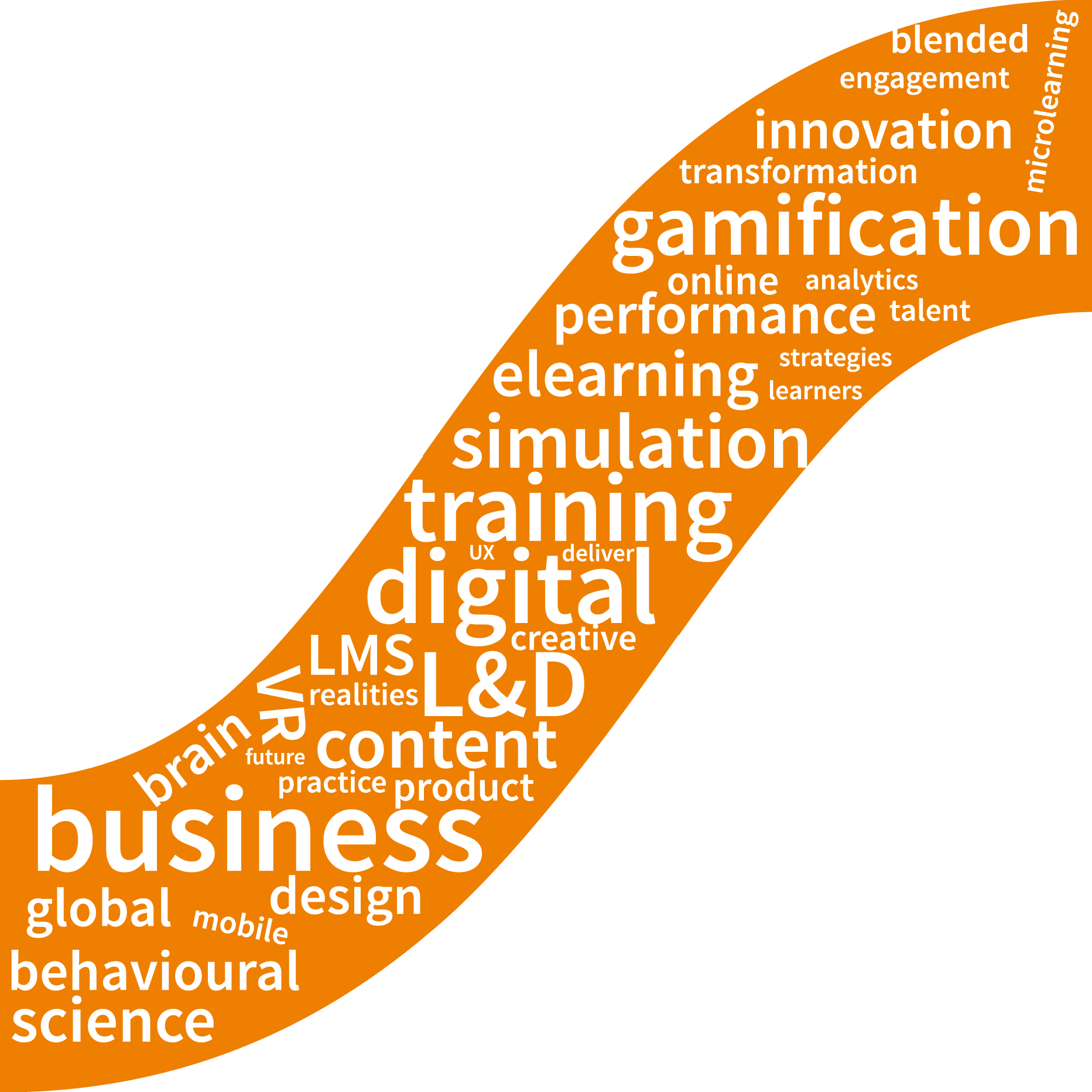
Learning Technologies Summer Forum Word Cloud

How did we put this together? We analysed the text of the Learning Technologies Summer Forum programme and all #LTSF17 Twitter posts to create a visual representation of what was trending at the show. Text size corresponds directly to frequency. Anything surprise you? Let us know.
Saffron Interactive’s work with Deutsche Bank announced as Business Continuity Award winner
Deutsche Bank, one of the foremost European banks, has been announced as winner of a 2017 CIR Business Continuity Award for Initiative of the Year. The nomination comes for the work Saffron designed with Deutsche Bank for an innovative business continuity simulation.


Machine Learning: the future of learning?
Introduction
When thinking about machine learning, you would be forgiven for thinking that it’s something used exclusively for large and complex projects like, for instance, NASA’s path planning of robots deployed to other planets. You might even think of it as something out of a science-fiction film where machines have taken over the world. In reality, machine learning is everywhere and you are reaping the benefits in your daily life.
Google, a major player in machine learning, are trying to build it into all of their products. Their applications range from improving search engine functionality to powering self-driving cars. In a series of recent AI acquisitions, Google bought London-based artificial intelligence firm Deepmind technologies, whose AlphaGo program defeated the strongest Go player in the world yet again this year. This was a huge milestone in machine learning as Go is a notoriously difficult game for computers to play, largely due to there being more legal board positions in the game than atoms in the universe.
Amazon uses machine learning algorithms to suggest products you might want to buy based on your purchase history and what it’s learnt from all of the previous shoppers before you. Netflix and Spotify also use a similar approach to build personalised playlists. Twitter can tell businesses what their customers are saying about them. Machine learning is also used in ecommerce for fraud detection, whilst hedge funds are using it to predict moves in the stock market.
But what exactly is machine learning? In essence, it’s a set of algorithms that machines can use to learn and make predictions on data without being explicitly programmed to do so. It means machines can learn to perform complex tasks such as face recognition and text translation, which are very difficult to program conventionally.
Machine learning is not something new and the theory for it has been around since the 1950s. The trouble at the time was having hardware powerful enough to put any of it into practice. Its recent explosion is a result of growing volumes of data and computational power being cheaper and more powerful than ever. This means we can analyse more data and produce better models, resulting in more accurate predictions.
Machine learning in education
Machine learning in education is not a new concept. The fields of Learning Analytics (LA) and Educational Data Mining (EDM) go back to the start of the millennium but, like everything machine learning related, they have been growing in popularity lately. Dr Ryan Baker of Columbia University launched the course “Big data in education” on Coursera in 2013 (recently moved to edX) which goes into how to apply these fields to large-scale educational data.
Pardos et al. investigated how affective states of middle school students (11-13 year olds) can predict end of year learning outcomes. Log files from the ASSISTments maths tutoring system were analysed to develop behavioural detectors for affective states such as boredom, frustration, confusion, and engaged concentration. The behavioural data was then correlated with end of year exam results in order to examine its impact on performance. Unsurprisingly, the data showed that students who were bored or confused while solving problems did poorly in their exams. However, exhibiting the same behaviours while receiving support was associated with positive performance. This highlights the importance of context when examining such behaviours. The study suggests that machine learning could be used in real-time to analyse such data and feed indicators in teacher dashboards, enabling them to make early interventions.
Machine learning in an LMS
Why would we want to use machine learning in an LMS? Well, we’re sitting on a gold mine of data about our learners and their use of our platforms. At the moment, apart from creating fancy looking dashboards, we are only scratching the surface of what we can use it for. Machine learning can help us unlock these insights and allow us to better understand the use of our learning materials and predict how our learners might behave.
Similarly to the Pardos study, behavioural data in a corporate LMS could be classified and correlated with an employee’s performance review. This can tell us what behaviours are associated with poor performance and raise early warning signs for intervention.
Course recommendations are not a novel idea and already appear in many modern LMS platforms. These recommendations can be made more relevant by using Netflix/Spotify style machine learning algorithms and studying users’ behaviour. The early intervention idea can be taken further here by recommending courses to users in order to improve performance.

Social learning
I’m sure you’ve already heard why social learning is so important for business and even if you’re not doing anything about it, it’s still happening daily in your organisation in the form of informal face to face knowledge sharing. The problem with informal training like this is that nothing is logged and we are missing a huge opportunity to find out more about our learners.
To help us see how this data can be utilised, we can take a look at how popular social networking websites are already using machine learning in their products. Facebook have created the FBLearner FLow platform and are using it for tasks like content moderation, sorting of content by relevance and grouping similar content – these can all be used to improve user engagement. Twitter data is being used for sentiment analysis, which can help tell what your customers are saying about you. Within an organisation, sentiment analysis can be used to tell what your employees think about recent changes, their satisfaction with the level of support provided, or even what they think about the available training.
The topic of user engagement is crucial when looking at introducing machine learning to your LMS. Not only is it an important factor in establishing a return on investment for any platform, but a lack of engagement will result in significantly less data being available for analysis and inhibit the accuracy of predictive models. Techniques such as personalisation and gamification have proved effective in keeping people coming back but, more importantly, regular fresh content is essential in maintaining their interest. This is where the social functionality can again play a big role as it allows for user generated content to fill the gap between official training being added to the platform. User playlists can give learners a chance to become the teacher by collating resources and sharing their knowledge with peers.
The future
With computational power and data storage becoming increasingly cheaper and more abundant, and the world’s hottest tech firms investing so heavily in machine learning, what does the future hold? Deep learning, a type of machine learning primarily inspired by biological neural networks such as the brain, promises to lead the way. It requires very large datasets and is typically used for complex tasks such as face recognition, speech recognition, and scene parsing. In the future, it could be used for tasks like real-time speech translation which could eradicate language barriers.
We’ve looked at how machine learning can have an impact on LMS right now, but what could further advancements in the field hold? Personal training assistants like Siri or Cortana could become the norm, being able to guide learners through their training and provide support when required. Richer data logging will be required for more accurate behaviour detection and more interesting predictions. To aid in this, we will see a rise in the use of central learning repositories such as Learning Record Stores (LRS) for the Experience API (TinCan). These allow for a much more comprehensive collection of data about learners, both formal and informal. Being signed into something like this on a phone, would allow learning to be tracked on the go and even offline. What is really significant here is that the LRS can persist between systems and devices and build up data about a learner over their entire lifetime.
Over the past decade we have seen a surge in factory workers being replaced by robots. Repetitive mechanical tasks can be carried out more efficiently by robotic arms on automated production lines – they never tire and rarely make mistakes. Apple and Samsung supplier Foxconn has just replaced 60,000 factory workers with robots and is now becoming an ever increasing trend in China. The rise of machine learning will take this further with a 2013 report suggesting that 47% of US jobs are at risk of automation. Any repetitive tasks now carried out by humans can be learnt and automated. eLearning and online courses have already contributed to the teacher role diminishing to that of a facilitator – will an organisation still require L&D professionals when an out of the box LMS is capable of identifying and providing all of the necessary training?
With machine learning coming into the mainstream fast, are you ready to take full advantage? SoftServe, a software and application development specialist, reports that 62 percent of medium to large organisations that it surveyed are expecting to roll out machine learning tools for business analytics by 2018. It’s important not to let learning technologies in your organisation fall behind this trend. Contact us to find out how Saffron’s digital solutions can keep you at the cutting edge.

Pavlo Onyshchenko
Developer and emergent technology researcher
Pavlo is an experienced back-end and front-end developer in .net, PHP, JavaScript and HTML5 who has built customised database architecture solutions, new plugin sets and system integrations. Noted for his attention to detail and project management skills, he was instrumental in the development of a bespoke LMS for Aldi. Pavlo is always casting a keen developer’s eye on the latest digital technologies, appraising their value for a learning environment. A keen climber, he employs that endurance and eye for the optimal route as he successfully summits project after project.

Saffron Interactive to present strategies for effective cyber security learning at LT Summer Forum on 13 June
Saffron Interactive’s James Tyas will deliver a seminar about how Saffron uses gamification and insights from behavioural science to generate employee behaviour patterns that counter modern security threats.

UI and UX in learning — How they differ and 7 tips to improve both
While User Interface (UI) and User Experience (UX) are sometimes confused with one another, they’re actually separate concepts, albeit with overlapping considerations. To craft really successful learning, it’s important to consider both and design programmes that are suited for the audience, subtly adding to the learning experience. Once you understand how UI and UX in learning differ from each other and relate to the user, you’ll be better able to use them consciously in your design.


Learning curation — the Goldilocks principle
In one of the better known fairy tales, Goldilocks and the Three Bears, Goldilocks quickly makes key decisions when presented with three choices of what to eat, where to sit, and where to sleep. In a modern day re-telling I can’t imagine that Goldilocks would face so few options. As consumers, we are now overwhelmed with the choices on offer. Today Goldilocks might have to choose not only from the temperature of her oats, but whether she has them with water, milk, soya or almond milk, let alone whether she has rolled, organic, or instant oats. What would she choose? I imagine that the three bears would have walked home to find a girl wracked with indecision. Choice overload is a significant problem in the modern world. Only now is the consumer industry, partnered with technology, understanding how to harness this to influence purchasing decisions. It’s time organisations take this behavioural insight and apply it to how learning curation is done in the workplace.

3 employee engagement misconceptions — what we learnt from Engage Change
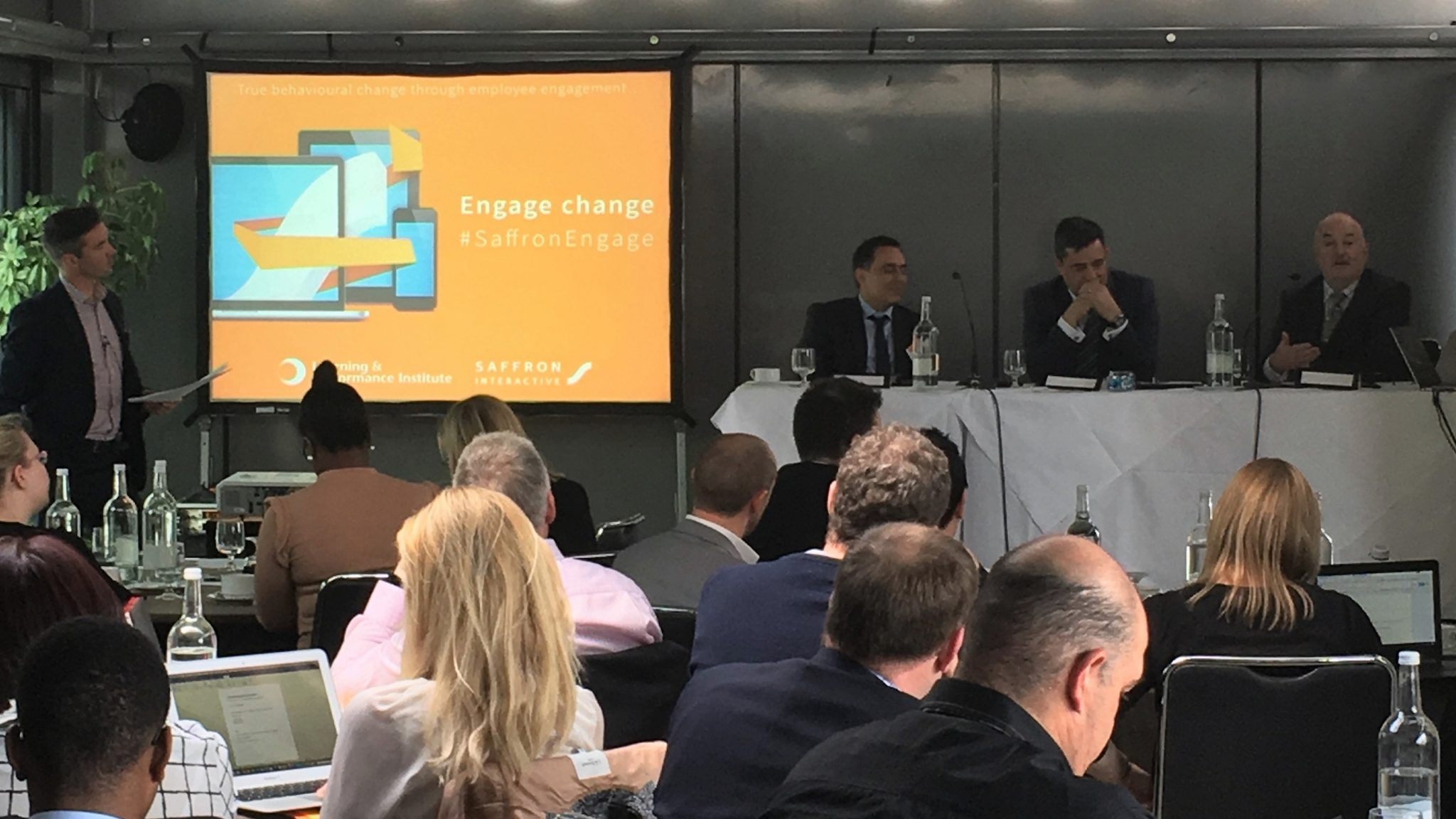
We believe the employee engagement dilemma to be so pressing that last month we held a conference, Engage Change, to bring together a host of Heads of Learning, Talent, Engagement and Change to discuss strategies of how to tackle the problem head on. If you doubt the gravity of the issue, then look at these statistics and consider what that means for the world economy in an increasingly digital age. One of the key factors that allows an organisation to remain agile and respond to disruptive technologies whilst still growing is having a high employee engagement rate. Employees themselves, and millennials in particular, cite learning and development opportunities within an organisation as ranking higher than pay in keeping them engaged. So the burden of responsibility falls upon L&D departments to rekindle that engagement. But does this mean sweeping changes within an organisation? Here are 3 key employee engagement misconceptions our conference dispelled.


Learn to engage — employee engagement through learning design
Can you think back to the most powerful learning experience you’ve ever had? Was there a class that you always looked forward to?
Mine was a class at university, not exceptional in its content but transformative because of the teaching methods used by the professor. He skillfully used the flipped classroom methodology to reach the promised land of education: it made me realise the unknown unknowns, the blind spots I never knew I had.
These experiences initiate deep learning moments, a rush of hormones that have us wanting to come back for more. In education, they have us diligently preparing for classes and continuing animated conversations long after they’re over. At work, quality learning re-ignites our excitement for what we do, energising and empowering us to create, think and do. In other words, it engages us.

Saffron Interactive recognised as an Investor in People for thirteenth year
Saffron Interactive, one of Europe’s most celebrated digital learning and communication brands, has been re-awarded the Investors in People Standard for the thirteenth consecutive year, demonstrating a commitment to realising the potential of its people.

Panellists announced for Engage Change, Saffron Interactive’s employee engagement conference
The Engage Change event, hosted jointly by Saffron Interactive and The Learning and Performance Institute, will feature three eminent figures in employee engagement. Taking place on 25 April at the Grange St Paul’s Hotel, the conference will dissect how learning and development can solve the current employee engagement crisis.

Employee engagement — why learning and development must be the torchbearer in the 4th Revolution
Employee engagement may be the greatest issue facing businesses in the modern era. The 4th Revolution – the age of artificial intelligence, augmented reality and digital everything – means the job market and demand for skills are constantly in flux, leaving the relationship between organisations and their employees stretched further than ever before. In this article, we’ll examine how to redress this fraying connection, and specifically how learning and development departments are the key torchbearers for employee engagement going forward. If they fail to rise to the task, we could begin to see yet more well-established businesses fall prey to start-ups and innovation companies.
Saffron Interactive and PwC announced as finalists for MEDEA Awards 2017
Saffron Interactive, award-winning learning technologies and consultancy provider, and PwC, the world’s largest professional services firm, have been announced as one of only 8 finalists for the worldwide MEDEA awards 2017. The nomination comes for the work Saffron designed with PwC for an innovative project management simulation.
Saffron Interactive and the LPI announce joint conference on employee engagement in learning
Saffron Interactive, award-winning learning technologies and consultancy provider, and the LPI, a leading authority on learning and development, are teaming up to host an exclusive employee engagement event, Engage Change, at London’s Grange St Paul’s Hotel on 25 April.


VR learning — potential as far as the eye can see
Alright, so it’s been well over a year now since we all started to hear whispers of a revolution within the digital dimension. I think it’s safe to say that we’re not quite at the point where we can celebrate some sort of VR Bastille day just yet. But let’s look at what we already know about VR learning, and where it’s going.
As Egle mentioned in her recent blog, much like gamification before it, VR and AR are in vogue at the moment. Her hesitancy to jump on the virtual bandwagon is valid, but I want to take this opportunity to make the case for why VR is here to stay (and why it’s going to take over).

Lean process — How lean learning benefits L&D
All organisations are governed by processes and procedures that appear crucial at first glance. Some are officially part of company procedure, and others simply become intrinsic over time from being the “done thing.” But just how valuable are they when given a deeper examination? In fact, most organisations could benefit from shedding extraneous tasks and undergoing a lean process transformation, making sure processes increase value rather than just expanding time and effort. L&D departments are no exception.

Learning trends: All hail the… VR?
‘All hail the kale’ was a big craze on the health food scene a year or so ago. Incidentally, that was the first thing that I thought of when I saw all the VR and AR banners at the Learning Technologies show a few weeks back.
Virtual Reality seems to have finally arrived and as learning designers we’re tempted to buy into its promise of effortless learner engagement and, let’s be honest, an opportunity to play around with the gadgets ourselves!



Super personalise me
Personalisation has become an expectation, and it’s not just about cookie-laden webpages. Manufacturers like Dell primed us for this with bespoke PCs long before the internet properly let mass customisation loose into every interaction, whether social, civil, or commercial. Marketers, especially the scared ones from traditional businesses, understood: Levi Strauss’ online tailored jeans were an early example of pioneering mass customisation that seems quaint compared to the refinements that enrich even the most banal of purchases today.
Our now compulsive appetite for individualisation is nowhere higher than in digital experiences, where the bespoke and highly personalised is an expectation. This expectation is not necessarily bought but certainly sponsored by the wanton abandonment of personal data that we relinquish to the datasets, registries and algorithms that make it work.
Now that every product and service we encounter has made personalisation so routine, it’s hardly unsettling to hear about the hidden costs. For a Google computer on one side of the world to personalise my search for something on another, a complex digital cognition is triggered by even the most absent-minded moment of digital curiosity. This apparently consumes so much cooling energy to perform that data centres are being moved to the Arctic (Facebook, 2013) and underwater (Microsoft, 2016).
The search engine aspect of personalisation alone has made the world’s most valuable company also one of its biggest computer hardware manufacturers. Gartner Group already listed Google as the world’s fourth largest ten years ago. At the time, it was also the fifth biggest customer of AMD processor chipsets, but now it makes these itself, as well as its own servers. So, there is apparently infinite value in being able to understand individual requests for information, however trivial or niche, and instantly respond with something relevant. Retail activity aside, we also all know that a good portion of these super-cooled searches are for results that improve knowledge, competencies and skills.
There’s something about data
All of the above is effectively about pull, sucking in a vortex of data and applying intelligent personalisation. Being visible and instantly reachable to anyone initially driven by their own or their employer’s motivation, such as the need to be trained, gives you the opportunity to pull them through to something pertinent to their need and opportune for yours. Implicit is an anticipation of effective personalisation, as artificially intelligent as you can afford to muster, in reciprocity for them deigning to engage at all. With attention universally deficit, you don’t have long and they won’t wait in line. The term attention economy has already been coined.
It is here that instructional design is presented with an opportunity to engage a learner with an experience they can believe is personally relevant and a good use of their time. There is a receptiveness to effective training that will convert into improved behaviours, and the return on investment this can fuel, by employing personalisation and mass customisation in elearning design.
To pull, entice or drag people into online training and through to new skills and competencies is easier if the quality and benefits of the digital learning experiences chime with their more habitual and self-motivated ones. Since that universally includes a personalised mix of the social, simulated, gamified, augmented and increasingly virtualised; instructional designers are confronted with some dauntingly high user experience benchmarks. Games, online retail environments, social networking and even office productivity software are unrelentingly refining user engagement, at a pace that long cycles of training development are not typically resourced to match.
Clients are increasingly noting the paucity of their digital experience at work, especially the training, compared to at home and at leisure. Keeping them engaged with the presented content becomes an instructional design challenge. The expectations that consumers, and so learners too, bring to this engagement, experience and reward are merciless. Nonetheless, learning technologies are responding with design and social networking-inspired treatment of learner data. Combined with increasing facility of integrating online learning with other collaboration channels and workflows, standardisation like xAPI that improves the handling and sharing of learning data enables intrinsically social and personal learning experiences. And since instructional design can use learner data in real time, like an instructor in a classroom might, this can exceed the personalisation of search because the delivered content can continue to evaluate the user’s need and adapt to it during the learning, which a search engine won’t.
So, a streamlined experience needs to pervade not just the locating of personalised content but also the harvesting of skills and competencies offered within it. To get online learning content to resonate with the emotional and socialised states that engender behavioural change, instructional designers are personalising courses with the ambition and refinement of social marketing maestros. We can now mass customise learning experiences. This extends dramatically beyond just filtering suitable courses for a self-expressed or organisationally defined profile. After all, Google has a button for that and there are better ones coming. Adaptive learning experiences can attain improved practice far richer than an interaction around what size and colour you want or like or should like. Using plausibly realistic scenarios in which the content adjusts responsively to learners’ progress dramatically improves and shortens their route to appropriate new knowledge and behaviours.
To do this immersively requires sustained personalisation and customisation both throughout the learning management and HR information systems, as well as within the course content itself. Socialising learning catalogues already structured around competencies and roles with user reviews, leader boards and ratings is now pretty standard fare. More bespoke and intelligent platforms offer algorithm-driven personalised pathways and playlists that can be easily broadcast by one user to others, providing an adaptive learning environment and deeply individualised experience attuned to business productivity outcomes.
A personalised and socialised journey through branching scenarios simulating real world systems and behaviours can be scaffolded with scored games, polling, forums and supplemental features of informal enhancement such as virtualised coaching and peer participation. We know these techniques can dramatically improve real world practice when intelligently applied. Personal and reflective insights on decisions made within such simulations, further informed by embedded psychometric tools, can support practice transfer with diagnostic takeaways relevant to validated typing of an individual, their understanding of themselves and how to pull this training further through to the goal of best practice.
It’s simulated, personalised and socialised interactions with virtual peers and stakeholders that are being used with measurable effectiveness to deliver improved learning in first aid, medicine, transport and many other fields. The personalised approach is agnostic to any sector because we’re hardwired to respond to it, and we’ve yet to even glimpse the learning foothills of virtual and augmented reality. But perhaps not for too long.

James Parry
Learning Performance Consultant
James has extensive experience in the design and delivery of elearning programmes, especially in accredited environments, built up through international programme and account director roles supported by an MBA and Prince2 project management training. His digital learning technology skills cover a broad spectrum of authoring and publishing environments, and he combines these with project management and business development skills.

Live and Let Comply — How compliance training can be improved
As a teenager I applied for a job as a cashier at a major high-street pharmacy. The first round of assessment, with compliance in mind, was an online quiz on good practices and ethics. We had thirty statements and had to give a true or false answer to each. One of the statements was:
True or false: “It is always wrong to steal.”
Quite a stupid question to offer a generation that grew up on Aladdin!
And so, within minutes of interacting with an employer I was being trained to lie to them. Rather ironic for a test designed to ensure quality of character. In comparison, I applied for a similar position at a popular British department store. They had an excellent test that put you on the shop floor with day-in-the-life challenges. I tried to follow the same line and rightly failed. Their ethics test was good, it filtered for dishonesty and heartlessness.
And yet, even as good Instructional Designers, we all too easily fall into the trap of writing compliance interactions like this:

Saffron Interactive to deliver key seminar on gamification and behavioural science at Learning Technologies exhibition
UPDATE: Slides and video of the seminar are now available, register to receive them here.
Saffron Interactive (stand E15), will be hosting a seminar on both days of the Learning Technologies exhibition on 1 – 2 February. Attendees will gain invaluable insights into the implications of gamification and behavioural science for learning and performance technologies, most notably through employee engagement.


Reflect to impress — the power of reflection
One of my Saffron colleagues wrote a blog last year, Musings on my performance appraisal, in which he considered how he could build time into his day for reflection on improving business performance. Well, his blog did part of its job, getting me thinking – well, reflecting to be more accurate – on the power of reflection. One reflection led to another and then to this blog, where I’m exploring the impact reflection can have on learning.
Reflection is a search for connections, a way of linking and constructing meaning from our learning and experiences that encourages the creation of insights and even wisdom. Reflection links a current experience to previous learnings. This involves drawing upon cognitive and emotional downloads from a variety of sources including visual, auditory, kinesthetic and tactile, as well as intuition. Reflection creates self-knowledge; it helps us take responsibility for our own learning and development; it is a tool for continuous improvement.
The learning continues: Saffron Interactive sponsors Learning Technologies 2017
Saffron Interactive, the award-winning learning and performance company, is sponsoring and exhibiting at stand E15 at the Learning Technologies 2017 show. The event takes place on 1-2 February at Kensington Olympia, London.


Learning Resolutions for the year ahead. Disclaimer: ones you can actually stick to!
Many of us, after what seems like weeks of eating, drinking and being merry will vow to start the year with a healthy new outlook. Resolutions to ‘cut out wine’, ‘eat more veg’ and ‘start jogging’ will be flying around. Many of these will have been given up on, if not completely forgotten, by January 15th.
So I’m here to make 2019 the year that you stick to at least one resolution, because I’ve got some really great, easy ones for you to put on the list. I give you –
Emily’s Learning Resolutions

Are you enabling learners to share their knowledge?
Over 75% of all Internet users are on social media. Facebook, Instagram, LinkedIn, Twitter and more, have now invaded our everyday lives, and added a new dimension not only to the way that we communicate, but also to the way we learn!
With social media, communication is no longer a one-to-one conversation, but rather a one-to-the-community, or community-to-community conversation. The power of an individual using this medium cannot be understated, given that major social revolutions in our recent history such as the Arab Spring were fuelled by Facebook.

Essential techniques to drive training uptake: Part 2
I recently posted a blog containing three tips on how to use Dr. Robert Cialdini’s Six key principles of influence to drive learner engagement with your elearning and on your LMS. I talked about reciprocity, social proof and commitment. In this post I’m going to talk about the other three principles in Cialdini’s book and how they could be used to drive more visits to your LMS.