

Can AI coaching offer the solution to scalable workforce skills development? | eBook

Employing people that have all the necessary skills to thrive in the workplace is no easy task. In fact, organisations spend in excess of £6.6 billion every year on recruitment, in an attempt to plug short term skill gaps! But with targeted coaching proven to deliver significant positive impact on productivity, employee satisfaction and business profitability, how can we leverage this technique to accelerate employee skills development?
Download your free eBook to find out!
To thrive in the face of change, business must scale coaching beyond the leadership track. Using the power of technology to bring traditional delivery into the 21st century can provide organisations with democratised, efficient, targeted and effective skills acquisition…
Enter your details and grab this eBook to explore:
- The current landscape of corporate coaching
- The barriers, benefits and disadvantages of coaching for skills
- How coaching can be delivered economically at scale using digital technology and AI
- Real life data and outcomes of an AI-enabled development assistant in action

Get an expert view
Sometimes L&D departments might need a trusted advisor themselves. We’d love to talk to you about how AI technology and digital coaching could increase workplace performance and accelerate skills acquisition for your people. So, get in touch to chat with one of our team!


Move beyond tired tropes to deliver style and substance from compliance training
In a world where the capability of technology is moving faster than ever believed possible, digital learning plays a central role in an organisation’s learning and development toolkit.
Yet even whilst surrounded by innovation, why is it that compliance training so often falls back on tired tropes in an attempt to achieve those all-important completions? To deliver results, compliance must be much more than another yawn-inducing ‘click-next’ exercise for your people… But how?
A necessary evil…
Anti-bribery & Corruption, Data Security and GDPR, Code of Conduct, Cyber Security, Diversity & Inclusion… the list goes on. Almost every sector and organisation come up with their own set of annual compliance training so it’s safe to say that many of us feel like we’ve seen it all. I’ve certainly seen my fair share of digital learning, whether it was during my teenage years working in retail, or in the first few years of my career post university. Now, elearning is what I do – and I love it – but it’s always been obvious to me that a lot of people don’t feel the same way. When I explain to family or friends what I do, the overwhelming response is usually: ‘Oh, so you’re the reason I have to do those boring compliance courses every year?’ or ‘I love those! Means I get to check my Instagram whilst pretending to take the course’.

This almost instinctive response to elearning tells me that many organisations simply aren’t getting compliance training right. It seems that the interventions they deliver still tend to be patronising, dull and seen as something people just have to do to get them out the way.
…Or an engagement opportunity?
This negativity is part consequence and part cause of the wider phenomena of ‘quiet quitting’, with employee engagement declining across industries. Reports show that only 21% of global employees are genuinely engaged at work. This means only a fraction of employees are emotionally invested in giving their time, skills and energy to their role, their team, and the wider organisation.

This raises wider conversations but also paints a bleak background to learning and development, where learner investment is arguably the most important factor in achieving effective learning outcomes. Compliance is often the kind of elearning most familiar to employees, as it forms a mandated part of an organisation’s annual training. But currently it seems to be often exacerbating the issue. The current attitude towards elearning is that for many it is laborious, time-consuming and offers little to no incentive for engagement. A survey of professionals in U.S. finance and insurance organisations with over 1,000 employees found that 15% of respondents clicked through without even reading or listening to the material! But perhaps more significantly, 49% just skim-read without listening in detail and 70% of respondents used that most damning of words to describe it – ‘boring’.
But does it have to be that way? Perhaps compliance training, mandated for everyone as it is, provides an opportunity to be a part solution to the rise of ‘quiet quitting’, not a cause.
The real objective
This lack of engagement can have a huge impact, as employees make decisions every day that can affect the wider organisation – putting both individuals and the business at risk. Yes, this training is often required by law, but it extends beyond that. The real goal is to change behaviours and assist employees in making the best decisions. Instead of getting learners to mindlessly click through courses for the sake of ticking off an annual obligation, the training needs to actively motivate learners, in order to shake them out of habitual behaviours and challenge them to make better decisions.
When developed effectively, compliance training can be an engaging, motivating and genuinely exciting experience. Not only boosting engagement with learning, but helping build knowledge, strengthening the skills required to mitigate high-risk situations, and developing greater personal and organisational investment.
Substance and style, not style over substance
To do this, it’s vital we ensure our compliance courses strike a balance between innovative digital approaches, learner investment and ensuring that information is delivered accurately and effectively. We understand that effective and impactful compliance training needs to be more than just basic knowledge transfer, where context and application are crucial in generating real behaviour change. But on the flip side, it’s far more than emphasising style over substance – every feature must be carefully articulated with the ‘purpose’ at the heart.
So, how can we actively avoid ‘boring’ compliance training? Well, as mentioned earlier, compliance fatigue is commonplace. Therefore, it’s crucial that the learning experience is different to the ‘norm’, and directly appeals to user’s intrinsic motivations to create real behaviour change. Instead of having huge blocks of text on repeated templates that make users immediately want to jump to the ‘continue’ button – or even the little ‘X’ in the top right corner of the window – we need to make our learners stop, think and become mentally and better still, emotionally, invested.

Just one such self-reflection technique is the ‘test-then-tell’ approach. Here the learner actively engages and assesses their existing knowledge and capability before being provided with feedback or guidance as to what they need to know. This piques the learner’s interest before delivering any content by demonstrating what they don’t know, and what the training will teach them – therefore immediately making apparent to the learner exactly what’s in it for them and why they need this training. As well as helping boost confidence in areas where their prior knowledge might be more advanced than they thought!
Context is king
Context and application are vital to getting the learner invested into the training. That means making learning relatable with emotive narratives to illustrate realistic stories about the company and the learner’s day-to-day role. This helps them engage with the learning and understand how compliance regulations directly impact them. Putting the learner into an interactive environment based on real working experience enables them to play out the consequences of their current behaviour in a safe space where they learn from their mistakes, whilst also developing their critical thinking skills.
When combined, these techniques – and much more besides – lead to the creation of an active learning experience rather than passive information transfer. Compliance training doesn’t have to be ‘boring’ – as our accolade of ‘excellence in the design of learning content’ proves!
Pivoting our approach
If we want our learners to be invested in the training they complete, we need to steer clear of ineffectual, regurgitative, ‘seen-it-all-before’ digital learning. Compliance training is mandatory for many good reasons as it needs to be embedded into employees’ everyday work and be a foundation of behavioural expectations. But that doesn’t mean it can’t be an enjoyable and productive experience. By pivoting our approach, we can develop motivating and engaging compliance courses that engender real behaviour change for employees and the wider organisation. Perhaps then the emphatic sigh I receive upon mentioning ‘elearning’ to family or friends might just transform into a squeal of excitement and intrigue…
Not sure where to start with creating effective and engaging compliance training that delivers results? Get in contact with one of the team today!

The participation gap: why tackling adult engagement in learning can solve labour market shortages
Over two years on, early 2020 with its national lockdowns, toilet roll shortages and furlough schemes, seems almost like a distant memory…
Yet the pandemic has had an undeniable impact on almost every aspect of society. This is especially true of the current and still turbulent labour market. Coming up with a sustainable solution to the challenges we face won’t be simple, but could the glaring gap within adult engagement in learning offer part of the solution?
A closer look at the challenge
Britain’s post-pandemic road to employment recovery has been entirely different than expected. In mid-2020, now Prime Minister Rishi Sunak outlined his £2.9 billion ‘Plan for Jobs’ and Restart employability programme, targeted at the long-term unemployed. Yet by its launch in 2021, the scheme was rendered almost redundant by the changing state of the economy and unpredictable labour market. We expected mass unemployment as furlough wound down, yet this never materialised.
Whilst this left Restart and its services scrambling to meet referral quantities and outcomes, this doesn’t mean that recovery is or was smooth sailing… quite the opposite. The labour market ‘recovery’ has merely unearthed an entirely new challenge: that despite record hiring, vacancies are also at a near record high, with employers struggling to fill roles and meet their needs. At the same time, we are faced with a growing ‘working power’ and a large rise in the economically inactive, especially amongst the older population. Faced with these challenges, we need a solution to engage, retain and motivate individuals throughout their career, supporting both their personal development and labour market needs. Individuals must be armed with the right skills and active participation learning is the key to their acquisition.

Mind the gap
But first, let’s understand the journey. Where we are now? Where have we been? And where do we need to get to? Recently, the Learning and Work Institute launched their 2022 ‘Adult Participation in Learning Survey’. Comprising of a representative sample of over 5000 adults aged 17+ from across the UK, the survey offers insight into the stark inequalities and glaring gaps within learning engagement. At the top level, overall participation has dropped, with over 55% of adults stating that they haven’t participated in any learning in at least the last three years. In turn, only 22% of the cohort would consider themselves ‘currently learning’. This is a worrying statistic, as the skills required in the future of work are continually evolving. This lack of engagement will likely lead to a cohort unable to adequately respond to the challenges of the labour market moving forward.
This gap is even more blatant when we filter down into the unemployed or those ‘not actively seeking work’. Over 73% of this subset have not participated in learning in 3+ years and 45% have not learned at all since being in full time education. With the current vacancy vs. suitable candidate deficit, these individuals are key to meeting demand but are often the most disengaged with learning, and the labour market. By finding a way to motivate these individuals to develop the confidence to take action, overcome barriers and start – or re-enter – their career journey, we can support the development of the crucial skills currently missing in the employment pool.
Age matters
We must also consider those in their mid-life. Often having retired, this cohort is perhaps less likely to actively seek out learning opportunities. In fact, only 32% of 45-64 year olds have participated in learning in the last three years. But with the existing and capacity to develop new skills that this cohort has, engaging them is vital in ensuring the labour market has the required capability and manpower.
Work is being done across Europe to help this cohort reengage with learning and career opportunities. This includes a TUC led mid-life MOT, part of which is helping individuals to assess transferable skills and identify new opportunities for work. This, alongside the DWP’s own initiative recognises the importance of this cohort, but the outcomes will take time to materialise and the direction of travel is not clear.

Jumping the barriers
Identifying and addressing the varied barriers that hold back participation in learning is crucial to ensuring optimal engagement and mitigating risk of ‘drop out’ in support services. Only 14% of the participants cited issues with digital skills or infrastructure as their primary challenge, whereas up to 49% deemed ‘situational’ circumstances as their biggest hurdle. These situational considerations break down into challenges such as: childcare commitments, lack of time, cost and transport.
Spoiler alert! Overcoming these challenges is something we are going to dig into in part two of this blog… But for now, suffice to say that technological advancements and a shift towards digital delivery could make this exponentially more achievable and attainable. Over 68% of respondents who have participated in learning stated that at least some of this has been delivered online – so the appetite and familiarity is there, it just must be utilised effectively to drive results.
Positive building blocks
And it’s not all doom and gloom! The survey offers some key insight into positive building blocks for the future, with 2 in 5 stating that they are either ‘very’ or ‘fairly’ likely to take up learning in the next three years. Highlighting a clear demographic that is already primed for action. So, we must ensure that these individuals have access to the tools they require to follow through with this desire.
However, whilst it’s often easier to focus on this cohort who may have one foot on the ladder, we cannot forget those further removed. As doing so risks widening social inequality through self-perpetuating vicious cycles continuing. The likeliness of future development is significantly reduced for those who haven’t recently engaged with learning; with over 69% of this cohort stating they are ‘unlikely’ to learn in the foreseeable future. Once again, these individuals offer a key component in the mission to plugging labour and skills shortages – but they pose the largest challenge.

Laying down the gauntlet
So now we’ve got somewhat of a ‘lay of the land’ – we know where we’ve been, where we are now, and what we need to achieve. But how do we do it?
Don’t worry, we are not going to leave you hanging. By taking this analysis of the current landscape and using it to support the development of impactful employment support, we can navigate barriers and motivate individuals. So, watch this space! And join us for part two where we’ll walk you through 5 ways we can keep your supported individuals engaged, develop skills that meet labour market demand and drive positive employment outcomes.
Can’t wait for part two? Get in touch with the Saffron team to discuss how we’re using innovative, impactful digital technology to deliver a personalised results-driven approach to employment support.

Barrick Gold and Saffron Interactive win bronze at Learning Technologies Awards 2022
Saffron’s record of success at the Learning Technologies Awards continues after receiving the bronze award for ‘Excellence in the design of learning content – commercial sector’, alongside partner Barrick Gold, at this year’s celebratory gala.
As the second-largest gold mining corporation worldwide, Barrick Gold is subject to stringent regulatory and compliance obligations. As with many heavily regulated sectors, a high-level of training fatigue is commonplace, alongside the assumption that compliance training is, and will be, an uninspiring and repetitive experience.
To overcome this challenge, long-term partners Barrick and Saffron took the organisation’s annual Code of Conduct training as an opportunity to develop a unique, captivating, informative and personalised learning solution. By creating an immersive learning environment, incorporating an innovative sliding doors ‘alternate reality’ interaction, alongside real-life scenarios and a quirky retro aesthetic, the course challenged perceptions of compliance training to deliver a lively, impactful experience for all learners.
This course broke through previous training assumptions and limitations, acting as a template for the wider business, with other departments looking at the approach for their own learning initiatives. External recognition from the Learning Technologies Awards has not only solidified the course as an example of ‘Barrick’s best’ but also showcased how to challenge conceptions of compliance and what compliance training can aspire to be.
Saffron’s CEO Noorie Sazen said, “At Saffron, we seek to deliver purposeful innovation and excellent learning design in every piece of learning we develop. To have our approach and record of excellence recognised, particularly within compliance, is hugely rewarding. This project was a product of a successful and collaborative partnership with the team at Barrick. We look forward to building on this in the future!”.
The course, winning bronze from among 450 submissions, was put through its paces with a meticulous multi-stage judging process in order to verify the measurable impact achieved.
The judges and awarding body summarised the project’s standout features: “A difficult topic presented in a unique and challenging way. The elearning meets a challenging brief in terms of both the performance need and the diverse range of target learners. We liked the use of the ‘sliding doors’ variant of the traditional branching scenario technique. We felt this gave learners a good perspective on the topics at hand. A nice piece of elearning that responds to a challenging performance brief – a worthy bronze award winner”.
To explore how Saffron could help change the face of compliance and deliver award-winning learning design within your organisation, get in touch!


Samaritans and Saffron secure spot in Learning Awards shortlist with Veterans App innovation
One year since its launch, the Veterans App celebrates continued acclaim with shortlisting in the 2023 Learning Awards ‘Innovation in learning’ category.
The Samaritans Veterans App has had an incredible freshman year – launching to resoundingly positive response from users, stakeholders and external awarding bodies. Over the last 12-months, the app has been able to support in excess of 3,000 veterans to better manage their own emotional wellbeing and successful transition back into civilian life.
This recent shortlisting in the Learning and Performance Institute’s Learning Awards ‘Innovation in learning’ category builds on the achievement for best ‘Mobile Learning Experience’ in the 2022 International E-Learning Association’s (IELA) annual award showcase. The app has also been shortlisted at the upcoming Learning Technologies awards, with results to be announced later this month.
Saffron Interactive is no stranger to the Learning Awards and hopes to replicate previous success, after achieving Gold in the ‘Learning Technologies’ category last year. Both Saffron and the Samaritans teams are delighted that the innovative design of this app has been recognised and is well placed to mirror previous accomplishments.
Keith Leslie, Chair of Trustees at Samaritans, said this of the app’s impact, “We worked very closely with veterans when developing the app to ensure that it was something that they would use and supported their specific needs, which is critical to its success and uptake.”
Saffron Interactive’s CEO, Noorie Sazen, stated “We are truly thrilled with the achievements of the Samaritans Veterans App. Our long-standing partnership with the Samaritans has been very gratifying and was essential in delivering an exceptional and innovative project. The teams worked in tandem to develop an app unlike anything else available to this cohort. We are proud of the impact and quantifiable results that the innovation provides.”
After presenting to an esteemed panel of independent judges in the next few weeks, the shortlisted projects will be assessed, and final winners announced at the 27th annual awards showcase in February 2023.
The Veterans App remains available and is free to download on both desktop PCs and all major mobile and tablet devices.
If you’re interested in exploring how you can deliver award-winning ‘innovation in learning’, contact one of our Performance Consultants today!
About Samaritans
- Anyone can contact Samaritans FREE any time from any phone on 116 123, even a mobile without credit. This number won’t show up on your phone bill. Or you can email jo@samaritans.org or visit www.samaritans.org for more information.
- Every 10 seconds, Samaritans volunteers respond to a call for help.
- Samaritans is a charity and it’s the public’s kind donations and around 22,000 volunteers that mean we are always there for anyone struggling to cope. Find out how you can support us or volunteer with us.
- You can follow Samaritans on social media on Twitter, Facebook and Instagram.
Can AI coaching deliver scalable and personalised skills development? | Webinar

Coaching is proven to boost work performance for over 70% of coachees.
But can AI offer an effective solution to delivering a personalised experience at scale?

The rapid advancements of AI and digital technology have improved the user experience of digital assistants considerably. But is this sufficient for using the technology to build effective coaching solutions?
Available on demand!
Grab your copy of the slides and watch the session recording to explore whether AI can:
- Be ‘human’ enough to provide coaching at scale
- Provide personalised development pathways
- Accelerate skills acquisition
And find out whether there is evidence to prove it!
Building on Saffron’s recent seminar at the Learning Technologies Autumn Forum, this webinar will offer an innovative solution to meeting the rising demand for coaching and fulfilling the need to constantly acquire new skills in your workplace.
Want to find out more?
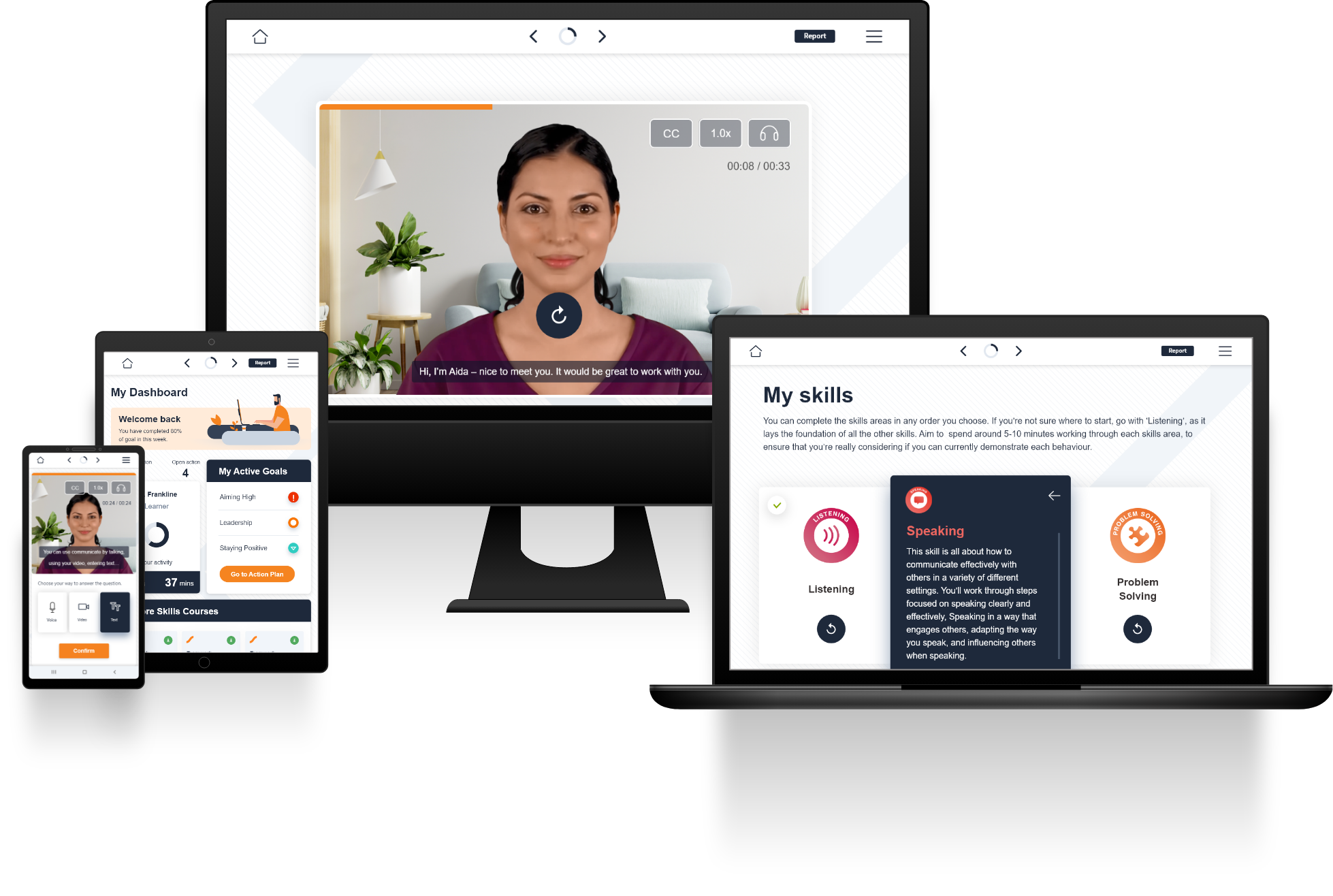
To explore how Saffron's Aida could increase workplace performance through effective and scalable coaching, drop us a line using the link below.

Saffron Interactive secure shortlisting double at Learning Tech awards
Saffron Interactive’s continued excellence in learning design has resulted in shortlisting for two categories at the 2022 Learning Technologies Awards, alongside partners Samaritans and Barrick Gold.
Aiming to build on previous success at the Learning Technologies annual awards showcase, Saffron is thrilled to announce shortlisting in two categories for 2022. Entered in collaboration with two longstanding partners, both shortlisted projects are recognised for their ‘Excellence in the design of learning content’. The Samaritans Veterans App, which earlier in the year won an IELA Award, has been nominated in LT’s ‘Public & non-profit’ category. And Barrick Gold’s ‘Code of Conduct’ training is hoping for success in the ‘Commercial’ sector counterpart.
Both projects are user-centric in their approach to learning design, using tested and proven behavioural science techniques to deliver on their individual objectives. The Samaritans Veterans App assists Military Service Leavers in developing techniques to successfully navigate the emotional obstacles of transitioning to civilian life. Whereas the Barrick Gold Code of Conduct training encapsulates a captivating, challenging, and meta-verse simulative learning experience that challenges public perceptions of “compliance”.
Subject to a rigorous two stage judging process, the shortlisted organisations and eventual winners are put through their paces by an independent panel of experts facilitated by the Learning Network. Receiving over 500 entries per year, the awards seek to acknowledge the best amidst the astonishing dedication, passion, and ambition displayed throughout the L&D sector.
Noorie Sazen, Saffron’s CEO, stated, “We are honoured to be shortlisted alongside our partners Barrick Gold and Samaritans. With the high calibre of entries the LT Awards receive every year, this is a great achievement for two remarkable projects and the teams behind them. It’s a true testament to the design based thinking principles used in every piece of learning we develop.”
Saffron undertook presentations to the independent panel in both categories this week. The winners will be announced in a gala evening on the 16th of November 2022. Saffron is thrilled to have the opportunity to celebrate continued excellence amongst the sector at the ceremony.
The team will also be showcasing their most recent and ground-breaking innovations at the Learning Technologies Autumn Forum event on 13th October on Stand 9 where they will be revealing Aida, Saffron’s AI enabled skills coach.
To further explore how Saffron can work alongside you to deliver award-winning ‘excellence in design’ with your learning content, get in touch with one of our Performance Consultants today.


Is digital delivery the future of employability?
Exploring the barriers to digital solutions in employment related services.
I’m of an age that grew up with vinyl records as the only means of purchasing and playing music on-demand. Recently I had a short vacation in an ‘oldy-worldy’ cottage that boasted an old record player and a selection of vinyl – including the soundtrack to Chitty Chitty Bang Bang! In a fit of nostalgia, I seized the opportunity to relive the memories of my childhood… But after forty minutes of crackles, static and jumping music; forty minutes of not being able to select the track I actually wanted and having to get up every five minutes to change the record, I had to conclude ‘yeah, I know why we went digital’.
Digital innovation is a fact of life. It’s the age we live in and has encroached into nearly every aspect of our day-to-day. In many cases, when it delivers tangible benefits, we embrace and don’t even think about it. But maybe as little as 10-15 years ago not many of us could envision that future and, if someone had described it to us, we’d have been sceptical.
It feels like that is where we are within employment related services: standing at the precipice of the question ‘is digital delivery the future of employability?’. We are wary and maybe a little guarded. But I want to explore where some of that resistance comes from and possibly dispel a couple of myths. So, let’s start by better defining what sort of ‘digital’ we mean.
There is digital and there is digital
Our work at Saffron sees us working closely with the advisors; those people ‘at the coalface’ who support the individual end clients. For them, digitisation has mostly meant increasingly demanding back-office case management systems. It may be valuable data that is being collected, but the day-to-day reality is increased admin with no tools focused on helping the supported individual. So, I can understand that resistance. But that’s not the digital I am talking about here.
The step-change – and the digitisation to which I am referring – is end-user facing tools that enable the individual to make progress by themselves. Tools such as skills assessments, CV-builders, job-searches etc. maybe supported with guides or digital training courses. There are an increasing number of such tools available and can undoubtedly help some individuals, particularly supporting those who are most motivated and competent to start.
But these instruments remain largely isolated. For many, they can be daunting and hard to navigate. They also do little to address confidence and motivation, as that sort of support has remained the domain of the live advisor. But the advent of artificially intelligent (AI) technologies means that even that, in part at least, can be digitised. It is possible to achieve an empathetic online environment wherein the end-user is supported and guided through the process, in a manner similar to that provided by a live advisor. This technology already exists and is embedded within Saffron’s Create Your Own Future platform. As one client stated, ‘what you are really doing is digitising our best advisor’ and that is a good way of putting it.
But the mere thought of AI can make people uneasy when they first encounter it, which is when the objections start to form…

Digital exclusion
Digital exclusion is almost always the first concern cited when contemplating the implementation of digital solutions. Lloyds Bank’s Essential Digital Skills survey shows that 20% of UK residents lacked ‘foundation level’ skills either wholly or partially in 2021 – which means they are unable to function online. Though it is worth noting that only 6% were completely excluded, i.e. they have no online skills.
But if we turn the statistic around, it also means that 80% do have the basic skills required to function online. And if we break that down by age, 97% of 18-24 years olds have the requisite skills. That remains at 90% or above for all ages up to 54, before falling back to the national average for 55–64-year-olds.
Having the functional skills is one thing, but do people have the necessary access? Here again there are reasons to be cheerful. In January 2022, 98% of the UK population had access to the internet. This is backed up by Ofcom’s 2021 report, Online Nation, which cites that over 90% of all 18- to 54-year-olds were frequent users of the internet.
Digital exclusion is a serious issue which needs to be addressed and I would not want to dismiss it for a second. But that does not mean we ignore the opportunity to engage with the 90%+ of people in our target group. If we can deliver an effective online solution for the 90%, not only are we providing them with support and assistance, but we are also freeing time and resources which can be better targeted towards those who need it the most, including those we term ‘the digitally excluded’.
Would people use online digital solutions?
So, a vast majority of the population are already online, but would they use an online employability platform? Conversely, is there any reason to think they wouldn’t? Indeed, anecdotally we know from our work that many people prefer online with its 24/7 availability, less pressure and ‘non-judgmental’ environment which some experience when engaging face-to-face. But we can definitely learn lessons from current behaviours in order to achieve the best online experience for the most people.
In 2021, UK residents spent an average of 3 hours, 37 minutes online per day. The sites most frequently accessed were Google and Facebook by some distance, followed by the likes of Netflix, Spotify, Snapchat and reference sites, such as the BBC. And the devices used to access the internet were predominantly smartphones (85%) and computers (74%). That differential is even more marked amongst younger cohorts with smartphone usage rising to 91% in 25-34 year olds.
Google is about providing guidance, enabling people to get to the information they seek by the quickest possible route. Facebook – and many of the other sites – offer an entire ecosystem, invariably centred around well-designed, bright intuitive interfaces. And ‘behind the scenes’ they remember the users likes, dislikes and activities so they can provide personalised suggestions and guidance. And finally, the device split means that any solution has to be designed for ‘mobile-first’ usage. These are the lessons we need to carry over into the best digital employability solutions in order to maximise impact and results for as many individuals as we can.

A human replacement?
But can an online platform, even with an ‘intelligent’ advisor, do everything that a live advisor does? That is the third and very valid concern often raised. I can give you a short answer: no, it can’t.
However, a lot of what an advisor does is form-filling with the individual, gathering data and providing information, and then chasing up on activities and progress. A digital solution can do that.
Anecdotally, advisors with whom we have worked estimate that 70% of their time is spent on such activities and only 30% actually ‘advising’. A well-designed, end-user platform shifts some or all of that effort to the individual, relieving the advisor of that burden. At the same time, the system provides reports and alerts as to how well that individual is doing, where they might be getting stuck, issues that might be uncovered etc. That way, the advisor, with the extra time they now have, can provide informed and targeted support where it is needed most.
However, what is unsaid in the original statement is that AI cannot do everything that a good live advisor does. It cannot replace the subtlety, nuance and intuition that a good advisor brings to the relationship with the supported individual. That is true, though it can gather information and insight that helps the good advisor to provide that high value support.
But the opposite it also true, it does not do what a bad advisor might do either. A digital solution does not get tired, have a bad day or simply provide bad or wrong advice. It provides the same level of service with the same level of enthusiasm at any time of day and night. An effective end-user online environment delivers consistency. It sets a baseline standard and supports the advisor as much as it does the supported individual. It makes every advisor a good advisor.

The digital future present
Digital is inevitable. It is here already, and we have happily accepted it into many aspects of our life because of the benefits it delivers.
But we are only just beginning to explore its usage within employment related services. Given that, there is a natural wariness, and it is right that we question its use and application. But it has significant potential benefits. It can free resource so that we can better support the digitally excluded and other disadvantaged groups. It can provide an empathetic environment for the end-user where they are supported to explore and develop themselves as far as they are capable. And far from eliminating the human touch, it can raise the standard and enable advisors to spend more time on higher-value, productive work with the individual.
We’d love to hear what you think. What is your experience with digital employment related services? Share your thoughts below or get in touch to learn more about the power of AI in achieving successful employment outcomes.


Prime your workforce for digital transformation in five steps!
Digital disruption continues to accelerate and the demand for digital transformation within the workplace has never been greater.
With 84% of employers on track to digitise their working processes, the need for agile employees that can keep pace with transformation has become imperative.
Recognising that digital transformation can improve productivity is one thing. But reaching the promised land of a highly-efficient and agile workforce is another. That poses an entirely new conundrum for organisations. Whilst 87% of executives recognise the skill gaps in their companies, less than half of them know how to address the issues, and only 42% of employees actually take advantage of the development opportunities that are available.
So, we can all agree that ensuring your workforce can adapt and learn quickly is the most effective means of embracing digital transformation. But how can this actually be achieved?
Understanding the roadblocks
It would be easy to assume that time or resources are the main inhibitors of change. But often, it’s the learner’s own mental constraints that can be the biggest obstacle. How so? Well, whenever we intend to carry out an action, we are met with and controlled by cognitive biases. These are pre-existing understandings, conceptions, or stereotypes that we hold from our life experiences. You may want to think you don’t have any such biases but – sorry to tell you – you do and maybe it’s your own Bias Blind Spot that makes you think otherwise.
Despite the negative connotation, cognitive biases function to save time, energy, and formulate speedy responses in a fast-paced environment. They are short-cuts and help us avoid having to think every single action through. So they can have a productive purpose and are effectively the “default setting” for people’s day-to-day behaviours. But if we are looking to change those behaviours, we are going to have to address those biases.
However, there are, in fact, over 170 cognitive biases, and that is a lot to tackle for one L&D department! But instead of attempting to uncover and address each individuals issue, we can counteract them more widely by encouraging the learner themselves to uncover their own biases.

Overcoming the obstacles
A strategy that directly supports learners in their transition towards change, by overcoming their biases and leading them to action, is necessary. James Prochaska’s Six Stages of Change provides an excellent framework upon which we can build – we’ve been a little creative by combining action and maintenance to make five!
Prochaska himself largely deals with major life-changes, but the model itself can be applied to any behavioural change. That might be in the context of a longer-term development or even within the context of a single learning event.
So let’s take a look at how these stages can be turned into practical steps to transition a learner from thought into action.
Pre-contemplation
In this stage, the learner is still deep in their own biases and is furthest from change. They may feel that what they are already doing is sufficient and any new information we give them is just going to bounce off. They are simply not ready to learn.
If we think of this as one-off learning event – be that a digital course or otherwise – it is most difficult for a learner to take in new information at the start as there are so many barriers. So how do we get around this? We first need to prime the learner and get them to reflect on their own experience – their pre-existing biases. One method we, at Saffron, use is diagnostic tools, such as the Likert scale. Here a learner is asked to rate how strongly they agree or disagree with various statements. These are statements of attitudes or beliefs and there are no right or wrong answers. Rather the learner is prompted to reflect back on their own thoughts. The objective is to awaken the gray matter and getting the learner thinking.

Contemplation
This moves them to contemplation. The learner is now alert but in a state of confusion because they are overwhelmed with new information. L&D’s role now is to gently influence and lead the learner.
By using a step-by-step approach, we can edge learners closer to the next stage. We need to guide them to make informed decisions and utilise personalised functionalities, such as ‘test and tell’, that both challenge and support them.
The ‘test-then-tell’ approach is a behavioural science method whereby the learner is first asked a question before being provided with the answer or feedback. It can be used both to impart factual information or challenge attitudes or biases. It’s primary aim is to encourage the learner to first examine their pre-existing knowledge or bias, priming their minds and making it more receptive to the feedback that follows.
Preparation
When the learner is in this stage, there might be a detailed plan, but no action has occurred yet. The learner has now accepted that they need to do something but choosing the right action is a big dilemma. There is a lot of new information but maybe not enough time and the learner might find themselves paralysed.
The method of counteracting this is by personalising the learning experience as much as possible; getting the learner to take ownership of their own journey. Studies such as the IKEA effect show that people place higher value on products they partially created. As L&D, we can provide the tools and encourage the learner to formulate their own plans. One technique we use at Saffron are ‘personalised toolkits’. Here the learner is guided with suggestions, but the learner chooses their own actions and can add their own notes or comments. They develop a plan, unique to themselves.
Action & Maintenance
L&D takes a step back here and puts trust in the learner to action the necessary changes. They’re not left completely on their own however, as measurable indicators and KPIs can track how they get on over a set time period. What one might find though, is there can either be a dip in this change, or some learners return to old, more comforting habits. This is where the significance of maintenance comes in.
The initial change is great, but it is equally important – maybe more important – for that to be maintained. That’s what distinguishes behavioural change, as opposed to regular change. Remedial or follow-up learning interventions must be used here. Continual coaching opportunities – more viable now for wider audiences through the use of AI – can be even better, enabling learners to consistently assess their performance, identify gaps, and take action against them can reinforce the change and build the behaviours that the business needs.
Termination
This leads us to termination, which means that the change is now a normal part of the learner’s behaviour. But be wary of ‘inauthentic action.’ This is where on the surface you might get the desired response, for example if someone passes an assessment ten minutes after taking a course – but the behavioural change never materialises! If that occurs, chances are that we didn’t overcome those biases at the get-go and follow the process through.
Conclusion
Digital transformation is the only way forward and our employees need to be equipped to deal with the liquid modern workplace. Learners need to address and face their cognitive bias rather than be paralysed by the struggle. As L&D, we need to understand the issues and the process so we can guide the learner and reaching the promised land of the highly-efficient and agile workforce.
The five steps described above provide a roadmap for guiding learners through this transition, against the backdrop of the overwhelming transformation that is happening around them. They also serve as a learning infrastructure which employers can utilise to achieve an agile workforce that is able to keep pace with the future of work.
The stages described above are cyclical, of course. So whilst the learner might have reached termination for one objective, the learning process isn’t finished. Learning is a never-ending process, this ‘conclusion’ signifies a beginning of a new cycle. But, over time, the learner becomes accustomed to the process and trained in challenging themselves, unprompted. Then we have the self-determined learner as part of a learning culture. But that is another subject and one that you can explore here, in my colleague’s blog The (Learning) Culture Catch.
If you would like to learn more about digital transformation and enhancing workplace performance, get in touch today!

Saffron Interactive spotlights work of local communities with ERSA Employability Awards partnership
Saffron continues mission to support advisors and the disadvantaged individuals they support in achieving sustainable and rewarding careers, with sponsorship of the ‘Community Partnership of the Year’ category at the 2022 ERSA Employability Awards.
During another turbulent year, the employment support sector has been grappling with a variable and unstable labour market, alongside changeable and uncertain government policy. This has left many individuals still displaced, without sustainable employment and feeling the tremors left by the pandemic. However, faced with these challenges, individuals and organisations have risen to the occasion, providing high-quality support and guidance to thousands of vulnerable workers and jobseekers alike.
2022 marks the tenth year of the Employment Related Services Association (ERSA) Employability Awards. The event offers an opportunity to celebrate the sector’s success by recognising staff, organisations and partnership achievements, symbols of the truly exceptional resilience displayed across the sector.
Saffron Interactive is proud to continue their work, focusing on using technology to improve delivery of high-quality advice, training and employment support, by sponsoring the ‘Community Partnership of the Year’ category at this year’s edition. This award celebrates organisations and partnerships collaborating to benefit local communities and the individuals within them.
Submissions to enter are open until the 3rd of October and the winners will be announced on the 30th of November, during an evening celebration at the annual ERSA Conference.
Elizabeth Taylor, ERSA’s CEO, says “It is fantastic to receive Saffron’s support for the Community Partnership Category this year. Having worked with Saffron, it is clear how central engaging with local communities and partnerships is to them as part of their wider mission to provide high-quality employment support. I look forward to celebrating the sector’s achievements alongside the Saffron team at the ERSA Conference in November”.
Saffron’s Performance Consultant, Ian Hilder, states, “If it takes a village to raise a child, it takes a community to support an individual. The efforts of authorities, organisations and advisors at a local level is critical to helping the most disadvantaged in our society. This award recognises that work. We are honoured to support the work of ERSA in all aspects and the benefits it has for local communities throughout the UK. We wish the best of luck to all submissions this year”.
The Saffron team will have the pleasure of presenting the winner of the Community Partnership of the Year award and are looking forward to reflecting on a truly remarkable year of employment support, alongside the sector at November’s celebratory event.
To find out more about how Saffron is working to create a more secure future for jobseekers, click here. Or get in touch with one of the team for a chat.
About ERSA
- ERSA is the representative body for the employment related services sector.
- ERSA exists to help their members achieve their shared goal; helping people achieve sustainable work.
- ERSA Members deliver government and charitably funded services to help people achieve sustainable employment.
- Contact ERSA on membership@ersa.org.uk or +44 020 3757 9415.
About Saffron Interactive
- Saffron is an award-winning digital solutions provider, working with partners to develop platforms and empathetic user environments, including AI enabled video-based mentoring for coaching and employability support.
- Working closely with the public and private sectors, not-for-profits and social enterprises, Saffron constantly measures the impact of their services as part of their commitment to constant improvement and evolution.
- Email Saffron on info@saffroninteractive.com or get in touch here.

Saffron Interactive secures record breaking 15th consecutive year of LPI accreditation as Learning Technologies provider
Saffron celebrates a continued reputation of excellence with their crystal anniversary of accreditation, as approved Learning Technologies Provider from the LPI (Learning and Performance Institute).
As the first and only learning technologies provider to have received 15 consecutive accreditations from the LPI, Saffron celebrates this prestigious accolade. The accreditation programme independently assesses and endorses a provider’s ongoing dedication to exceptional customer service, quality, and performance management.
Throughout the year, Saffron has been recognised for their continued commitment to providing high-quality and pioneering bespoke learning solutions. The accreditation follows a string of industry awards including gold in the ‘Learning Technologies’ category at the 2022 Learning Awards and the IELA award for ‘Mobile Learning Experience’. These external accolades, together with continued LPI recognition, further consolidates Saffron as an industry spearhead.
The talk of the industry
Ed Monk, CEO of the LPI, said, “I am truly delighted that Saffron Interactive has reached this significant milestone. The LPI Accreditation programme is meticulous in its examination of an organisation’s performance and the standards needed to qualify are very high – so for Saffron Interactive to maintain accredited status for 15 consecutive years is a phenomenal achievement. In fact, it has never been achieved before by a Learning Technologies provider.
“Now, with the business focus and performance that comes from a decade and-a-half of LPI accreditation, purchasers of learning can be assured that Saffron Interactive stands among the very best. Operating at the highest levels of customer satisfaction whilst continuously adapting to remain relevant within the marketplace.
“Noorie and the whole team at Saffron Interactive can be extremely proud of their efforts. I have no hesitation in recommending Saffron Interactive as a high quality provider of learning technologies”.
Saffron’s CEO, Noorie Sazen, said, “This achievement is testament to trusted relationships with our clients and the passion and innovation of our Saffronites. It recognises Saffron’s cutting-edge, performance driven approach to learning since our inception, which enables us to consistently provide our partners with learning that drives positive change and measurable results”.
Lastly, Jim Parish, Saffron’s accreditation mentor and LPI’s expert consultant, stated “Saffron’s approach is built upon the principles of ‘falling in love with learning’ and using this to empower organisations and their people to discover, acquire and apply the skills they need for the future. Their unique approach is part of a continuing development of the product and services offered utilising the best minds and practical approaches to skills acquisition. I would recommend them to anyone seeking true innovation in digital learning”.
Building on success
Saffron is honoured to receive this recognition from LPI and to further build on our success. We are excited for the next 15 years in the industry.
To further explore how Saffron could redefine performance in your organisation and help deliver quantifiable business impact from your learning solutions, get in touch with one of our Performance Consultants today.
About LPI
- Since 1995, the LPI supports, promotes, and celebrates individuals and organisations who help people learn in the workplace.
- The LPI services include accreditations, certifications and consulting.
- To learn more about the LPI and their accreditation process visit their website or contact them via +44 (0)2476 496210 or info@thelpi.org.
About Saffron
- Saffron is an award winning bespoke digital learning provider. Supplying partners with solutions including bespoke learning experiences, AI enabled coaching platforms and employability support.
- Saffron constantly measures the impact of their services and quantifies the actual value to their clients. Working closely with both public and the private sector.

Power skills for power businesses
Artificial intelligence, machine learning, and automation are replacing many time demanding and repetitive yet simple tasks previously done by paid employees.
The good news – for the business, at least – is that this can remove the need to recruit people with all the necessary hard skills. The even better news is that these systematisations are cheaper and more efficient. The bad news? These shifts ring true for all companies, both yours and your competitors alike. Therefore, all organisations will have lost the potential competitive advantage of a hard-skilled workforce.
So, how will your company outshine the competition if hard skills will be standardised by machinery?
With soft skills.
In fact, the workforce shift has already started with CEOs now prioritising employees with certain key skills, including emotional intelligence and good communication. And because of that, 93% of recruiting managers are citing soft skills as a vital factor in hiring decisions. But is that enough?
Traditionally, skills have been broken down in two main categories: hard skills and soft skills. But ‘soft skills’ come with baggage. Due to their complexity, they’ve been seen as notoriously difficult for an individual to develop and even harder for an organisation to train. Also, measuring soft skills is not an easy task, as success indicators can be much more nuanced and it’s down to the individual or organisation to set goals, track results and keep raising the bar over time. Indeed, the very term ‘soft’ seems nebulous and insubstantial when set against ‘hard’ skills.

The rise of the ‘power’ skills
In reaction to this, the term ‘power skills’ has been gaining credence in place of ‘soft’. Power skills are the clearly defined, essential ‘soft’ skills needed to drive your business forward. And to leverage that metaphor: if hard skills are your cars engine, and soft skills are the oil needed to keep that engine running, power skills are not just any engine oil… Power skills are Mobil 1 Extended Performance engine oil, awarded Best Advanced Synthetic Motor Oil 2022 by Forbes Wheels.
Perhaps a laboured metaphor, but business is about both focus and performance. If an organisation can clearly define and articulate the mix of power skills it needs, then it has a fighting chance of focusing both its recruitment – and more likely – it learning and development strategy around them.
The skills agenda
And the rewards are there to be had. Whilst hard technical skills frequently only apply to one function, power skills are transferable. They boost an individual’s overall flexibility and agility.
By way of example, a Gallup study showed that collaboration and effective communication are essential skills that companies must cultivate to generate organic growth. Effective communication is also closely tied to successful teamworking and a positive workplace culture. Communication skills also encompass active listening and being willing to participate in conflict resolution, all of which combine to overcome the negative impacts of miscommunications, maintain the progress of projects and meet business goals.
Teams are proven to succeed when the members feel that their leader has their best interests in mind. In fact, Harvard Business Review recently surveyed over 1,000 executives, 91% of which stated compassion is an essential leadership trait and 80% indicated they would like to improve this in themselves. Collaboration is already recognised as a critical power skill in the modern workplace, and research demonstrates that organisations with more compassionate leaders excel in this area.

Developing power skills
But we know there is no magic elixir that will instantly improve your employees power skills. Unfortunately, attending a single-day course on ‘mastering adaptability’ won’t make you a master in the subject, trust me. So what will?
Commitment. Both organisational and individual.
Estimates of the time required to acquire a new skill vary from 20 hours to 6 months up to the extreme of 10,000 hours! Of course, it depends upon the nature of the skill, but even at the lower end it’s vital that an organisations training and learning culture is built to allow employees to develop these skills over time.
To get you going, you need to explore your organisation’s internal landscape and whether it’s built to cultivate a culture of innovation. And digital solutions have a huge part to play – they can accelerate skills acquisition and provide an environment for practice! But to explore this in more detail check out our webinar, ‘3 ways to help accelerate skills acquisition’.
We don’t pretend its easy, though. Possibly the biggest challenge is the shift in mindset required. If ‘soft skills’ are going to be where a business can gain competitive advantage, their development must be integral to the wider business goals and not just an afterthought. Perhaps that is the real ‘power’ of power skills – the very term can help build that change in mindset.

And if one particular organisation doesn’t take it seriously, there are plenty of its competitors who will. And we’ve certainly seen a positive upswing in organisations looking to make that leap. So much so, that the global market for soft skills training reached US$23.64 billion last year and that number is predicted to double by 2027. By receiving guidance from others, through training and mentoring, employees can master power skills with more ease.
Final thoughts
Well, the hard truth is there is no escaping it, the world of work is constantly changing and companies are tending to lean towards employees with efficient power skills because of the benefits they bring. Yes, hiring someone that has these attributes can be good for the organisation, but reskilling the workforce that you already have can often be cheaper, more effective and garner an increased long-term return on investment. Digital learning can be a fantastic foundation for an individual to begin their reskilling journey – offering the ability to assess, track and acquire new skills often from one neat package. But with digital disruption continuing to wreak havoc, there’s no rest for the wicked! It’s vital that you identify the missing link in your skills strategy and arm your workforce with the multi-dimensional skillsets vital for survival.
Interested in learning more? Get in touch and we can explore how you can upskill your workforce to keep up with the power skills of the future!

The Restart scheme, one year in: retrospective insight into experience ‘at the coalface’
One year ago…
Organisations opened their doors to the Government’s much-anticipated Restart employability support scheme and the first referrals entered. However even before the scheme began, the changing state of the economy and unpredictable labour market rendered it, if not redundant, then its impact significantly diminished.
With much written and debated about the scheme itself, including its purpose, scale and services, surprisingly little has been discussed about those doing the actual delivery, the IAG advisors.
What has been their experience and what are the challenges they face?
Right scheme, wrong time?
The Department for Work & Pension’s (DWP) Restart scheme is targeted at helping the long-term unemployed back into work. Whilst it was not designed specifically in response to the Covid pandemic it was undoubtedly heavily influenced by it. At the time it was being formulated in 2020, the UK had been through one lockdown and entering a second, with talks of a third. Whilst the furlough programme had saved many jobs, mass unemployment was predicted when that unwound during 2021 and so given that context, the DWP predicted around 1.4m referrals to the Restart scheme and a spend of £2.9bn. It made sense at the time and, credit where credit is due, it was a valiant attempt to anticipate issues and get ahead of the curve.
But of course, like many best laid plans, it did not work out like that and that mass unemployment never materialised. Instead, now in July 2022 we have more job vacancies than we do unemployed. And yet, at the same time we have lower numbers in paid work than we did pre-pandemic. This is largely because over 1m people have left the labour market altogether since 2019. Of those, the largest grouping is individuals aged 50-64, accounting for c. 30% of the 1m and bringing the total number of economically inactive in this group to 3.5m.
The Learning & Work Institute’s Participation Gap report covers these issues in detail, but one consequence has been the down-playing of the Restart scheme. Numbers are expected to be 40% less than predicted with a potential underspend of up to £1.1bn, but the Government is having to play catch-up on the 50+ group, in particular.
At a macro level, the impact, or lack thereof, has significant consequences, but for now I’d like to look at the micro-level. And most importantly: what is the experience for the most critical cohort in all this, the IAG advisors delivering the programme?
‘At the coalface’
Saffron continues to refine and re-purpose our Create Your Own Future platform, which is centred around AI technology that supports both end-user and IAG advisor alike. Given this work, we have worked closely with many IAG advisors over the past 2-3 years and latterly Restart has been a big focus during that period. Whilst specific details remain confidential, these partnerships have provided great insight into the experience of the IAG advisor ‘at the coalface’.

Right people, right place
Our first insight was that the vast majority of IAG advisors are doing the job for the right reasons: they have a visceral commitment to wanting to help the individuals they support. That may not be much of a revelation to readers who know this cohort well – you know this is a dedicated bunch of people. But we had some trepidation in that, whilst our Create Your Own Future platform is designed to complement and support the advisor as much as the supported individual, we anticipated some resistance: ‘it’ll never work… a virtual advisor could never do what I do’ or the like.
But far from it, advisors were quick to adapt. Grasping that the system took away a lot of the repetitive ‘legwork’, freeing them to spend more targeted, higher value time with those who need it. As one advisor put it:
“I just want to be able to get on with actually doing my job – helping and advising my clients. Anything that can help me do it… I am all for it!”
The good, the bad and the ugly
Ultimately, that sentiment bodes well for the adoption of digital solutions, which the DWP had specifically called out and encouraged in the original Restart specification. But from what we have seen, how that has been interpreted and implemented varies greatly from one Prime contractor to another.
The Prime contractor, who ‘owns’ the direct contract with DWP, largely dictates the digital systems that have to be used. The advisor, whether employed directly by the Prime or, as is more often the case, a sub-contractor – or sub-prime – has little to no choice in the matter.

At the better end of the scale in one example, the central case management system used is relatively light in terms of data-entry requirements and the advisor is also provided with a suite of tools to assist them in their work. But it still requires the advisor to guide their client through the process and, as only a couple of the tools are appropriate for the client to use themselves, there is still a significant amount of data-entry. However, it is obvious that there is some ‘joined up thinking’ behind the technologies that seek to ease the burden on the advisor.
At the other end of the spectrum, advisors are confronted with an extensive, often incoherent questionnaire that they are charged with completing with the client in the first interview. As many candidly admit, it is not possible to do it all thoroughly in the allocated hour and they are shamed with inclusion on a ‘naughty list’ the next day if they fail to do so.
But beyond that point, the advisor is pretty much left to do the rest alone – assessments, CV-writing, job searches, chasing and checking on clients etc. – using whatever resources they can find. They then have to input progress data for reporting purposes.
Putting aside issues of consistency, the administrative burden alone was estimated to take up to 70% of the advisors’ time which was behind much of the frustration we have heard expressed.
‘Take care of the pennies…
…and let the pounds take care of themselves’, as the saying goes. The same is true for IAG advisors: support and take care of them and any programme can be successful. Fail to do so and we risk the opposite. And IAG advisors have options in the present climate.

The role of IAG advisor is not immune to the vagaries of the current jobs market: recruiting and retaining quality people is just as difficult as it is for many other roles currently. Add to that the fact that we are likely to ask many to pivot from Restart as it is scaled back, to other probable initiatives, such as with over 50s, and the importance of taking care of these precious pennies is obvious.
We are acutely aware that our ‘on the ground’ insight offers just a snapshot into the scale and variety of employment support across the nation so we would welcome your comments and thoughts.
How can we better support our advisors? If you are an IAG advisor, is this your experience?
If you would like to know more as to how our Create Your Own Future platform supports client and advisor alike, please get in touch.

The (learning) culture catch: why achieving L&Ds top priority is such a challenge
Embedding learning culture at an organisational level
The list of the “Top 5 challenges for L&D leaders” for 2022, was just published by the LPI. Compiling feedback from learning leaders and examining over 10,000 individual challenges the sector faces, this year the report identified the second major difficulty as ‘creating an organisational learning culture’.
Additionally, recent research from the CIPD established that 98% of L&D practitioners want to create a supportive learning culture, but only 36% think they have actually done so. So, it’s clear we all want it, but why is it so hard to achieve?
We do recognise that implementing a learning culture is a difficult task for organisations; it never feels like there is enough time in the day or enough resources within the company. But perhaps the more fundamental issue is that whilst, as L&D professionals, we may know we want a learning culture, how many of us can clearly articulate what that means in a way that inspires the rest of the business?
Let’s start with what a learning culture is not…
You can lead a horse to water, but you can’t make it drink. Whilst that may be an old, outdated proverb – it rings true in this context. Having all the data, technology and infrastructure in the world does not magically make people want to learn. Though we may want to deny it, for many employees, ‘learning’ is something they are made to do on occasions. It may not be something they voluntarily choose to do on a day-to-day basis.
The realities of this in practice, can be displayed by exploring two different employers and their experience with delivering digital learning. The first, is Company A. They identified the need for their learning to go digital, chose an LMS provider with over 20,000 courses and modules and let the employees loose. No plan or guidance was installed, and – by no surprise – the employees were overwhelmed with the number of courses. Because of the poor implementation, only 0.28% of the courses were accessed and less than 5% of the workforce took advantage of the learning opportunities available.

Now let’s contrast that with Company B. They were making an active decision to learn company-wide, and chose suitable content to make available. Company B had a clearly defined vision that was communicated to all employees. That vision was that learning was a day-to-day activity and the responsibility of the individual. But rather than making it a chore to be done, instead it was positioned as something that makes their job easier, more rewarding and leads to their personal and career development over the long-term. As a result, 76% of Company B’s workforce engaged with the available learning opportunities – as opposed to Company A’s mere 5%!
You are not alone
To achieve the example set by Company B is a big ask and one that you cannot do alone. Although an individual employee may be inspired and take responsibility for their own development within a learning culture, that inspiration can quickly wither if it is not nurtured. The change needs to be company-wide. Line managers are the engine driving a learning culture. However, according to LPI, just 36% of line managers reported modelling behaviour to promote learning goals.
Managers need to inspire their teams with self-directed and continual learning. One easy way to do that is by leading by example and sharing their progress with their teams continuously. And let’s not forget, managers are also employees with their own needs and ambitions. As such, they can also ‘buy-in’ into this for themselves as well as their staff – feeding into the visceral, living and breathing learning culture.
Adaptability
So, we have the vision. We have communicated that vision and we have buy-in from managers and staff alike. But how do we nurture that vision to develop a sustained learning culture?
The world has gone digital and so has learning. Books, manuals, and face-to-face teaching are fantastic but they are costly and may not be easily accessible on a day-to-day basis.

That has driven the rise of digital alternatives with which we are all familiar to a greater or lesser extent. But we – the L&D professional – have one big problem. We’ve created a learning culture, full of self-determined learners: how do we satisfy every individuals ever-changing learning needs?
The short answer is we can’t. Yes, there are some core pieces of learning that we are still going to create. But, in a true learning culture, our job is to provide tools and techniques that help individuals solve problems for themselves. Our role is more of a coach or mentor, rather than a trainer. Or more accurately – and remembering that we are not alone – our role is a mentor to the real mentors, who may usually be a line manager or other champions.
And technology can help. Nowadays it is possible to have video-based coaches with AI capabilities that can supplement and support human mentors. They use voice recognition and natural language processing to make the learners’ experience as seamless as possible. An example of this technology is AIDA, it creates a holistic self-driven environment, empowering users to create their own journey and providing exponential data to feed back into the business.
Feedback is king
And if we are to be adaptable, we need feedback. Feedback is incredibly important for organisational learning and often gets overlooked due to its simplicity. Team and peer feedback must be nurtured because it promotes team building, reduces bias, and removes the fear factor. And this includes client feedback, if appropriate. Such feedback is imperative for a learning culture, whether it is positive or negative. Hearing back from your clients – or even prospective clients in a sales environment – why a sale or project did not go through, or a process failed, is of extreme importance. It helps you better understand the company and values so you improve next time. But there are also lessons to be learnt for your own organisation from this self-reflection.

And by way of example, we at Saffron do just that – we conduct a “Lessons Learnt” session after we conclude every project. The whole company – including senior management and individuals not directly involved on the specific project – joins forces to share thoughts and give feedback. It is a chance for the whole company to reflect, share what happened and keep everyone up to date on what the organisation is producing. Whilst also serving as a ‘pat on the back’ for successful delivery of a project. This loops back into management inspiring by example and facilitates the continuous feedback that should be done within a culture of learning.
Is a learning culture worth your time?
Ultimately, a learning culture is worth the effort if you are willing to put in the work to make it happen. Simply having the resources available won’t take the organisation anywhere if the team is not set up for success. A clear vision, clearly communicated across the company is the foundation. Leading by example, adapting the ways people learn aided by appropriate technology and incentivising every kind of feedback are the day-to-day building blocks.
But there is one group we’ve ignored; I hear you say. Senior management. And often, they ‘don’t get it’. They lead the charge and without their support how do we achieve a learning culture? Well, to answer that question I’m going to point you to my colleague’s blog ‘Solving the data puzzle: delivering performance impact with your learning’. So check that out to explore how you can both measure and articulate the value of learning in your organisation.
We hope we’ve offered some food for thought and got you ruminating about how you can successfully achieve a culture of learning in your organisation. But if you want more insights or want to let us know what you think, get in touch.

Samaritans and Saffron Interactive recognised for exceptional use of mobile learning at 2022 International E-Learning Awards
Samaritans and Saffron Interactive’s partnership on the pioneering Samaritans Veterans App has been awarded the Bronze ribbon for ‘Mobile learning experience’ in the International E-Learning Association’s annual awards.
Launched as part of a wider Samaritans and Ministry of Defence programme, the free Samaritans Veterans App uses mobile learning to help Service Leavers and Veterans develop techniques to better manage the long-term emotional challenges of leaving the military and adjusting to civilian life.
Combining design-based thinking principles and Saffron’s award-winning behavioural science methodology, alongside Samaritans nuanced understanding of how to best service the needs of the veteran community, enabled the team to develop a truly effective tool.

The pioneering solution provides emotional health and wellbeing resources, including videos, learning exercises, podcasts and the ability to create actionable to-do-lists. All of which combine to enable veterans to take action and steps towards better supporting their own wellbeing and that of others.
The recent accolade continues a record year of excellence for both Saffron and the Samaritans, as well as solidifying a long-term partnership between the two organisations.
Saffron’s Noorie Sazen said, “Working on this project alongside Samaritans to provide essential support to the veteran community has been an honour. Saffron continue to pioneer usage of mobile technology within learning and so we are thrilled to have received recognition from IELA for our innovative approach and measurable impact”.
Keith Leslie, Chair of Trustees at Samaritans, said: “I’m delighted our Samaritans Veterans App has been recognised with this award and the positive response it has had amongst the veteran community who want to manage their emotional wellbeing has been fantastic.
“Our data shows that veteran callers are almost twice as likely to report suicidal ideation compared to other callers, so there is a real need for support.
“We worked very closely with veterans when developing the app to ensure that it was something that they would use and supported their specific needs, which is critical to its success and uptake. We’ve had over 1,500 veterans download the app since its launch and continue to receive positive feedback on its invaluable support.”
Feedback since the launch of the project has been exceptional and the application is still free to download through all major mobile and tablet devices as well as via desktop PC. The app continues to achieve a positive impact on users by providing access to live volunteer and peer support where needed, as well as offering opportunities to connect and make links with the wider veteran community.
To find out more about Samaritans work and the project itself, click here.
Or to explore how Saffron could work with your organisation to develop an award-winning learning experience, get in touch with one of our Performance Consultants today!
About Samaritans
• Anyone can contact Samaritans FREE any time from any phone on 116 123, even a mobile without credit. This number won’t show up on your phone bill. Or you can email jo@samaritans.org or visit www.samaritans.org for more information.
• Every 10 seconds, Samaritans volunteers respond to a call for help.
• Samaritans is a charity and it’s the public’s kind donations and around 22,000 volunteers that mean we are always there for anyone struggling to cope. Find out how you can support us or volunteer with us.
• You can follow Samaritans on social media on Twitter, Facebook and Instagram.


Solving the data puzzle: delivering performance impact with your learning
A recent study by The Learning and Performance Institute found that measuring ROI and learning impact is one of the top five challenges faced by learning and development leaders. But why does it matter and why is it such a challenge?
In early 2020 Covid-19 tore up the rulebook and thrust HR and L&D into the spotlight. It was no longer ‘business as usual,’ relying on live training and ‘on the job’ assistance from colleagues to pick up the slack. L&D was exposed and charged with delivering impact on employee engagement, productivity, and performance in a remote, digital world.
And a learning culture matters: not only do businesses with a strong learning culture enjoy better employee engagement but also retention rates around 30-50% higher than those that don’t. According to Robert Half, UK “employee turnover has significant consequences on workplace productivity and growth”.
This is exacerbated by the skills shortage: as organisational awareness of the skills Sahara deepens, the business focus sharpens.
This all leaves many learning professionals facing the question; “How do I prove that our L&D strategy is providing value?”.
The answer? You guessed it… Data.
Behavioural change
Taking the first leap into achieving learning with a measured business impact can be somewhat daunting. However, rest assured – it doesn’t have to be. Breaking the process into component parts and tackling each in turn allows for a simple and streamlined model.

The very first thing to consider are the areas of focus for the business as a whole in order to ensure the learning goals are aligned with organisational ones. So start by considering the questions “What do we want our people to do better or differently?” and “How will we know they are doing it?” These are the keys to identifying tangible behavioural outcomes, allowing you to understand the data points that need to be measured and, on a practical basis, how they can be captured.
Only once you’ve defined the behavioural change that you wish to see, and how you’ll know it’s been achieved, can you then look to begin measuring impact.
Understanding your metrics
There are various different metrics you can look at when trying to determine whether an L&D course has been effective. Some may include analysing customer service satisfaction ratings, employee engagement scores, change in performance appraisal ratings, turnover or productivity. You may choose to set these metrics against industry benchmarks, your own goals or both.
So if, for example, you want to improve your customer service scores, the training could focus on developing workforce customer-engagement techniques and then measure the impact on hard business metrics, such as sales or conversion rates. Selecting the right metrics, both before and after training, enables you to show how training has benefitted your employees, your customers and the bottom line.
Examining your data
When it comes to looking at the data, your ROI analysis should include several strategies for differentiating the effects of training. If you’re trying to determine whether your training was effective, you might compare pre- and post-training results. You might then compare your own post-training results against an organisation with similar characteristics, such as industry sector or size.
Calculating ROI means capturing survey responses not just directly after training but over the next few months when participants have had the chance to apply what they have learned in real working situations. By building this evaluation process into the very foundation of every learning initiative, you receive ongoing formative feedback on overall effectiveness, allowing you to catch any improvements early and adjust as needed.
In many instances, qualitative information is incredibly valuable and can carry as much influence as quantitative data when presenting a business case to stakeholders. Most people think of ROI solely as a numbers game, but qualitative comments can be just as useful and provide unique insights that you would miss otherwise. When crafting a ROI strategy, you should consider identifying the non-numerical aspects associated with assessing a training program’s effectiveness too. This can be done through 1-to-1 interviews, focus groups, questionnaires or surveys.

Feedback is crucial and integral to understanding a true picture of overall success.
Practical ways of capturing qualitative data can be through polls launched straight after learning completion, as well as spaced out after the learning to track whether the skill or behaviour change has been embedded. But don’t overlook social learning initiatives – either directly housed on your LMS or perhaps utilising external services like Yammer. Social learning provides unique insights into whether learning concepts have been truly embedded as well as displaying how individuals are engaging with the learning subject matter and topics over time.
Applying your research!
But once you’ve outlined what you want to achieve, how you’re going to measure it and what infrastructure you need place to do so… what comes next? Ultimately, without examination, analysis or understanding, data is meaningless.
To secure the resources it takes to create or maintain a robust L&D strategy and deliver on expectations, you will need to clearly display the value of the investment to leadership. This means taking all of the metrics, data and reporting we’ve discussed and using it to create a story that speaks directly to what executives care about the most – business growth.

There are various ways in which you can do this. Primarily, you’ll need to show how performance was improved by upskilling or reskilling initiatives and set those rewards against the risk and cost of external recruitment – if you are able to find anyone, that is. As well, highlight the critical skills gap among your current workforce, the long-term cost on your business of that and how your programs address the issue. Also showcase the increase in employee engagement, productivity and retention that results from learning participation. Combined, these metrics and analysis establish and quantify the connection between L&D and increased business growth.
Above all, it’s important to set realistic timing expectations. Other business functions have more straightforward metrics, yet L&D is dealing directly with people and their ability to learn and develop. This takes time. Plus no two employees start their learning journey in the same spot. Every employee has unique professional experiences and a varied educational background. Make it clear that L&D results can take months to come to fruition, and set short-term indicators you can report on in the interim.
Learn More!
It’s essential to ensure your training provides value for money. Although determining and expressing the benefits, value and ROI is not always simple, it’s far from impossible! What we have covered in this article gives you a model for determining whether your online learning programme is worth the investment, but if you would like to learn more then check out our recent talk at the Learning Technologies 2022 event here.
Or, if you’d like to chat about optimising your learning data to deliver ROI in more detail then get in touch with one of our Learning Consultants today.

The missing link in your skills strategy: upskilling vs. recruiting
Understanding the current landscape and where the missing links are within your organisation is just step one in traversing the ever-widening skills gap.
But hopefully, you’re one of the lucky ones who’s read part one of this blog series. And if you are, you’ll be up to scratch on where your organisation could be falling short in keeping up with current and future skills demands. But the journey doesn’t end there. The next step is understanding how to bridge those gaps.
If you haven’t read part one, you can check that out along with our other fascinating learning insights here. But don’t wait, the skills gap certainly won’t!
So, if you’re ready to explore the missing link in your skills strategy, let’s get down to business.
No big surprise, there are two primary ways to address skill gaps and these are upskilling existing employees and/or recruitment.
Upskilling – A win-win?
Upskilling, we’ve all heard of it but it has a bit of a jargon-mystic to it, so what does it actually mean? Simply put, upskilling is giving your employees a chance to enhance their skills or learn new ones. Easy, right?!

Upskilling can also be economically beneficial for your organisation. In fact, studies have shown that upskilling is a third of the cost of recruiting – with the average cost of hiring a new employee $4,425 versus an average of just $1,300 to upskill an existing employee. But it also shows you value your workforce by investing in their capabilities and empowering their growth – it really is a win-win situation!
Finding focus
The gaps present within the general skills landscape will often be reflected within organisations, however the specific gaps in your workforce may not be immediately obvious. Therefore, doing a skills gap analysis can be essential to revealing areas to focus time, resource and budget.
The first step to conducting a skills gap analysis is by asking the question, “what skills do we value as a company?”. Thinking about your organisation’s job descriptions, business objectives, and values can help identify the skills your company might need in coming years. Surveying team members – managers and employees alike – on where they think skills are missing is also highly recommended. Employee insights are invaluable and their involvement increases ownership over their own development as well as contributing towards your organisation’s goals and growth.

The training you provide – or are going to provide – can also be important in identifying development gaps within your workforce. By incorporating in-built diagnostics, you can ascertain unique insight into the particular needs of your employees on an individual basis but also across teams, job roles and functions within the business. Achieving this virtuous cycle is a whole separate discussion – but you can find out more here. Spoiler: data is key.
Thinking beyond the now
But don’t forget the future. As well as your current organisational needs, it’s key to consider what skills your organisation might require in the next ten years. This can be difficult to predict alone, so involve managers and others in the process who can provide insight into both organisational plans and industry trends.
Upskill or bust?
Over half of companies’ train and develop their staff to fill open vacancies and providing access to appropriate learning and development pathways can help you close the gap between current and required skill levels. But in addition to providing formal training in key areas, by developing an organisational learning culture – underpinned by a comprehensive digital learning infrastructure – you can achieve a workforce that is able to self-determine their own development, identify problem areas and work to find their own solution.
But however good your staff retention rate, upskilling alone is never going to be sufficient for a successful or growing organisation. So…
Recruitment – We need to talk about Gen Z
When it comes to recruitment, it’s crucial to understand that the workforce is changing. What is seen as desirable in an employer is radically different to what it was a decade ago. Move over millennials, the Zoomers are in town. Gen Z – who already make up 20% of the workforce – care deeply about issues like “cultural inclusivity, sustainability and a healthy work-life balance, [and] 70% of Gen Z employees want to work for a company whose values align with their own”.

In turn, organisational commitment to diversity, equity and inclusion will have a major impact on Gen Z’s decision-making process. It was found that, “77 per cent of Gen Z have indicated that a company’s level of diversity affects their decision to work there”.
Therefore, articulating your organisations commitment to providing professional development and DEI can help develop an internal culture that is appealing to new hires as well as nurturing existing employees.
Facilitate freedom
But they still want more: flexibility! Half of Gen Zers say that freedom and flexibility is their absolute top priority when on the job hunt, so remember to emphasise this throughout the hiring process and be open to remote working options. Due to the current pandemic, there are now many people whose only experience of working is remotely, so having options (be them hybrid or home) is essential.
The skills gap doesn’t sleep
All things considered, upskilling is or should be the first place you look fill the skills gap. It is usually more cost-effective, it can also increase your employee’s commitment and productivity as well as equipping you with a skilled, diverse, and motivated workforce. But if recruiting is part of your strategy – as it inevitably will be at some point – then either way, building a solid learning culture within your organisation is equally as important when it comes to sourcing and retaining the right talent in your workforce!

So, if you take away one piece of information it should be this, learning must be an ongoing, continuous process. But L&D does not have to do it all alone. Enlist managers and staff alike, facilitating learning across the entire organisation. When managers act as mentors, they create an environment where learning can happen daily. Ongoing guidance and feedback are essential to getting the most out of your employees. And weaving the values of consistent learning into your business strategy will ultimately see you growing, optimising, and retaining the finest talent.
Interested in learning more? Get in touch and we can explore how you can upskill your workforce to keep up with the skills of the future!

Saffron Interactive strike gold with AI coaching innovation at Learning Awards
Saffron Interactive continue to cement leadership within learning and development after being awarded Gold in the ‘Learning Technologies’ category at the 2022 Learning Awards.
This prestigious industry award recognises Saffron’s AI-enabled coaching and employability support platform, Create Your Own Future. The success at this event forms the most recent in a hat-trick of awards recognition for the pioneering platform and follows previous accolades including the Learning Technologies award for most innovative new product and achieving gold for best blended learning solution in the International E-Learning Association awards (Business Division).
The AI-coaching platform,supported by Nesta in partnership with the Department for Education, was initially developed to support those whose jobs are most at risk because of digital disruption. However, due to the impact of Covid-19, Create Your Own Future was broadened and accelerated to help those that had lost their jobs as a result.
Encompassing ground-breaking innovation, design-based thinking and interwoven with behavioural science, the platform introduces many technological innovations including an AI-enabled video coach. Available 24/7, the coach offers personalised support to the user – leading them through an exploration of their transferable skills, providing job-matching profiles and training recommendations, as well as encouraging the learner to create an action plan for goal completion, using in-built content.
Jane Warwick, key member of the project’s delivery team at the Trades Union Congress stated, “The learner feedback has been overwhelmingly positive. Learners want to know more; they feel motivated and in control. Having reviewed their skills and made a plan, they’ve gone on to other learning voluntarily for their own self-development”.
Saffron’s CEO Noorie Sazen had this to say, “Saffron are immensely proud to have received the Gold award as the service offered a vital lifeline for hundreds of individuals furthest away from the labour market. But we are even more excited about how the technology can be used in other applications and in particular, coaching for skills at a cost that is affordable for the entire workforce”.
The platform is continuing to provide invaluable support to hundreds of users and Saffron are working in partnership with organisations as part of the UFI VocTech Challenge to refine the user experience, effectiveness and expand its reach.
For more about the Learning Awards and the rigorous judging process click here.
If you would like to learn more about the platform or how AI-coaching can bring your organisations skills strategy into the future of learning and development, get in touch!

The Skills Sahara: Why your talent pool is drying up
It’s almost become a cliché through its repetition to the point of fatigue, but it is an unavoidable fact that over 50% of companies state that they cannot find the skills they are looking for – almost double what it was a decade ago.
Further still, with reskilling and upskilling remaining the firm favourite in Don Taylor’s 2022 L&D Global Sentiment Survey, we ignore the skills gap at our peril. But whilst we’re all aware that we’re facing a veritable ‘skills Sahara’, is it possible to pinpoint where to focus our strategy, budget and priorities to ensure we can arm our workforces with the skills that they, and the business, need to not only survive but thrive in the future of work?
Its like the wise woman once said when asked ‘how do you eat an elephant?’ – you start one bite at a time! Whilst, of course, we do not advocate eating elephants, addressing the skills gap can feel like a mountainous task. So, in this first of two ‘deep dives’, we hope to provide some insight into the nature of the skills gap so we can start to break it down and make it more manageable. And stay tuned for the follow-up, where we’ll address how your organisation can start to close the gap.
Skills under the microscope
So, where do these skills gaps currently exist and where should I focus my skills strategy? Whilst the gaps vary across different sectors – and you may have your own particular areas of focus – there are some familiar faces that keep cropping up. And it is worth drawing the distinction between soft and hard skills. Soft skills are often neglected as they are harder to display and verify but also often relate less directly to someone’s technical ability to ‘do the job’. In turn, they are also deemed notoriously hard to acquire – but how much of that is fact or fiction? Whilst soft skills are undoubtedly a trickier proposition, there are certain ways your organisation can tailor your learning to accelerate their development within your workforce.

And the truth is that hard skills would be rendered almost useless without soft skills: they are an essential part to improving one’s ability to work with others, making them integral to the bigger picture.
Soft skills and emotional intelligence
LinkedIn, with their access to many millions of professional profiles and job postings, are able to provide insight into where the skill gaps have, or will, appear. Through their research, they found that the most in demand soft skills are: creativity, persuasion, collaboration, adaptability and emotional intelligence.
Perhaps the most important result here is the emergence of the term ‘emotional intelligence (EQ)’. In recent years, more and more organisations have been paying attention to emotional intelligence – both what it means, and how to cultivate it.

Essentially, EQ is having the capacity to be aware of, express and control one’s emotions, alongside the ability to handle interpersonal relationships in an empathetic and judicious manner. People with high levels of EQ experience more career success, build stronger personal relationships, lead more effectively and enjoy better health than those with low EQ. With this in mind, cultivating a workforce with high levels of EQ should be seen as a key component of an organisations strategy, not only when it comes to recruitment, but also by weaving these qualities into organisational learning and development, policies, procedures and work processes. As nurturing a workforce with greater personal – and professional satisfaction – can boost productivity, innovation and motivation.
But how can this be done both effectively and efficiently? Check back in for part two!
Hard skills and the ‘usual suspects’
When it comes to hard or technical skills, recent studies confirm what we probably intuitively know – the future is digital! But to be more specific, the top skills employers were lacking in 2021 were the following; cloud computing, data analysis, artificial intelligence, digital marketing and UX design.
As it currently stands, there are more vacancies that require these kinds of hard and soft skills than there are suitable candidates.

With HR and L&D the hub of cultivating talent and skills, it’s vital that we are aware and understand where the current and future gaps lie. As for organisations to thrive, it’s crucial to regularly take stock and ensure your people strategies are aligned to develop a workforce that can keep pace in the ever-changing landscape!
Do or die! Tackling the skills gap
How we the address the skills gaps – strategy, tactics and techniques – is the subject of our second blog. Spoiler alert! You have three options: recruit; upskill/reskill or be the Emu and bury your head in the sand. If you choose the last option, don’t worry about reading our second instalment. But if you’re ready to pioneer the change within your organisation, we look forward to seeing you there!
In the meantime, please feel free to comment with your experiences, share, re-post, re-tweet. We like discussion. Or if you prefer, get in touch and we can explore how you can upskill your workforce to keep up with the skills of the future!

Saffron Interactive recognised for ground-breaking innovation with Learning Technologies award
Saffron Interactive have been awarded Bronze in the ‘Most innovative new learning technologies product’ category at this year’s Learning Technologies Awards, for their ground-breaking employment support platform, Create Your Own Future.
Create Your Own Future was initially developed to support those whose jobs were most at risk of digital disruption, as part of a Nesta and Department for Education funded project. As a result of Covid-19, the project was broadened and accelerated to meet the needs of a wider cohort.
Combining design-based thinking principles alongside pioneering technological innovation, including an AI-enabled video coach with inbuilt voice and text recognition and Natural Language Processing; it has provided invaluable support to those most affected by the current economic climate. Many users are now on the journey to long-term sustainable employment, armed with additional skills and resilience capabilities.
The platform itself has recently received further funding from grant-funding body Ufi VocTech Trust, as part of the VocTech Challenge. The grant will be used to further develop the Create Your Own Future product in order to expand its reach and impact. The project will continue to focus on using technology to improve access to high-quality employment support for those who need it most.
Saffron’s Noorie Sazen said, “We are thrilled to have been recognised for our innovation and ground-breaking approach to employment support. Create Your Own Future has offered a vital lifeline for hundreds of individuals most at risk of displacement from digital disruption and we are proud to pioneer the use of digital technology within the public sector. We are also excited for the future development opportunities that will enable a greater reach and impact for the project”.
Due to the impact of the pilot project, Saffron are also now working to expand the technologies for use within the corporate coaching sphere. Offering organisations an opportunity to procure scalable, effective and high-quality coaching for the entire workforce.
The judges and awarding body had this to say on the standout features of the product:
“We all know that coaching works – the problem is how to scale it? Often the reserve of those higher up the pay scales; it was refreshing to see this coaching product aimed at those further down who will perhaps benefit from it more.
The judges liked that the platform used existing technologies for sentiment and audio analysis, whilst adding the ‘human’ touch of automated video avatars of coach/guides to help find a new career. It was very clever how the system can identify people who need more help and connect them to a real human coach for further support. Well designed and executed.”
If you would like to learn more about the platform or if you’d like to explore how AI-coaching and digital technology could upskill your workforce, get in touch!




Samaritans and Saffron Interactive support military veterans’ mental health with app launch
The Samaritans Veterans app was launched on the 27th October and aims to help Service Leavers and Veterans in developing techniques to better manage the long-term emotional challenges of leaving the military and adjusting to civilian life.
As part of a wider Samaritans and Ministry of Defence programme developed to support active Armed Forces personnel, veterans and their families, Saffron Interactive were chosen by Samaritans as their partner to work with the veteran community and lead on the design, development and deployment of an emotional health and wellbeing support application, specifically targeted at Service Leavers.
As long-term partners in developing both internal and external learning initiatives for Samaritans, the Saffron team were able to combine design-thinking principles and their award-winning behavioural science methodology alongside a nuanced understanding of Samaritans’ tone of voice to create a truly effective tool for the veteran community.
The free app is available through all major mobile and tablet devices as well as via desktop PC to ensure maximum accessibility and reach. The emotional health and wellbeing resources provided through the app include videos, learning exercises and podcasts, as well as the ability to create actionable to-do-lists that enable veterans to take action and steps towards better supporting their own wellbeing and that of others.
Samaritans receive around 10,000 contacts from the military community every year, with consistently over 70% of these being veterans. Joseph Walcott, Samaritans Military Programme Manager and former Army Officer, stated: “The new Samaritans Veterans app provides a practical way for those leaving the military and veterans to look after their own emotional health and that of their families, as well as support each other through a period of real upheaval in their lives”.
Saffron’s CEO Noorie Sazen had this to say about being part of the project:
“Saffron are proud to have partnered with Samaritans on this project. To have had the opportunity to use Saffron’s thought-leading expertise to support veterans in developing new ways to better manage their own wellbeing and adjusting to civilian life is fantastic. The pilot feedback was amazing, and we cannot wait to see the full-scale impact of the project.”
The application also provides access to live volunteer and peer support where needed, as well as offering opportunities to connect and make links with the wider veteran community.
Initial pre-launch feedback was incredibly positive, with Liam, a Navy veteran stating, “The support resources in the app are great and I like that you can do daily check ins to help manage your moods. Anything that can help you to get on with the everyday things is so useful when you have just left a familiar routine”.
The Samaritans Veterans App is available now and is free to download (Samaritans Veterans) on your phone from the App Store (iOS) or Google Play (Android) or use the desktop PC version here.
To find out more about Samaritans work and the project itself, click here.

Goldilocks coaching: Can AI deliver targeted, ‘just right’ skills development at scale?
Coaching has been proven as an effective means of accelerating skills development, but organisations are still spending £6.6 billion per year trying to plug workforce skills gaps. So how can we replicate and scale the impact of targeted coaching styles in order to plug those gaps and accelerate skills acquisition?
If you missed it, in part one of our blog series we explored the current landscape of corporate coaching, establishing that it is possible to deliver the level of personalisation needed for effective coaching using AI and digital technology.
However, only 9% of organisations currently use any AI-based tool to enhance their coaching efforts. But with more than a quarter (27%) stating that they intend to adopt digitally enabled coaching support in the next two years, is it possible to replicate the many different approaches that traditional workplace coaching can offer?
Which is the question we’ll be addressing in this part of our deep dive – by taking a closer look at different coaching styles.
The ‘Goldilocks’ Approach
We know digital can achieve scale, but can it deliver the targeted, adaptable and ‘just right’ support that is able to truly accelerate skills acquisition and meet the needs of the organisation and the coachee? In order to find out, let’s consider four key coaching styles often used in traditional coaching interventions and how digital can extend and enhance their effectiveness.
- Directive coaching: where a coach (often a manager) with a breadth of experience coaches a newer employee on what to do.
While they may not have lived it, digital coaches can also have a wealth of experience built into them. Indeed, an advantage of digital is that the coach can encompass a full range of experience, where a live coach may have gaps. One of the clients we are working with expressed this as “digitising our very best – our ideal coach”.
The digital coach’s knowledge can even be shaped by a history of “lived” experiences and distinct personality traits much like any interaction with a human coach or manager would. This was something we were able to do for our own digital coaches in our recent project, Create Your Own Future, where we created four distinct personalities each with their own relatable “back story” in order to appeal to a specific learner cohort. For more insight into Create Your Own Future and making your employees more career adaptable click here.
- Laissez-faire coaching: which in short, can be described as “leaving employees to do their work”.
This style of coaching is reminiscent of existing digital point-of-need tools with incorporated AI or even chatbots: the individual is left to get on with their work but there is assistance when needed. Just as with a live coach, the individual can ask for help, but AI can go one step further. Digital platforms can be built to identify patterns, behaviours and sentiment which indicate a user may be confused or performing a task ineffectively, the AI coach is then able to offer immediate guidance as well as the opportunity to discuss a user’s concern further.
In turn, there is the broader ability to provide targeted responses (including pointing towards resources, further learning or human support) that direct questions from users. Learner responses – including potential ‘at-risk’ indicators – can be flagged within the internal data recording capabilities for digital platforms, providing opportunity for streamlining and further targeting support sessions in key areas of concern with line managers.

- Non-Directive coaching: a style which utilises non-judgemental and active listening to best draw out insight, creativity, and wisdom in others.
As people, it can be difficult to withhold judgement and practice active listening effectively when speaking with a coachee. Digital coaches however, if built with enough intuition, are even better placed for a non-directive coaching style, as they lack the emotional preconceptions that we, as people, invariably have. The user can use their digital coach as a sounding board, to practice effective self-reflection, an important skill for personal improvement.
- Situational coaching: a combination of directive and non-directive coaching, this style requires the coach to regularly assess and alternate between styles.
This is well within the capacity of many digital coaches as technology has become increasingly intuitive. It is not unbelievable that a digital coach could be taught to recognise patterns and behaviours or understand a user’s self-assessment in order to employ the best coaching style.
An achievable goal?
Demand for coaching in the workplace is growing rapidly year on year, leading the International Coaching Federation (ICF) to predict that by 2022 the market size of the coaching industry in the U.S. alone will be worth $20 billion dollars. A $5 billion dollar increase in under three years!

The ICF has attributed this massive market size growth to one factor – changing global perceptions of coaching. For a long time, coaching was perceived as a luxury available only to senior management. Now, businesses have begun to recognise the value coaching has for all employees and therefore for an organisation overall.
As the demand to provide coaching for all stakeholders in an organisation increases, digital coaching will be able to step in to meet this demand by providing a scalable service that can provide a personalised, humanised, intuitive, and effective experience for both users and employers.
But can a digital coach ever become emotionally intelligent? Stay tuned for part three of the series to find out!
To see how an Artificially Intelligent Development Assistant could deliver targeted skills coaching to your workforce, chat with one of our Performance Consultants today!

Cookie-cutter coaching: Can AI deliver personalised skills development?
Coaching in the workplace has proven to be an effective means for boosting employee engagement and facilitating professional development.
The effects on executives alone are significant; with research citing a 53% increase in productivity, 48% increase in organisational strength, 61% increase in job satisfaction; 22% increase in bottom-line profitability and an average return on investment of almost 600% against the cost of the coaching itself.
However, as Bill Gates wisely said:
“Everyone needs a coach. […] We all need people who will give us feedback. That’s how we improve.”
How then, can companies extend the benefits of corporate coaching to all employees, not just to executives?
Traditionally, coaching in the workplace has either been delivered by line managers or through external providers who conduct targeted sessions for select individuals. However, both methods are limited in their effectiveness. Line managers are often time poor, and the quality of the coaching relies heavily on their own skills and the training they may – or may not – have received. External coaching provision, whilst potentially higher in quality, is both expensive and limited in its reach.
But with the coaching industry seeing ‘colossal market sized growth’ over the last three years, the demand and imperative for organisations to provide coaching for all levels of the workforce – and not just the leadership track – is clear.
In this multi-part blog series, we will be considering how technological advances, particularly in Artificial Intelligence (AI), can help meet this demand and resolve the current limitations of the coaching landscape.
But the first question we need to consider is: Can AI deliver personalised coaching?
Scalability vs. personalisation
Digital coaching, unlike traditional sessions delivered by line managers or coaching professionals, is innately scalable. But does scalability equal generic? Could a digital coach deliver the level of personalisation that human coaches can?
It is understandable to be concerned about this, given how integral personalisation is to effective coaching. Good coaching delivers interventions based on the need of the recipient and the desired coaching culture in their company, rather than providing “cookie-cutter interventions” which are the same for every company and employee.
However, technology is smarter and more intuitive now than it has ever been and the opportunities for growth in this area are immense. Developments in machine learning and enhanced sentiment analysis are also moving at a rapid pace. So, it is not impossible to envision how AI can provide personalised coaching that supports the culture and goals of a company, whilst assessing and providing the most effective approach for every individual recipient.

Indeed, there are already examples out there including our own Create Your Own Future platform. In this platform the user selects from one of four coaches – the one with whom they feel most comfortable. Through an ongoing ‘conversation’ the AI coach builds up a profile of the user and tailors its later responses accordingly. At the same time, the AI coach has their own ‘back story’ and reveals more about themselves in an empathetic way, in order to establish a level of rapport with the user.
A live coach can be available alongside the platform to provide high-value, targeted support where needed, but a high proportion of users have completed their journey with minimal or no support. And many prefer the digital environment, with 80% of users citing the coaches as both supportive and engaging. With 24/7 availability, the AI coach is always cheery and even happy to see them in the middle of the night! Plus, the anonymity and non-judgemental environment provides a “safe-zone” for people to explore more sensitive issues.
An achievable imperative
The value of coaching is proven, and with organisations facing up to the challenges of skills shortages alongside a rapidly changing environment, it is set to grow significantly. The potential of digital and AI solutions to make coaching available beyond the bastion of the chosen few is beginning to be realised. The ability to significantly reduce the cost of coaching, whilst still providing a personalised and valuable experience, is both imperative and achievable.
In our next feature, we’ll be exploring the types of coaching methods often employed and how digital solutions are able to extend and enhance their effectiveness. Subscribe to our newsletter to make sure you don’t miss it!
And to see how an Artificially Intelligent Development Assistant could help boost your workforce’s productivity by 53%, get in touch with one of our Performance Consultants!

Secure Homes and Work Forum: Securing futures with digital solutions | Webinar

Digital employability solutions should both enable advisors to assist more people, more effectively and deliver a better experience for the supported individual. But with all the promise of new technologies, why is that so difficult to achieve?
Renaisi, a social enterprise delivering employability services in London, are on the digital journey and recognise the value, but are yet to take the plunge. In an open discussion, Rebecca Simpson of Renaisi, will share issues within the sector, from the advisor perspective, and lessons learnt from exploring supplier solutions – including Saffron.
Both Renaisi and Saffron hope to get input from organisations or individuals in a similar situation – Is this a shared experience? Could there be a shared solution?
Keen to know more?
Fill in the form below to grab your copy of the slides from the ERSA Secure Homes and Work Forum, presented by Renaisi and Saffron Interactive:

Create Your Own Future: Digital employability support

Scaling career development with AI-video coaching | Webinar

Create Your Own Future is a digital employability platform, born of the Nesta CareerTech Challenge, funded by the Dept for Education and developed by Saffron Interactive.
Featuring an innovative AI-enabled video coach, the platform leads a supported individual through initial diagnostics, skills assessment, job/training matching, action planning and on-going support. The service complements live advisors, enabling scale and high-value interventions where most needed.
Keen to know more?
Grab your copy of the slides from our webinar, presented alongside the Career Development Institute, to explore:
- An overview and demonstration of the live application
- Insight into live advisor support and collaboration
- Background, results and future customisation or bespoke opportunities
This webinar and slide deck will be of interest to those offering career development and employment solutions or providing counselling support.
Create Your Own Future: Digital employability support
Saffron makes history and secures 14th consecutive year of LPI accreditation
Saffron Interactive have received accreditation as approved Learning Technologies Provider from the Learning and Performance Institute (LPI), for the 14th year running.
Saffron have once again affirmed their position as an industry pioneer, trusted advisor and partner to organisations seeking a game-changing approach to digital learning solutions.
This accreditation cements what has been a notable first half of 2021 for Saffron, receiving accolades from across the industry – including recognition as the gold winner for ‘Blended Learning’ in the International eLearning Awards, for their ground-breaking employability support platform, Create Your Own Future. The Learning & Work Institute also published their evaluation of Create Your Own Future, with the platform identified has having notable impact on its target cohort – those most vulnerable to digital disruption.
Ed Monk, CEO of the Learning and Performance Institute stated,
“Now into their 14th consecutive year of LPI accreditation as a learning provider, there can be no doubt that Saffron remains committed to excellence, both in the performance of their employees and the value they provide to customers. An exceptional result, and one in which the whole team can be proud.
Once again, the LPI has no hesitation in recommending Saffron Interactive to any prospective customer wishing to work with the very best in the provider industry”.
Receiving another consecutive LPI accreditation, as well as consistently being recognised as one of the LPI’s Top 15 Learning Technology Providers, solidifies Saffron’s pioneering approach to learning as one that is cutting-edge but proven to improve performance, engender a learning culture within organisations and deliver measurable results.
“We are thrilled to have received our 14th consecutive accreditation from the LPI,” said Noorie Sazen, CEO. “In a time of such turbulence, Saffron are proud that our bespoke digital tools are able to provide organisations with real performance metrics that accelerate skills acquisition, build adaptability and create behaviour changing outcomes”.
Jim Parish, Saffron’s accreditation mentor, stated,
“We are delighted to award Saffron Interactive with Learning and Performance Institute Accreditation for the 14th year in a row.
The quality of bespoke eLearning solutions, range of innovative learning technology and strategic supporting services offered by Saffron Interactive ensures that clients can achieve the learning objectives they set and add real and tangible benefits to their organisation. This is achieved through working in true partnership with clients to first understand their real issues and needs and then, work with them to design and implement flexible learning and development solutions, working with them to embed change that sticks.
This partnership is extended to ensure that future change requirements are met with the same level of quality and dedication. It is a pleasure for the Institute, and personally, to be working with the whole team at Saffron Interactive”.
For more information on the LPI and their accreditation process, click here.


Agility for L&D: leading business transformation
Amidst upskilling, hybrid working and the next normal, another term has fought its way to the forefront of current trends within learning and development: business agility.
Given the rapid pace of change, it’s no surprise that organisations worldwide are striving to become more adaptable and ready to take on any unexpected challenges that might come their way. But how can you ensure your business and the workforce, are as agile as you need them to be?
Agility?
First, let’s cover what agility actually means in a business context. Business agility refers to an organisation’s ability to quickly and continuously adapt when faced with changing markets and environments. But even more so, business agility emphasises the constant innovation needed to maintain a competitive advantage. Research has shown that organisations who implement agile transformation correctly, experience a serious performance boost. In fact, 65% of businesses who cited their own agile transformation as ‘highly successful’ reported a significant impact on their financial performance. This indicates the innate value of prioritising a business strategy that drives agility.
Moreover, during the last year, more and more L&D departments have acquired a seat at the c-suite table, gaining influence and the power to directly drive business transformation. To maintain their authority beyond the COVID-19 pandemic, L&D will have to prove their worth to long-term business aspirations and become a leader for change. Yet implementing agility is not as easy as it may seem.
To get you started, we have compiled three areas you might want to consider when beginning your agility transformation:
-
Strategy

Perhaps the most obvious, though often overlooked step is to implement agility into your learning strategy and adapt your processes to incorporate an agile approach. Start by defining what agility means to your organisation and to your department, perhaps instead of waiting for a new learning intervention to be polished to perfection, you release it to a small focus group in earlier stages and build upon the feedback you receive. The important thing to note here is that agility does not have to happen overnight, you can take it one project or one iteration at a time. Discover what approaches your workforce responds to or engages with and continue to build upon those until you have achieved the fluidity and flow efficiency that agility is known for. This can reduce risk while increasing your turnaround and employee satisfaction.
-
People
Your people are your company, they represent and act upon the values of your organisation. Therefore, building an understanding of your business strategy, processes and thus, agility is key. Studies have shown that an agile work-environment with cross-functional teams increases employee engagement by 20 to 30%. This often results in higher performance rates as employees are more invested in their work and its outcomes, as they understand their purpose or goal within the wider company.

Additionally, with the lifetime of a skill rapidly decreasing, promoting a continuous cycle of skills development is imperative to future-proofing your organisation and helping to generate an agile mind-set within your employees. By providing the tools for learners to self-assess and consider their existing skill sets – as well as where they may need development – you can be on the path to building a workforce filled with self-determined learners that are ready to tackle whatever challenges come their way. Fostering this flexibility and adaptability within your employees can play an important role on the route to agility.
-
Technology
The right technology is a crucial part of successfully implementing agility within your organisation. It needs to underpin and support all other areas of your learning strategy, your workforce and their self-development. We developed our Create Your Own Future platform, as a means to upskill and reskill at scale, while still keeping that human touch. The functionality and design of the platform was rated highly by 100% of users and at the end of their journey, users’ confidence was raised by 91%. The success of the platform is an excellent indication of what a powerful tool can achieve in learner engagement self-determination; a crucial component of agility.

Employing technology that matches your agility needs and enables your processes rather than hinders them is critical to achieving a successful agility transformation. This goes hand in hand with our previous two points. Build focus groups and consult your workforce to ensure new technologies provide value to their job and engages them. Only then will you be able to see behaviour change taking place.
Conclusion
Agile businesses are well-equipped to take on the rapidly changing environments that are bound to challenge us in the future of work. By implementing an agile mind-set into your learning strategy, fostering adaptability within your workforce and underpinning everything with technology that facilitates these changes, you can ensure your organisation is ready for the next normal and can thrive amidst any future challenges.
Want to discover how you can implement agile transformation into your L&D strategy? Talk to one of our consultants today!

Social media is raising a generation of learners: what can L&D learn and apply from this trend?
87% of businesses state they have noticed skill gaps or are expecting them within the next few years. Building a culture that enables and encourages learning, knowledge exchange and behaviour change will be key to filling that gap.
Social learning would seem to be a useful tool in building that culture, but it can be hard to harness its power in a corporate environment. However, in the “real world” social learning has exploded on social media and offers an excellent model as to how we can translate that into a workplace digital environment and lead to lasting behaviour change.
A successful model
Trends spread on social media unlike anything else. One week, everyone will be folding burritos a certain way, the next we are making tops out of scarves.
Sound familiar? That’s because it’s a brilliant example of social learning in action! This theory highlights the importance of imitating others’ attitudes and their behaviours. It also states that learning can occur simply through observation or direct instruction. And social learning emphasises the learner’s internal cognitive processes which take place in a social context, ie. peer pressure, social-norm bias etc.
So, looking at social media and Gen Z, what lessons can we learn from the digital natives and how can these be applied in a workplace context?
-
Understanding the importance of learning
LinkedIn Learning’s workplace report shows that Gen Z are learning more than ever, with 76% stating they believe that learning is key to a successful career. And having grown up in the digital age, with content at their fingertips, it’s no surprise that they are so good at it. Encouraging social learning in a close-knit group, not unlike what we can observe on social media, can foster an openness to learning in the corporate world, particularly, if the value of the new behaviour is clearly communicated and beneficial to the individual or the community.
-
An open mind
But understanding importance and putting that into action are two different things. Gen Z is not afraid to have their practices and worldviews challenged; key competencies that make up a successful learning culture. But that is not always true for everyone – and people may not even be aware. Often, our internal bias serves to re-confirm what we already believe about the world and lets us slip back into past behaviours. In our recent webinar, Moving learners from thought to action: Turning the intention to acquire new skills, into reality, we discussed how these human biases affect workplace training and employee self-development, but also provided a three step plan to overcome them.

-
Sharing and teaching others
As well as a willingness to be taught, Gen Z also demonstrate an enthusiasm for teaching others that is unparalleled. 80% of Gen Zers say they like to learn with others and 52% say they like to help their friends learn.
Amongst other things, this has led to a rise in producing closed captions for videos where the platform does not automatically generate them, to increase accessibility for hearing impaired users. We are currently also seeing a rise in the use of tone indicators such as “/j” meaning “joking” to ease communication for neurodivergent users. These behaviours all show a clear desire to provide value and contribute to the community at large.
This impulse to teach and be taught as part of a community needs to be at the heart of the learning culture we are building in the workplace. We can build an engaged, innovation-driven workforce by recognising an individual’s contributions whilst also promoting the contributions of others at the same time.
-
Positive reinforcement
But possibly the biggest lesson we can take from social media is the continual positive feedback it provides in the form of likes, followers etc. This keeps the users engaged and feeds into their willingness to learn and reflect, in order to receive further positive reinforcement. But it also fosters flexibility. Trends come and go, so to remain relevant, new behaviours have to be picked up and adapted quickly.
This need for adaptability is critical within L&D and the future of work. The average lifetime of a skill is now just five years, so an adaptable and agile workforce will be key if businesses want to remain competitive. Though social media does this on a much larger scale, we can provide positive reinforcement to learners that continually engage with learning material and encourage peer-to-peer exchange. Putting the infrastructure in place that facilitates this, will be even more important as we shift into the next normal and the new era of hybrid working. To find out more on how to facilitate this, watch our webinar Learning Culture: worth the investment or just a fad?.
Conclusion
Of course, there are other motivators behind the growth of social media. But that does not discredit the patterns we can see and the lessons we gain from it. If we want to build an engaged workforce, establishing a learning culture filled with self-determined learners is an essential part. But appealing to our Gen-Z learners – and learning from them – is going to be key in ensuring we can continue to drive business growth and innovation.
Want to explore how you can leverage Gen Z and social learning within your organisation’s L&D strategy? Get in touch, we love to talk!

Career Adaptability: the key to organisational skills strategy | Webinar

Businesses face a corporate ‘survival of the fittest’. To keep pace, they must navigate Digital Disruption, adapt and thrive in the face of uncertainty. And to do this, they need a flexible workforce that can adapt and change with the business as the bedrock of its success.
But with the longevity of skills rapidly decreasing, how can organisations ensure that their entire workforce is fit for purpose long-term?
Download the slides!
Grab your copy of the slides or watch the recording from our recent Learning and Skills Group webinar, to explore:
- Why career adaptability is the currency of the future
- Addressing and overcoming barriers to career adaptability and skills acquisition
- How high performing organisations are embedding career adaptability
This seminar and slide deck will arm you with practical tools and tips to level up your organisational skills strategy and create a learning culture that drives the business forward.
Create Your Own Future: Digital employability support


Building mental resilience and delivering ROI with Transport for London
Building mental resilience and delivering ROI with Transport for London
In preparation for the 2012 Summer Olympics, Transport for London required a course on mental resilience to better combat depression, stress, and anxiety in the workplace. Saffron developed a learning intervention that challenged the taboos surrounding mental health and empowered employees to recognise and react positively to stress.
Download our extended case study to explore the full story of how a 45 minute learning intervention resulted in a £7.8 million return on investment, through the reduction of paid absences.
Download your free copy now:
Get an expert view on your employee wellbeing strategy
Sometimes L&D departments might need a trusted advisor themselves. We’d love to talk to you about this and help you plan the next steps for your mental resilience strategy. If you’re interested in arranging a meeting with us, please get in touch.

Saffron cements leadership in blended programmes and innovation
Saffron Interactive’s ground-breaking digital employment support platform, Create Your Own Future, has been awarded Gold for best blended learning solution in the 2021 International E-Learning Awards.
The pioneering platform was supported by Nesta in partnership with the Department for Education. Initially developed to support those whose jobs are most at risk because of digital disruption, Create Your Own Future was broadened and accelerated to help those that had lost their jobs due to Covid-19.
Built using design-based thinking, Create Your Own Future introduces many technological innovations including an AI-enabled video mentor, who guides and offers personalised support to the user. The platform is underpinned by behavioural science and utilises Savickas’ Career Construction theory to lead the user through an exploration of their transferable skills, provides job-matching profiles and training recommendations, and encourages building action plans for goal completion. The result of the initial journey is a dynamic, evolving dashboard that keeps the user engaged with nudges, notifications and game mechanics. All this sits alongside human support, aiding work coaches to target their time and expertise towards positive outcomes.
Create Your Own Future has offered invaluable support to hundreds of users. With over 51,120 minutes spent on the platform, many individuals are now on the journey towards long-term, sustainable employment.
To receive this recognition for ‘Blended Learning’ from the International E-Learning Association endorses the value of the project and the impact of its development. Noorie Sazen, Saffron’s CEO, remarked, “We are thrilled to have been awarded Gold for this programme. The tool is pioneering within the public sector and we are extremely proud to lead the way within digital employment support. To be recognised by the IELA for this project, particularly during the current climate, is a huge achievement”.
The platform is continuing to provide support for individuals and Saffron are working to constantly refine the user experience and its effectiveness. Saffron are also discussing bespoke versions of the platform with numerous providers, to further expand its reach.
If you would like to learn more about the platform or watch a short video showreel click here.
Or if you’d like to explore how Create Your Own Future could be adapted to support your cohort or meet your requirements, get in touch!

xAPI: the building block for future-fit learning
When it comes to digital learning, the vast majority of us are well-versed in SCORM and how it relates to an LMS (Learning Management System), right? We know that a piece of elearning has to be SCORM-compliant so that it can talk to the LMS. Simple. Beyond that, maybe we’ve heard of xAPI and an LRS (Learning Record Store) …
But how many of us are really sure what it is or why we would need it. If that is you, don’t worry, in this short article, we’ve compiled everything you need to know about xAPI, its benefits and what it might mean for your learning in the future.
The History…
In the early days of elearning, SCORM quickly established itself as the defacto standard for LMS compatibility. However, even as it did so, people could see its limitations. It enabled one piece of elearning to “talk” to one LMS and tell it if a learner had passed/failed a course. But not much more.
And so in 2008, Project Tin Can was born. Built on extensive research for the next generation after SCORM, the resultant Tin Can API aimed to solve the problems articulated by the industry. The main issues were that the traditional SCORM-LMS model lacked the capability to track any learning or activity a user might undertake outside of a piece of elearning. And even within the learning itself, it only offered a limited data-set as to what learners actually did. The need was for greater flexibility and the ability to collect far more data – virtually anything a learner does – across multiple applications and devices. And that is essentially what the Tin Can API, which was officially re-named Experience API or xAPI, does.
The Science bit…xAPI statements
So how does xAPI do it? Well, the basic building blocks are the xAPI statements. These are composed of three core components: an actor, verb and object. This standard makes it easier to capture any type of experience in understandable data.
For example:
- Lynda (actor) read (verb) the xAPI article (object)The actor and verb are required in every statement, but the object can become more complex and hold more detailed information.
- Lynda (actor) commented (verb) “Best article I have ever read about xAPI” (object)By following this syntax, any data can be captured, on any learner activity, on any device or in any application.
The Learning Record Store (LRS)
So how does the LRS play into all this? Well, the LRS is the database where all those xAPI statements are stored. Different tools from various environments use the xAPI standard to communicate and transfer data to a related LRS. For example, from an elearning course we might gather not only a pass/fail mark, but also how the learner responded to each question; how long they spent in a particular section; where did they go back and revise? Or we might record what related webpages they visited and what resources they accessed. As well as related games, simulators or any other application they opened and what they did there.
And all of that data gets compiled within the LRS, allowing us to run detailed reports, providing granular insights on both an individual’s behaviour and that of the group.

LRS, not only but also…
But as well as acting as a data-repository and enabling detailed reporting, the LRS can also be the launch pad for further activity and an enriched user experience. And it does that by transferring that data on to be used in other applications. For example, in our Create Your Own Future employability platform, in one area the learner assesses their transferable skills and that data is fed to the LRS using xAPI. Then, at a later stage and in a different application, the learner considers possible careers and training requirements. At this point the skills assessment data is retrieved from the LRS so that it can be cross-referenced and used to deliver appropriate career and training suggestions. In turn, the learner’s activity in the careers and training application is likewise recorded back to the LRS and then fed into an Action Planning module and so it goes on. But for the learner, it is a seamless, multi-layered experience.

So, will an LRS do away with an LMS?
The simple answer is probably no, at least not in the short-term. LMS are widely used in organisations, colleges and institutions and they do have their own capabilities. They are largely used for managing “conventional” learning in terms of courses, users, forums, events, certifications etc. And in that context, an LRS may even feed in some data to the LMS, if required. But a typical LMS is limited to managing and tracking that “formal” training only. Which is still important but ignores the vast amount of learning that we all know happens beyond this realm. And, as you now know, that is where the LRS, enabled by xAPI, comes in.
xAPI and LRS: What can it do for you?
Of course, you are going to have to think through the data you want to capture and how you are going to use it, but the xAPI-LRS model opens up immense possibilities. There is vast potential to get insight into what information or skills people are missing on a day-to-day basis, by seeing what they are searching for at the point of need. You can see where people are struggling within training – what questions do they get wrong, what do they revise – inside or outside of it. You can see activities the best performers undertake, across a broad range and not just “formal” training.
These insights – and many more – are going to yield big benefits:
- Performance Measurement: with such a granular tracking system, you can get away from basic pass/fail metrics and measure learning against key business metrics to demonstrate ROI and business impact.
- Richer Learning Experiences: Conventional elearning often happens in a sort-of vacuum, where the individual is left alone with the learning material, largely as a self-contained one-off activity. xAPI enables flexible, multi-platform learning with one activity feeding, informing and enriching another.
- Learning, fit for the future: xAPI is just a tool, but a tool in the right hands can shape wondrous things. In other articles and recent webinars we have discussed the need to develop a learning culture, embedding learning into the flow of work and encouraging the self-determined learner. As, we’ve shown here, xAPI is the basic, technical building block from which you can build the learning edifice of the future.
As the Tin Can Project put it themselves:
Conclusion
Envisioned as the next generation of SCORM, xAPI has the potential to revolutionise your L&D strategy. Through its detailed tracking capabilities, xAPI offers an extensive insight into user behaviour across a multitude of systems and activities. An insight that cannot be matched by LMS, allowing you to demonstrate business impact and build a learning practice, fit for the future.
Are you ready to see what an xAPI can do for your organisation? Reach out to one of our consultants today!

The Future of Work: Two thirds of our workforce can’t keep pace
A third of all workers in the UK are aged 50 or over, a percentage which is steadily growing year on year. With guaranteed retirement at age 60 very much a notion of the past, individuals are often required to remain within the labour market, or re-enter, much later in life.
But with the skills required to cope with the future of work constantly evolving, what does the current landscape look like and how can organisations ensure that their entire workforce is fit for purpose?
Can you keep up?
The Digital Revolution. It’s the veritable grim reaper that has been knocking on the door of the traditional workplace for quite some time. In the modern age, businesses face a corporate ‘survival of the fittest’; keep pace and navigate the challenges to thrive in the face of uncertainty or fail to adapt and risk the likelihood of sinking into obscurity.
But what are the pillars of survival? Adaptability. Resilience. Agility. Transferable skills. In fact, according to the World Economic Forum, it’s skills and ‘talentism’ that are deemed the likely currency of the future; ‘capital is being superseded by creativity and the ability to innovate — and therefore by human talents — as the most important factors of production. And so why is it, in a world where the value of skills is so high, that two thirds of hiring managers feel that their workforce doesn’t have the skills to support the business needs over the next three to five years?
Economic imperative
It seems that once again, keeping up with the sheer pace of technological change is the albatross around many organisational necks. We shared an infographic recently, exploring the economic imperative for organisations to invest in a culture of lifelong learning. But this imperative becomes even more apparent when you take into account the ever-widening skills gap, alongside the rapidly decreasing longevity of skills. The pace of change has led to the average ‘half-life’ of a skill becoming just five years. This means that every five years some key skills are around half as valuable as they were before – and perhaps even more terrifying, much of what you learnt 10 years ago is now almost obsolete!

This change makes it even more vital for organisations to offer opportunities for individuals, at all stages of their career, to regularly assess and refresh their skill sets. Merely relying on the skills of yester, without a thought to developing the skills needed for the future of work, puts organisations far more at risk.
Failing to prepare or preparing to fail?
So, how well are businesses doing with tackling this problem? Well, a recent survey by the Learning and Work Institute highlights some serious gaps. Within the UK, just one third of adults’ state they have participated in learning during the last three years – the lowest proportion in over two decades. The issue becomes starker when you look at those in their mid-life: just 26% of 55-64 year olds have undertaken any learning activity – compared to 65% of 20-24 year olds.
Making it clear that those who have been present in the labour market for many years, are either not being offered or not engaging with opportunities to undertake the learning and development that will keep their skills fresh and relevant. Effectively indicating that at least two thirds of our current workforce is ill-prepared for the future of work and are currently relying on skills and knowledge that could be considered irrelevant – or at the very least, outdated – for their current challenges.
Taking on the challenge
So, there is a mountain to climb. Businesses are constantly under threat, and to survive will need a workforce that can adapt, rapidly acquire new skills and innovate. But with existing capability-building programmes often falling short, what can organisations do to fill the gaps and facilitate a journey of continuous learning?
Well, taking the step to identify and analyse your own organisational skill gaps is a great place to start. In this sense, ignorance is not bliss; you need to know the gaps to overcome them.
By focusing on the immediate needs, as well as thinking forward (at least into the next five years), you will be able to highlight key focus areas and then put the infrastructure in place to tackle them. Utilising technologies such as skills diagnostics and self-assessment tools puts the worker at the centre of the process, whilst also capturing key data insights to feed into skills mapping.

Saffron has recently explored this capability within our employability platform Create Your Own Future – offering individuals the chance to explore their existing skill sets, highlight gaps, action their own future development and directly access training or support. Incorporating this template within your learning strategy can create a fantastic springboard for continuous learning.
The key is to simultaneously empower your workforce to take ownership over their own skill gaps, whilst also building confidence as to the value of their existing transferable skills. But also by developing an integral learning culture, underpinned by an effective skills strategy, you allow employees to understand the value of continual learning and cultivate engagement.
Balance
The workforce of the future is diverse and so are the skills needed to survive within it. With the percentage of workers in their ‘mid-life’ continuing to grow, organisations miss an opportunity if they discount the value that these workers offer.

But, as always, balance is essential. Value employees existing knowledge and experience but couple that with a learning strategy that is able to efficiently tackle their skill gaps.
This organisational melting pot of ideas, experience, continual learning and growth is what drives the business forward. A workforce that can continually adapt and keep up with the future of work is the bed-rock of the dynamic organisation of the future.
Keen to take that first step and identify where your organisation’s skill gaps are? Get in touch and we can help you tackle them!

Why you can get rid of google with point-of-need tools
Point-of-need is the future of learning
With digital transformation accelerating at a pace where 77% of businesses are implementing change, the types of jobs and skills needed are changing radically over the very short term.
How can the departments responsible for change keep pace, keep themselves relevant whilst also tackling the impacts of the COVID-19 pandemic?
Point-of-need learning technology is the answer.
Register now to be sent a free copy of our research and analysis, and discover:
- How prepared large organisations are to implement point-of-need learning
- What point-of-need tools are being provided in these organisations
- The direction being taken by the latest point-of-need technology
- How point-of-need learning tools can allow L&D to reclaim the position of trusted advisor
Download your free copy now:
Get an expert view
Sometimes L&D departments might need a trusted advisor themselves. We’d love to talk to you about this and help you plan the next steps for your people development strategy. If you’re interested in arranging a meeting with us, please get in touch.

Learning in the flow of work: the challenge and the answer | Webinar

“Learning in the flow of work” is almost a painfully simple concept – it’s right there in the phrase itself! So why is it such a challenge? Why did so many global Heads of Learning cite it as their second biggest challenge, when asked by the Learning and Performance Institute?
Session now available on demand!
Watch the session and grab your copy of the slides from our latest Learning and Skills Group webinar, to explore:
- What is “Learning in the flow of work” and why is it such a challenge?
- What are some of the practical tools and tips for embedding learning into the workflow?
Backed by the latest research and thinking, check out the slides and watch the seminar to arm you with some of the tools you need to take on the challenge in your organisation.
Performance-boosting walkthroughs
Start the conversation


The hidden dangers of the Netflix approach to digital learning: why access isn’t enough
Micro, video led learning has been one of the biggest trends within elearning for quite some time, but with the ever increasing popularity of streaming platforms like Netflix and micro-content delivery apps such as TikTok and Instagram Reels, it is no surprise that organisations are eager to replicate the ‘Netflix approach’ within learning and development.
They’re fun, fast and addictive (even if you do follow mostly cat-related content like me). But under the shiny seductive appeal of this approach lies a problem.
I’m getting ahead of myself. First time for a quick quiz, pencils and pads at the ready…
What is the biggest challenge facing Learning and Development professionals today?
- Dealing with the fallout from COVID-19.
- Achieving goals with reduced L&D budgets.
- Building a digital learning culture.
Well, according to the Learning and Performance Institute, it’s c that sits firmly in the top spot.
However, in a sense it encapsulates many of the other top challenges; remote or semi-remote teams, a need to support the workforce of the future and embedding learning into the flow of work. Fostering a successful digital learning culture holds the key, and the response to this has been micro-learning, content catalogues and video coming to the fore. But are these trends enough to create the culture of continuous learning that is vital for organisations to remain relevant and agile?
A poisoned chalice?
Part of creating a learning culture is to draw on what employees see already in their day to day lives – to make learning seamless and integral. If we enjoy it out of work (or so the logic goes) we’ll enjoy it in work. If you’re one of the many who use Netflix, you’ll be familiar with their intuitive interface and broad offerings. With 204 million users, it creates an irresistible template for Learning Management Systems. A well-curated platform that could give each learner near infinite choice of learning resources, with easy, attractive UI and micro-learning video based content that fits in around the employee’s workday.
But before shouting “Praise the L&D lord, my struggles are over” and reaching for the celebratory champagne, let me reveal a less enticing fact. The average Netflix viewer only gets through 2% of the content on offer in a year. Which may not be an issue when your offering includes seven hour epics on Norwegian salmon fishing, but it may present more of a problem when despite a broad range of digital learning, your employees fail to engage with even 10% of it. Throw in decision fatigue and we start to realise that utilising the Netflix approach, with a glut of learning resources, does not automatically build the learning culture you’re looking for. In this case, more can actually mean less. Less engagement, less impact, and less, or rather lower, return on your investment.
Culture (not just content) is king
So it’s clear that building a digital learning culture won’t be achieved by solely boosting content availability, however attractive the Netflix approach may appear. Instead, it should be seen as one of many factors that help accelerate your learning culture and as part of the internal infrastructure that enables continuous learning. An LMS that supports your learners is a great cornerstone to your learning strategy, but what else is needed? Here are our three top tips:
-
Be the guide on the side
If learners are to engage with content, they need guidance. Some of this can already exist within an LMS, with the ability to personalise learner pathways depending on role, seniority, and development goals. Spending time on crafting these will ensure your employees explore the content that is relevant and constructive for their individual needs, instead of feeling flooded by resources.
-
Ensure offline support is as robust as online
Learning is quickly eradicated if not put into practice. Employees need on-the-job learning opportunities to cement theory. Simply put, it’s the tangible infrastructure that supports the intangible culture. Ensuring that collaborative and team learning is resourced, rewarded and encouraged ensures a sense of working toward collective goals and transference of learning not only to roles, but to the wider team as well. Communication around learning needs to be facilitated, whether through the LMS, MS Teams chats or Yammer groups. Being able to discuss and share forays into learning, including both mistakes and successes, will generate the continued interest in self-development. Just like word-of-mouth reviews, the recommendations and insights from peers are the most powerful.
-
Remember that change takes time
You may have heard of Kurt Lewin’s Three stage model of change. Much as we (and those around us) may expect instantaneous change, it is a process. Building a digital learning culture will not occur overnight and requires patience and perseverance to ride through the turbulence that change may bring with it. That means that every aspect of the organisation needs to not only be on board, but understand why changes are being made to ensure their buy-in. Educating others on the learning strategy helps to guarantee its success.

Equipping yourself with the right tools, like a dynamic LMS is a great first step. However, relying on this to transform your company is a gamble with the odds stacked against you. Instead, the LMS and the content housed in it, should be seen as one of many strings to your digital learning strategy bow. Terrible metaphors aside, with the right strategy in place yours can be one of the many successful organisations moving toward a successful digital culture of continuous learning.
If you’d like to find out more about building a digital learning strategy that drives productivity rather than kills it, get in touch with one of our learning consultants.

Could your employees’ overconfidence be stalling business growth?
Developing learners who are confident in their own ability; that’s got to be a positive thing, right? Not necessarily. Overinflated or misplaced confidence is often one potential blocker in achieving a workforce that is ready and prepared to cope with the unknown future of work.
Adaptability, resilience, growth
If the current uncertain employment landscape has taught us anything – it is that our workforces need to be prepared to cope with any problem or road block they may come up against.
At Saffron, we have been exploring for quite some time, how to build a workforce that embodies the key principles of heutagogy or ‘self-determination’. Those who achieve this elusive goal are the people who will be able to cope with the fast-paced working landscape of the future. This requires adaptability and resilience, alongside the ability to synthesise knowledge (rather than purely receive it). It’s this that is the driving force for business stability, as well as continuous growth.
Don’t lose your learners
So, if you put the mechanisms in place and achieve a workforce who can drive their own learning and development, then you’re done and dusted? Not quite. Whilst heutagogy could be the solution to many of your organisation’s upskilling woes, these types of learners are often very susceptible to becoming ‘siloed‘ and losing perspective on their own development or true capability. Meaning that they may view themselves as fully competent or capable in a particular skill and therefore unwilling to listen to outside feedback that may say otherwise, either from their peers or line managers.

This potential loss of perspective is where the risk to organisational growth lies. Learners who are unaware of or unable to identify their developmental needs and act upon them, are likely to remain stagnant. This can lead to a deficit within your business innovation and growth prospects – if your workforce isn’t advancing, neither can your organisation. But by combatting this issue head on, and utilising your learning interventions to do so, you can seamlessly accelerate the acquisition of key skills and drive continuous learning.
Long and winding road
Even for the most experienced learner, the journey from novice through to competence and to eventually achieving true capability is long, and learners are often unable to offer unbiased insight into their own capability. This notion was conceptualised by two psychologists Dunning and Kruger, in their 1999 research rather charmingly titled; ‘Unskilled and Unaware of It: How Difficulties in Recognizing One’s Own Incompetence Lead to Inflated Self-Assessments’. Dunning and Kruger theorised that when an individual’s competence is at its lowest, their confidence is at its highest – because they don’t know enough to truly understand how little they know. And it’s that gap between perceived knowledge and actual knowledge that prevents individuals from catching their own errors – leading to overconfidence and skewed self-perception.

But it’s essential to view that gap as a positive! Its very existence offers your learners an opportunity to further their own development. The key is harnessing and highlighting that gap in ways that will motivate rather than alienate your learners and avoid pushing them further into siloed behaviours.
Mirror, mirror on the wall
Successfully navigating feedback and its impacts can be a minefield for people managers – but giving your learners the opportunity to step back and objectively view their own skill gaps can be a powerful tool in targeting and accelerating development in key areas.
As we’ve already explored, humans have an inherent ability to self-assess inaccurately. But that shouldn’t prevent us from offering learners the opportunity to do it within learning interventions. Self-reflection is a skill, like any other, and the more we do it the better we get.

By weaving evaluation throughout learning, especially in simulations, we can build a picture of true learner capability. By offering strategic points for self-assessment and reflection, and displaying the results of the simulation alongside their self-evaluation, we can ‘hold a mirror up’ to the learner. Doing this offers the opportunity to discover key areas for improvement, therefore tailoring their progression and accelerating development of key skills – as well as avoiding learner alienation due to the impact of negative feedback.
Once the mirror has been put up, it is vital that mechanisms are then in place to support the learner on their next steps. This means providing them with resources or further learning needed to tackle the areas identified and avoid the learner getting lost in the learning jungle. Alongside this, there also needs to be support mechanisms in place to facilitate subsequent mentor or line manager conversations if the results or disparities highlighted in the evaluation may not have been as expected.
Creating purpose-built learning that enables seamless learner development and encourages self-determination within your workforce can seem quite daunting. But working with the right learning partner and harnessing the plethora of data you’ve got at your fingertips, you can be up and running before you know it.
Reach out to one of our Saffron learning consultants and we can explore how utilising your learners self-reflection can be a powerful tool for your organisation’s future growth!

Career adaptability has a shape, but does it match your employees’?
With digital disruption more prevalent than ever, upskilling and career adaptability have become buzzwords for employees and employers alike. And rightly so.
Upskilling can not only reduce costs, but boost employee satisfaction and productivity, and provide you with a competitive advantage in the marketplace! Building career adaptability, within the workforce ensures your employees have the skills and mind-set required to survive in the ever-changing landscape. It is a powerful combination and win-win for those organisations that are forward thinking and invest in creating this ecosystem.
But upskilling can be difficult. There are not always the resources, be it time or budget, to allocate to training existing (or even future) employees. So how can you set up your workforce in a way that ensures learning can happen effectively without disrupting the normal workflow? How can you hone in on discovering the most suitable candidates for a new role and maximise your employees’ potential? In other words: are your employees in the right shape?
The right shape?
Let’s go back a bit. If you’re not familiar with categorising employees as shapes, you might be completely lost right now. It all started with the term and describes people with a deep technical or other specialism in one area (the ‘stem’) who also expand their expertise beyond their focus area to apply their skills within adjacent specialisms – the top part of the T. This model was used to make it easier to categorise potential employees from their I-shaped counterparts, who were seen as less desirable, as they did not have the ability to advise holistically and see the broader picture.
However, this model is now not enough. Essentially, people will need to evolve their specialisms and their breadth of knowledge to encompass multiple specialisms and related adjacent, now popularly known as M-shaped people. This is how people are needing to be now in terms of career adaptability. But less common still, are the E-shaped people – symbolising employees that not only have experience and expertise but are able to execute on those separate specialisms.
Shapes of the Future
Recognising employee’s shapes is all well and good, but which ones are going to shape the future? As you might have guessed, E-shaped people are predicted to become the foundation of workforces in the coming years. Particularly due to their curious and hands-on nature, E-shaped people will do well in a future that is built on constant change and evolvement.
Furthermore, this shape lends itself well to the so-called ‘portfolio careers’ that are likely going to be common in tomorrow’s job market. A ‘job for life’ is already outdated, but the future means individuals will have a number of different careers throughout their life, perhaps even overlapping each other, so agility is key. So, to thrive as an organisation you will want to ensure that your employees (old and new) have the skills required to blossom in the new landscape and be able to adapt to whatever might come.
Though the positive benefits of further learning and ‘shaping’ are evident, many organisations hesitate to upskill, worrying that hard-earned, upskilled employees will move onto competitors. But in fact, the opposite is true; by providing employees with opportunities to extend and apply their new knowledge, they have the chance to recognise their own value within the business and perhaps even pass it onto others. This in turn, leads to higher satisfaction rates, which, makes switching employers less attractive.

Fostering an agile workforce
There is an abundance of approaches out there that you can take to train your own staff. But one noteworthy example of low-cost, efficient upskilling comes from Google. In recent years, they have implemented what they call their “g-2-g” (Googler-to-Google) program, which is a voluntary network of 6,000-plus employees. There, employees can teach and train each other in a variety of ways such as teaching courses and 1:1 mentoring. The initiative has yielded impressive results with 80% of all tracked training at Google being done through this network.
Building a social learning network like Google is a great approach if you are looking to upskill your employees cost-effectively and build a learning culture. And the cherry on top: an unconstrained structure like this encourages the forming of E-shaped people, due to its self-motivated nature which fosters exploration by providing people’s expertise and experience to others outside their field.
However, a network like this cannot stand on its own. To effectively transform your workforce into E-shaped employees, you’ll want to make sure that they do not only have opportunities to learn from their peers but also provide them with further training such as elearning courses, blended learning and so on.
To assure that learners don’t lose sight of their long-term goals and the steps to get there, it’s wise to supplement their learning with mentor check-ins. These offer a great opportunity to regroup and realign any training with the individual’s needs and ambitions, as well as the organisations goals.
At Saffron, these are principles that we integrate into everything we do, such as our Create Your Own Future platform. Here, users’ experiences and skills are evaluated and applied to potential careers, even outside their previous field. A mentor guides the learner throughout their journey and a personalised dashboard ensures learners are kept on track with their goals.
Conclusion
As the career landscape changes more and more from stability to mobility, adaptability becomes increasingly important, yet many employees lack the agility needed to navigate the ever-changing tides of the market. By developing your employees into E-shaped people, you are not only providing them with the tools they need to survive any disruption but thrive on it. To make their learning as succinct and effective as possible you’ll want to ensure to supply a blend of resources, ranging from internal exchanges to external learning modules while providing mentor support along the way.
Check out our Career Adaptability Hub for more resources. Not quite sure how to transform your employees into the agile workforce that they could be? Chat to us, we’d love to talk!

I am not my user—how L&D suffers from false consensus bias
When we’re building learning experiences it can be all too tempting to use our own experiences, beliefs and assumptions as a blueprint for how the user will react. It’s a big mistake and more prevalent in L&D than you might think. It’s called: ‘false consensus bias’.
Think of a food you really dislike. Then think of how you would describe it. Do you use phrases like ‘it’s disgusting’, or ‘it makes me gag’? We posit these statements as objective qualities of the food rather than our subjective experience of it – but many people will love the same snack that you find repulsive. This attitude doesn’t limit itself to food. In fact, studies have proven we’re extremely prone to assuming that our experience of something is universal – it’s known as the ‘false consensus bias’. Just consider how many times you’ve given your opinion on something by saying ‘it’s…’ rather than saying ‘I find it…’. When it comes to design, the danger is that we create something that we believe is ideal, but that really only takes our own preferences and experiences into account.
So, when developing digital learning experiences, it’s important to consciously put aside this bias so that effective online training is created with all target users in mind. In this way, we not only deliver what they need to know but also cater to a broad range of values, tastes and preferred learning methods. Recently I attended a workshop with Unity Works, ‘a specialist organisation supporting people with a learning disability to gain skills, achieve qualifications and secure jobs, so they can reach their full potential’. We asked service users to give their views on Create Your Own Future. It’s a platform developed by Saffron as part of Nesta’s CareerTech Challenge, in partnership with the Department for Education, that uses a ground-breaking AI-enabled virtual mentor to support users in developing their skills, making career plans and securing employment. Like all projects developed by Saffron, Create Your Own Future underwent rigorous accessibility testing, reaching the WC3 AA standard on the Web Content Accessibility Guidelines. But often, considering purely accessibility guidelines is not enough to ensure you are able to capture and not alienate your learners.

The feedback from the Unity Works cohort was incredibly positive – one Unity Works user went on to secure three job interviews after using the platform. But that isn’t to say there was no room for improvement. Some of the users had found our skills rating terminology difficult to get their heads around. In this part of the course, users were presented with a skill, for example “strategic thinking” asked to rate themselves as to their competency in this area, from ‘undeveloped’ to ‘very competent’. Unity Works users suggested that a “smiley face system” may be easier for a wider user base to interpret. A simple change, but one that could help avoid losing learners part way through their journey. For other learners, though, this may lessen the impact of the exercise. Somewhere in the middle of these is possibly the right approach.
Part of tackling this false consensus bias is to build in evaluative points throughout the design process to ensure that all potential user profiles can use and benefit from the end product. Changes may seem small, but if they go unchecked can create barriers for the user. Nearly 1 in 5 working adults have a disability and about 73% experience barriers on more than a quarter of websites they visit. Each design iteration allows refinement and a further move toward a piece of learning that is effective and engaging for all learners. User design testing can lend a hand here, whether it be through A/B testing, contextual inquiry or creating learner personas to guide your design. Whatever the method is chosen, crucially, they must form a continuous part of the agile design process. Working with inclusive design principles throughout, we can create an experience that is equally useable, enjoyable and effective for every learner.
Exclusion, alienation and disengagement of the user occur when we solve problems using our own biases. Or to put it another way, when we design for people like ourselves, and only for people like ourselves. Whilst the false consensus bias is entirely natural behaviour, it doesn’t mean that we are unable to move past it. At Saffron Interactive we pride ourselves on guiding clients through the design process, ensuring that their diverse user base is fully reflected in the final product. Although it may go without saying, everyone benefits when design is inclusive and engaging. If you’d like to find out how we turn diverse perspectives into powerful elearning experiences, get in touch with us today.
Want to chat with us about how to create elearning that appeals to all users? Get in touch with one of our learning consultants and we’ll talk it out.
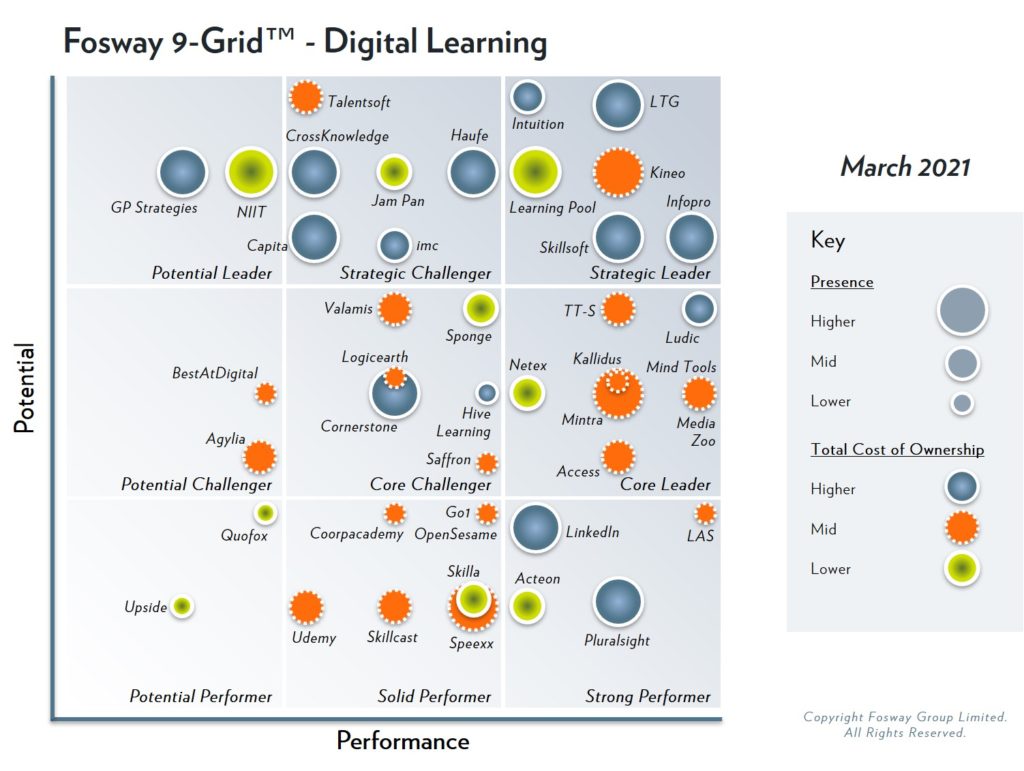
Saffron fortifies Core Challenger position in 2021 Fosway 9-Grid™ for Digital Learning
Saffron Interactive, award-winning learning technologies and consultancy provider, strengthen their position as Core Challenger in the 2021 Fosway 9-Grid™ for Digital Learning.
With strong performance across all five areas (Performance, Potential, Market Presence, Total Cost of Ownership and Future Trajectories across the market), Saffron Interactive reinforce their Core Challenger position in the Fosway 9-Grid™. The spot highlights Saffron’s premium and highly bespoke digital learning approach and the ranking was particularly influenced by the development of the trailblazing AI-enabled platform, Create Your Own Future.
“Saffron’s growth is propelled by the measurable results we create for clients” says Noorie Sazen, Saffron’s CEO. “We enable people and organisations to perform at their best using truly innovative technology and learning design underpinned by behavioural science. Our strong performance in the Fosway 9-Grid™ reflects that.”
The Fosway 9-Grid™ is a five-dimensional market analysis model that is used to understand the relative position of solutions and providers in the learning and talent systems market.
David Wilson of Fosway Group, commented: “Digital learning has evolved well beyond formulaic e-learning content. Saffron has always been innovative in its approach to digital learning, and it is important to them continuing to diversify their offering, with a broader range of solutions and services. Saffron’s continued commitment to its customers and ongoing innovation sees its continued recognition as a Core Challenger in 2021.”
The full Fosway 9-Grid™ Report for Learning Systems is available for download on the Fosway Group website.

Can you cultivate a culture of innovation in the workplace?
What exactly is it that drives businesses forward? In most cases, it’s your people and innovation. A bright spark that is formed, developed and workshopped until becoming a fully tangible concept and then reality, generating revenue and new markets – is the nirvana. But both your people and their innovation need to be nurtured, which was complex previously, but in this age of working remotely, can it be done?
Skills for the future
The World Economic Forum estimates that by 2025, 85 million jobs may be displaced by a shift in the division of labour between humans and machines. So it is no surprise that amongst their top skills for the future are; Analytical thinking and innovation; Creativity, originality and initiative; Complex problem solving – to name but a few. However, this data is nothing new, it merely puts a number on something Saffron have been advocating for years. Those skills that are currently unable to be replicated by AI – or at least not as successfully, are the ones we need to nurture. But is it possible to muster up creativity whilst working within a silo, juggling work with home-schooling, or distracted by the housework?
Drive innovation, drive growth
It isn’t enough for organisations to expect innovation to happen organically; it has to be an active business goal that allows each department to facilitate and support – including HR and L&D. With innovation being one of the four main levers for revenue growth, businesses need to act now. Rob Shelton, PwC’s Global Innovation Strategy Lead, cites, “Business leaders need to realise that innovation pioneers already exist within their own industry […] and if they are not among those pioneers, they have to be ready to step up to that competitive challenge.” With innovative companies delivering $0.25bn of additional revenue, compared to the least innovative, fostering creativity and innovation is a genuine business imperative.
Developing a fully-fledged innovation strategy and weaving your learning initiatives to support this will enable your workforce, and business, to avoid stagnation. Ultimately becoming an organisation with agility and adaptability at its core and encompassing a culture of innovation.

Prioritise your people
However, the dark cloud of COVID-19 is an undeniable road blocker. Even though prior studies have indicated that artistic brilliance is often twinned with poor mental health, CIPD’s Health and Wellbeing Report, shows a 37% increase in stress-related absences and a huge spike in the inability to switch off out of working hours over the last year. Not only does this need to be considered in terms of employee well-being, but it’s also a key factor of working practices that kill creativity, rather than cultivate it. There is growing evidence that high creativity is related to low stress, so organisations who prioritise workforce wellbeing can simultaneously drive innovation.
By giving your employees room to breathe, literally and figuratively, you are freeing up headspace for those creative and innovative thoughts. Whether this is achieved through organising regular one to one mentoring sessions, scheduling specific ‘fresh-air’ breaks throughout the day or creating learning initiatives with the direct purpose of building mental resilience within your workforce, supporting your people is key.

Not only can a focus on employee well-being cultivate a culture of innovation, it is also integral in general employee productivity. As illustrated within a piece of learning we created for Transport for London, prior to the 2012 Olympic Games. The course aimed to challenge the taboos surrounding mental health issues and empowered employees to recognise and respond positively to stress. With the course generating a £7.8million return on investment through the reduction of paid absences, the positives of embarking on an employee wellbeing learning strategy are tenfold.
Safety first
A psychologically safe working environment comes hand in hand with employee mental wellbeing but it also feeds empowerment, as well as encouraging sharing of thoughts, feelings and ideas. It is vital to foster a workplace in which feedback is encouraged and making mistakes is okay, as “creativity is thwarted in organisations where mistakes are taboo. When mistakes are punished, employees will avoid risk.” Ultimately, if your workforce feels safe to share ideas, with both peers and managers alike, creativity can bloom, and your culture of innovation will thrive.
Self-determination
But for this to happen, organisations need to actively develop learning initiatives that facilitate curiosity, collaboration and creation. By giving employees the tools and freedom to become self-determined, they will seek more than just surface level understanding of problems and solutions – building application rather than purely regurgitation. By putting the learner in charge of their own journey, giving them the opportunity to explore, make mistakes and assess their own progress, you allow employees to drive their own growth.
Supporting this, by creating a community of learning, you provide a safe space to share thoughts, theories, and questions – but also actively seek out feedback and guidance. These conversations naturally accelerate skills acquisition, building deeper understanding and act as a melting pot for innovation.

Creative leaders cultivate creative teams
Putting the practices in place to breed creativity and innovation can seem daunting, particularly whilst employees are operating remotely. But taking the first steps and prioritising nurturing these skills is imperative for future growth and agility. Employees engaged in taking ownership of their own learning and are intrinsically motivated to achieve their goals, enable a continuous cycle of growth and development. This culture of innovation is vital, as; “In the most creative firms, a strong narrative has permeated the enterprise: people inside the organisation believe in what the company is trying to do and that they can help to achieve it.”
Interested in learning more? Get in touch or view our LTDX seminar on-demand, where we explore self-determination and how it can accelerate skills acquisition within your organisation.


Why ignoring diversity in L&D is killing innovation
‘We need more images of middle-aged white men please’. I’m not joking. This exact phrase was said during my first ever call with a client in the learning technologies industry. Luckily, I was only there to observe, so they were spared my stutters of disbelief.
Don’t get me wrong, I understood where they were coming from. The majority of the audience for this particular course was management. And in their company, that meant middle-aged white men. They wanted their audience to relate to the characters in the course to promote engagement, and so we changed the photographs.
This happened a few years ago, and I still think about it every day. My (maybe naïve) viewpoint, is that instead of changing these photographs, why don’t you change your hiring practices? Why don’t you work to make sure your employee base reflects the diversity of the world so that your courses can too?
Why do we need to diversify our courses?
In the past few years, we have seen a major shift in public perception towards equal representation, which is, thankfully, being reflected in the majority of goods and services we consume. The world of advertising, for example, is making a conscious effort to portray the world as it actually is, in all its glorious colours, shapes and sizes. Granted that some of this is being met with hostility from keyboard warriors in comment sections, but studies have shown that creating diverse adverts leads to increased sales, and really, who cares what keyboard warriors have to say.
We don’t live in the 1950s anymore. The workforce is more diverse than ever, and this should be reflected in how we learn. The traditional way of thinking about characters or images is that when learners ‘see’ themselves in a course, engagement goes up. They place more value on information that comes from someone that looks like them and so elearning should be more diverse.
Like most things in life, it’s not that simple. What if, like my client, your employee base is mainly one gender and race? Personally, I don’t think this is much of an argument against diversity in elearning courses.

Being in a diverse environment brings different points of view, enhances creativity (which leads to innovation), and can even make us smarter. This article from Scientific American pulls together decades of research from all sectors, to help show that having a mix of races, genders, ethnicities, and sexual orientations in a group makes for better problem solving and decision making. Not just because people with different backgrounds bring new information, but because being exposed to diversity can actually change the way you think.
If innovation is valued by your company, then having a diverse workforce will help push your workforce to think differently, and challenge existing work patterns. An example of this is a study undertaken in 2004 by Anthony Lising Antonio. They found when a black student presented a dissenting opinion to a group of white students, it led to broader thinking than when a white student introduced the same opinion. And it isn’t just race, studies around this topic with gender, sexual orientation and other characteristics have produced similar results.
In the past learning theory has placed a lot of emphasis on learners relating more to people that look like them, but is this what we actually want? Don’t we want to challenge our employees and get them thinking differently? Adding diversity to a group (or indeed an elearning course) means people will anticipate a difference of perspective. They become more open-minded and so learn more. Why shouldn’t this apply to who your learners see in an online course?

Added to this, is the fact that Millennials and Gen-Zers are coming into the workforce and demanding social responsibility from the companies they work for. These employees are much more likely to show loyalty if companies show their social value. Diversity in online learning is one small but simple way to show your commitment to this. Of course, ensuring you have a diverse workforce is the best way to show your commitment to diversity.
Why is it a challenge?
As an industry, we’re historically not great at diversifying our content, and we’re getting later and later to the party. Over the last ten years characters and images in elearning courses have started to change, but this is mainly in terms of gender and colour. Think about it, when was the last time you saw a disabled character in a course?
One of the major issues for elearning developers is a lack of diverse stock photography, especially if you want a character to be depicted throughout a learning journey. There’s not much we can do about that, except holding our own photoshoots, which can be expensive. Some suppliers though, (including Getty) have already pledged to diversify their images in the wake of the BLM movement last year.
Where do we go from here?
Well, clearly this is a complex issue.
Character led narrative courses are more popular and effective, so it’s time to put more effort and thought into developing the characters within them. Give them back stories and really think about their lives. At the very least we should be aiming for more cultural and gender diversity.
Overall, we need to really think more about the images and characters we put into courses, and how they can challenge your learners. We shouldn’t always put the middle-aged white man as a manager, or the young woman as an intern. It’s lazy and we’re just feeding stereotypes. Using characters that are fully developed and diverse can be a way of breaking down unconscious bias and emphasising that diversity is not just an exercise in tokenism. Perhaps it will even lead to innovation and a culture change in your company.
Get in touch to explore how we can support you in developing your learning strategy to drive innovation and performance within your workforce.

The Skills Economy: Drive business growth in 2021
The working landscape is changing
With the World Economic Forum estimating we will need to reskill over 1 billion people by 2030, we stand to miss out on $185 billion in potential GDP growth if we fail to meet this growing skills demand.
With reskilling an undeniable business imperative, how can you keep pace and prepare your organisation for the future of work?
Download our ebook to get some pointers on how your can transform your organisation into a resilient, thriving business that prosper even in times of workplace trauma.
Download your free copy now:
Get an expert view
Sometimes L&D departments might need a trusted advisor themselves. We’d love to talk to you about this and help you plan the next steps for your people development strategy. If you’re interested in arranging a meeting with us, please get in touch.

How you can deliver L&D Sentiment Survey’s top priority of re-skilling
Don Taylor’s annual global sentiment survey highlighted that there was an unprecedented agreement that re-skilling and upskilling was the priority focus this year. At Saffron we’ve been looking at the skills agenda for some time.
Whilst there’s been a focus on what skills need to be learned, we’ve always been interested in what L&D can do to develop learners that upskill or re-skill themselves. This will be crucial as workplace trauma and disruption continues.
The answer could be self-determined learning. If you want to see how Saffron have developed and implemented this with various clients, look at our opening seminar at Learning Technologies Digital Experience, which you can see on-demand here – or you can see the summary below.
Why self-determined learning?
Quite simply, the way we work has changed, learners want change and business requires the way that people learn to move from competence to capability.
We need learners that can identify their own problems, find the solutions and build their skills. Learners that achieve a deep understanding enables them to apply their knowledge to all future roadblocks – rather than one specific problem.
The key principles of self-determined learning are below. Select each of the areas to find out more.
Explore
Curiosity is what drives a learner, they take the lead in the process and so have the freedom to explore a subject. They seek out answers to a problem they themselves have identified.
Connect
Learners need to connect with a course. They need to feel that it’s applicable, personal and relevant to their interest in the subject.
Create
Learners cannot be a passive part of the learning process. They should be active in creating materials, resources and content that help the information stick.
Collaborate and share
As part of the creation process, learners should have the opportunity to collaborate with colleagues and share their ideas and products. This helps synthesise the learning and apply it to new contexts.
Reflect
Another fundamentally important stage, reflection leads back into the explore stage. Learners reflect on what they’ve learnt, identifying gaps or what they want to find out about next. It also allows them to think about and understand the process of how they learn.
Self-determined learning is not a one-time event; it’s a continuous cycle. We need to create a culture where learners are placed at the centre of the process, and are able to determine their own goals and paths, so that they progress from receivers of learning into synthesisers.
But does this work in the workplace?
It not only fits in the workplace – but is necessary.
One common question is “But how do we get them to learn what we need them to learn?”. Forcing employees to take a course doesn’t mean they’ve learnt something. We have to make the learning effective, and we do this by really understanding how people learn best. You can still have a course on compliance, but think through how this may be done differently with the practical steps below.
Saffron’s five tips
1. Test before you tell
For a learner, realising what they don’t know sometimes needs guidance. At Saffron we use a test then tell approach. This can be done by placing a diagnostic at the beginning of training . Humans are innately curious, so showing them what they don’t know, often motivates learners to explore it.
2. Provide an adaptive experience
Providing a learner journey that adapts as the learner progresses, flexing to how they are responding to questions, scenario dilemmas and choosing options is the ultimate way to let learners explore the content and provide individualised performance support. AI can make this even more dynamic with sentiment analysis allowing for even greater opportunities to let the line manager understand when and if to provide encouragement or support at strategic points.
3. Be a guide on the side
Self-determined learning doesn’t remove the role of a mentor or guide. Be one that furthers thinking but doesn’t supply the answer.
4. Let them create
Building a community around learning helps mitigate learner disengagement but more importantly allows assimilation, refinement and innovation of ideas and experiences. Even simple learner dashboards replaying back to the learner their own or others’ activities can spark debate, reflection and ultimately – action! Closed social media groups are ideal and provide an outlet for creativity but also build on the IKEA effect, i.e. the value that is placed on something we create is often higher than its actual worth. This builds accountability, pride and deepens understanding, motivating us to learn even more!
5. Turn them from receivers to synthesisers
Action led learning sets can be done face to face or in virtual collaboration but can also be digital. Replayability is a key advantage of digital and naturally allows practice so that skills can be honed.
In summary, it’s important not to quash the natural curiosity to learn that we all have as children. Questioning, exploring and evaluating all come naturally – if we don’t spoon feed our learners in what and how they learn!
Join us at our next Learning Technologies Digital Experience seminar on Tuesday 23rd February, where we’ll go through three simple ways to help self-determined learners accelerate their skills acquisition.
We hope to see you there, but if you can’t make it, get in touch and we can explore how best to integrate self-determined learning into your organisation!
Why you can get rid of google with point-of-need tools
Point-of-need is the future of learning
With digital transformation accelerating at a pace where 77% of businesses are implementing change, the types of jobs and skills needed are changing radically over the very short term.
How can the departments responsible for change keep pace, keep themselves relevant whilst also tackling the impacts of the COVID-19 pandemic?
Point-of-need learning technology is the answer.
Register now to be sent a free copy of our research and analysis, and discover:
- How prepared large organisations are to implement point-of-need learning
- What point-of-need tools are being provided in these organisations
- The direction being taken by the latest point-of-need technology
- How point-of-need learning tools can allow L&D to reclaim the position of trusted advisor
Download your free copy now:
Get an expert view
Sometimes L&D departments might need a trusted advisor themselves. We’d love to talk to you about this and help you plan the next steps for your people development strategy. If you’re interested in arranging a meeting with us, please get in touch.


Money doesn’t drive organisations, skills do – but how do you foster talent?
Covid-19 has compressed years of economic progress into months, acting as a catalyst for the transition to a digital workplace and highlighting the possibilities for remote and flexible working. 8.8% of global working hours have been lost during the pandemic, but automation has also rendered large portions of society with certain skills no longer of value and others that we had previously overlooked, as critical.
According to Professor Klaus Schwab of the World Economic Forum, “the world of the future is not the world of capitalism, it’s the world of ‘talentism’”. In other words, skills have replaced money as the resource that fuels businesses and organisations. But how do you foster talent in your workforce?
By nature, workplace training isn’t designed for building valuable, transferrable skills. The existing models for workplace learning were designed to meet the needs of the industrial revolution, offering workers the training to operate machines and carry out processes, with an emphasis on uniformity. Essentially, this training is similar to programming robots, with the learning objective being for workers to carry out processes and perform tasks in a standardised way in order to fulfil the requirements of a specific role. Now that we can program actual robots to do these things, these models for workplace learning are no longer relevant.
Learning for the workplace of 2021 needs to train employees as humans, not as machines. Advancing technology require humans who are able to design, operate and repair it, but in the EU public sector alone, 8.6 million people are reported to lack digital and technological skills. Acquiring these skills would allow displaced workers in ‘low-skilled’ professions to take advantage of ‘opportunity jobs’ emerging in the technology and IT sectors, which typically have higher wages and less vulnerability to automation. By providing this training, employers can invest in the people they already employ and improve job security within their company.
The idea that we need to train employees in a way that enhances their uniquely human value is supported in the World Economic Forum’s prediction that the skills most in demand by 2025 will be reasoning, decision-making, managing, advising and communicating. All of which are skills that underpin successful human collaboration. When considering these soft skills, employers may be surprised by the aptitude which existing employees already possess for jobs which may at first appear to be beyond their skill set.

By adopting this approach, employers can enhance employees’ confidence in their own capability, highlighting the skills which they already possess rather than the ones which they currently lack.
An example of a company that benefitted from reskilling is AT&T, who discovered that only half of their employees had the science, technology, engineering and maths skills required to allow the company to perform competitively in the 21st century, and many were in jobs that had a life span of less than a decade. After investing in a large-scale reskilling program, AT&T found that retention rates improved and reskilled employees were four times as likely to advance in their careers within the company and twice as likely to be hired for a critical internal job. It was also evident that reskilling and upskilling is beneficial to company stakeholders, as AT&T were able to fill vacant roles with people already invested in and familiar with the company.
When looking at how we can bridge the skills gap, these findings indicate that the best learning that employers can provide for their workforce is that which draws on their value as people. Rather than informing learners by offering purely instructions and processes, the job market of 2021 needs training that analyses learners, allowing them to pinpoint their own weaknesses, and identify ways to strengthen them. By investing in people and fuelling employee reskilling, employers can play their part in creating a workforce that evolves alongside technological development.
We’re at the Learning Technologies Digital Experience, offering insight to tapping into your employee skill sets to move your workforce from passive recipients to analysts and synthesisers.
Register to attend or get in touch with us and we can support your journey to transforming your organisation’s learning strategy.

Digital Disruption Survival Kit | Saffron Interactive

Digital Disruption Survival Kit
Build a learning strategy to defeat the skills gap
The digital revolution has led to a skills gap. The skills and behaviours your people need are changing faster than ever.
Your learning strategy needs to keep up.
This essential survival kit gives you key ways to stay one step ahead in the digital wilderness.


Adapt your strategy to survive
Agility
Build a learning strategy that stays ahead of the game
Resilience
Guide your learning department through tumultuous times
Engagement
Get buy-in and drive change
Business impact
Drive tangible results and integrate with the wider business
